

Old or worn electrical wires can interrupt the electrical supply to your home. Find out the cost to replace the wire from the meter to the breaker box.
Here’s what you need to know about these important types of connections

The difference between load and line wires matters because the line wire brings electricity in from your utility company while the load wire sends power to other outlets downstream.
Identifying line and load wires by their connection points keeps you safer than relying on wire color, since black wires can serve either function depending on location.
Line wires stay electrically active at all times, so you need to treat them as hot wires and take proper safety precautions whenever you work near your electrical panel.
Hiring a local electrical professional provides reliable help with GFCI outlet installations and circuit work, keeping your home safe when confusion between these wires could cause dangerous shocks.
It’s vital for your safety as a homeowner and a DIYer to understand the basics of how your home’s electrical system operates. One of the most important things is to learn the difference between line vs. load wires.
Don’t worry; we’ve got you covered. Here’s what you need to know about the distinction between these wire types and how they operate.

When electricity is delivered from your utility company, it comes through to your home’s electric panel (breaker box) on the line wire, which is also called the incoming or upstream wire. The electricity gets shared through the load wire—the outgoing or downstream wire—to other devices in your home. There’s always an active electrical current flowing through line wires, so consider them “hot” and behave accordingly.
Let’s consider how this process relates to a wired light fixture in your home. The line wire supplies the power to the light or dimmer switch. Flip the switch on, and the load line sends that power to turn the light on. The load line stops sending that power when the light switch is in the off position.
Now that we’ve covered the basics of line vs. load wiring, let’s take a closer look at how they interact with circuits and GFCI outlets to power our homes.
An electrical circuit is made up of various electrical devices, including outlets, lights, and switches. The line wire connects the electrical panel to the device while the load wire continues from that device to another one downstream. Where it meets that second device, the load wire becomes the line wire.
This process can go on and on, depending on how many outlets or receptacles are connected to that circuit. For ease of reference, remember that the line side is where the power comes in, and the load side is where it emerges and delivers power to other devices on the circuit.
When a ground-fault circuit interrupter (GFCI) outlet is involved, the line and load wires connect in pairs. If there is only a connection to the line terminals, then only that particular outlet has GFCI protection. However, if there is a connection via a pair of cables or pigtail wires to the line and the load terminals, then the GFCI protection extends to other outlets further along on the same circuit.

Wondering where to find your electrical panel’s line and load wires? When looking at the breaker box in your home, you’ll see wires at the top and the bottom of the panel. The incoming wires at the bottom are the lines wires, which deliver electricity directly from the power company. The outgoing wires at the top are the load wires, sending power to the connected outlets in your home.
Some electrical systems make it very easy and mark things as line and load. You might also see that the incoming or line wire is attached with a silver screw that’s different from the others. Line wires are typically black while load wires are usually black, red, or blue. If that sounds confusing at best and dangerous at worst, you’d be right. That’s why it’s better to determine which is which by the location of their connection rather than their color.
Additionally, you could use a voltage tester to help you determine the line vs. the load wire. Read the instructions that come with your device. Typically, the voltage pen will glow red when it detects a live wire—that’s the line wire that is always holding electricity at the ready.
Keep in mind that confusion between these two wires can be dangerous, especially when fixing or installing a GFCI outlet. There is an internal circuit breaker, but if it’s installed improperly, this safety backup can fail. In this case, power will only be shut off upstream to the line wire, but it will still be sent to the load wire located downstream, leaving you still at the risk of an electric shock. If you have trouble determining the difference between line vs. load wiring, it’s best to hire a professional electrical wiring and panel service technician to take over your electricity project to ensure it’s done safely and correctly. Otherwise, choosing the wrong wire could have disastrous consequences for your house and safety.
Aside from the wires, there are other ways the terms line and load work within your home’s electrical system.
Line describes any parts of the circuit that are powered at full household voltage. This is to distinguish from those circuits that are installed at low voltage because their associated devices need minimal or only occasional power, such as a doorbell or outdoor lights.
Load may also refer to the level of electricity demand—also known as the power draw—of an appliance or device plugged into a circuit. To find the “total load” on a particular circuit, add up the top wattage of every light fixture attached to the circuit. That way, you can tell if a circuit can safely handle every light or device if they were powered on simultaneously.
I recently had Mosby Electric perform an electrical installation on 8-14-2026, and I couldn’t be more satisfied with the service. From the moment I called, their team demonstrated fast arrival and professionalism. The electricians were highly knowledgeable, completing the installation...
 Mosby Electric
Great company! Price was competitive, technician showed up on time and completed the job (exterior electric Radon fan replacement) quickly. Would hire them again.
 MaGen Property Inspections and Radon Mitigation
I conferred with 2 other contractors before Armstrong Electric. Nick and his crew showed me that the project was not as convoluted as the other contractors made it appear to be. They completed the entire project on time. They were professional, friendly and cleaned up after at completion. I...
 ARMSTRONG ELECTRIC, LLC
The techs on my project, Shawn and Cliff, were great. They were prompt, courteous, and efficient. I am very happy with the results and would definitely contact Mr. Electric for any future electrical projects.
 Mr. Electric of Columbus
Victor was wonderful. He was on time, professional, and explained everything he was doing. He was thorough and figured out that the problem was electrical instead of with my HVAC system. Very knowledgeable. I will be using this company in the future for any HVAC needs. Thanks!
 Hubbs Heating & Air LLC
They were excellent. They did a great job. I was totally satisfied. They put tremendous effort in making sure the work was completed. They were great. They provided immediate response to any inquires I made. I would hire them again. I would recommend them to anyone who needs electrical work....
 JCB & Associates, LLC DBA Property-Tech Industries
Initially, the repairman could not find the problem. Apparently, there was some electrical shortage, but he could not find the definite problem. He left, but called back later to say he had a new idea. He returned and replaced the light switches on the doors. The refrigerator seemed to return...
 Appliance Pro LLC
The initial quoted price from a walk-through seemed high, but we discussed that the quote represented worst case scenario (re-wiring to two floors) and we were excited about the opportunity to have the work done in a timely manner with closing for fire safety reasons, etc. When the job was...
I have to tell you I am all about customer service - I will go out of my way and even pay more for it if you give me great customer service. <br> <br>In a world where this is hard to find, these guys were awesome! I can not sing their praises enough. They were prompt, personable, funny, got...
 Waibel Electric
When I challenged the markup on the generator, Bruder Electric withdrew its bid. They only want naïve customers.
From average costs to expert advice, get all the answers you need to get your job done.
Old or worn electrical wires can interrupt the electrical supply to your home. Find out the cost to replace the wire from the meter to the breaker box.

Find out the business phone line installation cost. Learn about labor, materials, and ways to save on your business phone system installation.

The cost of a barbed wire fence depends mainly on how large your property is. If you have a longer fence, you can expect to pay a few thousand dollars.

GFCI outlets offer shock protection, but they’re more complicated to install than standard outlets. Our guide to GFCI outlet wiring line vs. load will make it all clear.
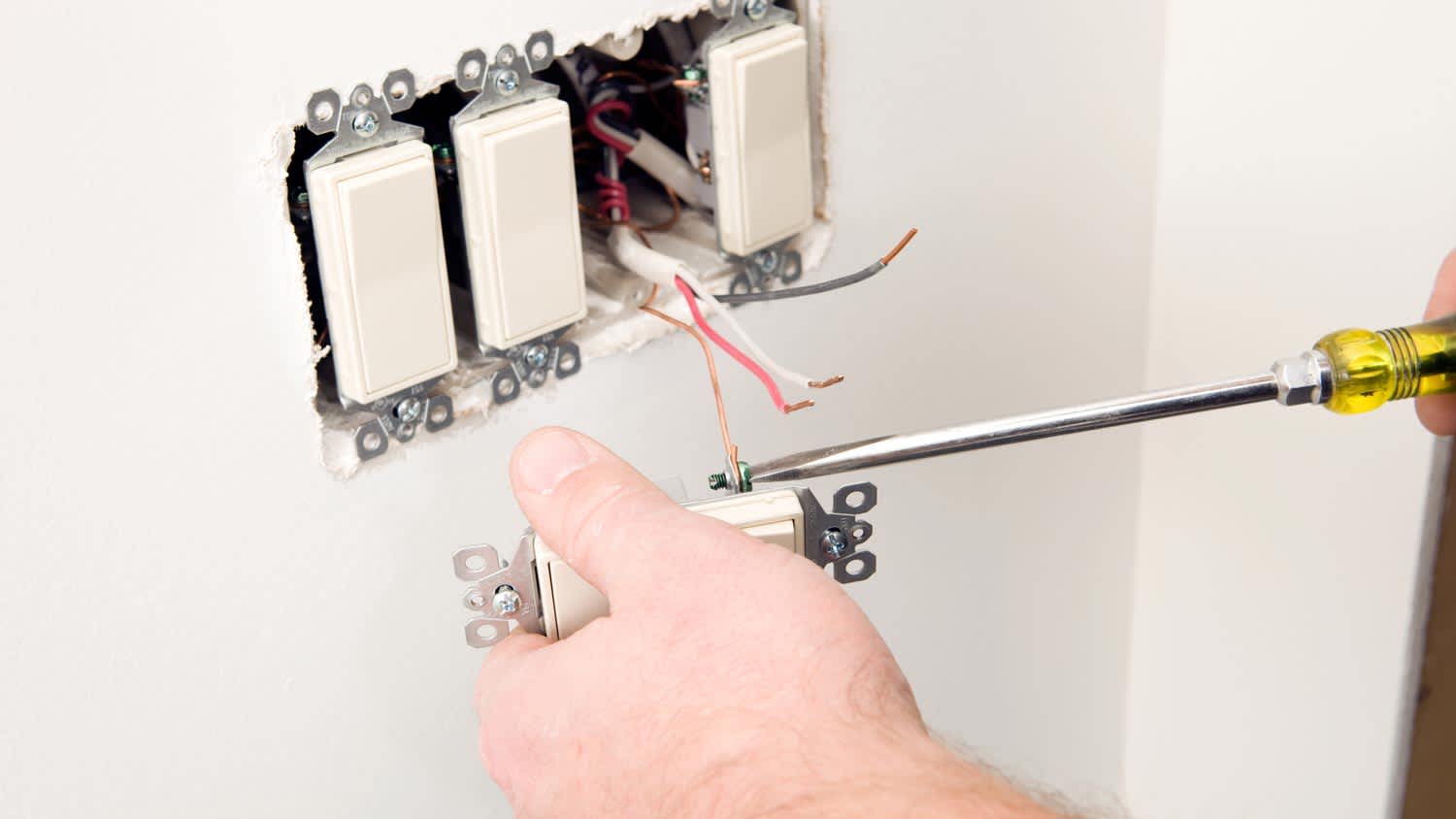
When comparing aluminum wiring versus copper wiring, read our explanations of the key factors to consider to help you make the safest and smartest choice.
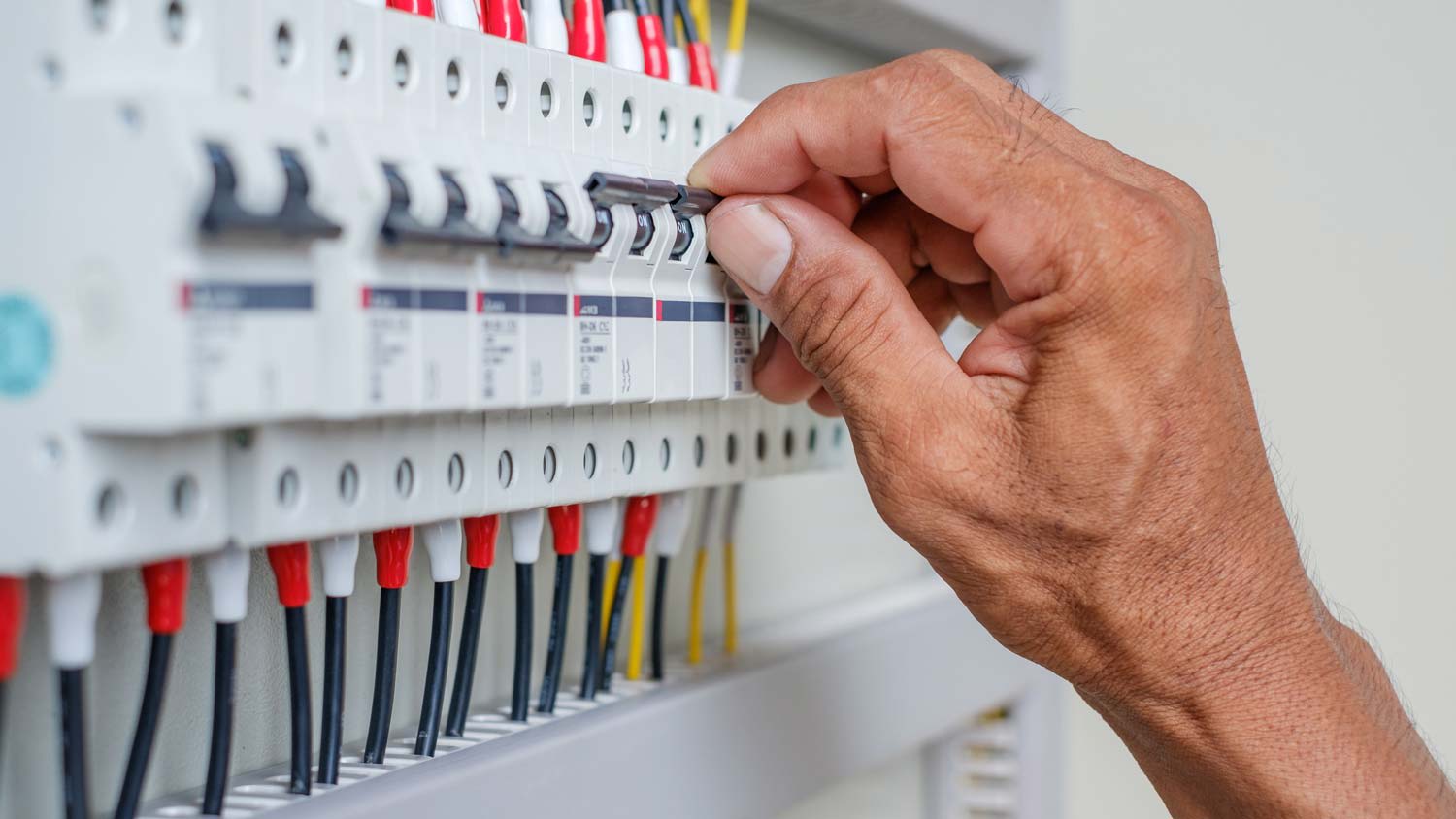
Planning out a 50-amp circuit? Selecting the right wire size is crucial. Find out how to determine the right 50-amp wire size.