

Moving your favorite tree isn’t exactly a small task, so we’ll break down some common tree transplanting costs so you can be prepared.
Have no fear: You can move your plant babies to your new home without worry

When transporting plants across state lines, check your destination's regulations first, as some states restrict certain plant species or require health inspections.
Expect to pay $20 to $100 for moving supplies like boxes, packing paper, and floral tubes to protect your plants during the move.
Repot your plants into plastic containers two weeks before moving day, giving them time to adjust before you pack them for the trip.
Hiring a local moving company provides helpful guidance on packing fragile plants securely and keeping them safe during transport to your new home.
If you’re preparing for a fresh start in a new home, you’re likely feeling excited about your upcoming move, but worried about how your plants will react to the uprooting. Since you’re a dedicated plant parent, you already know about plant care—now you need a moving plan. Here’s a step-by-step action guide to safely transporting your beloved plants to their new home.
Difficulty: Easy (1/5)
Simple project; big impact.
Total Project Time: 2 to 5 hours, depending on the number and size of your plants.
Cost: $20-$100
What You’ll Need
Materials:
Paper bags
Plastic bags
Various sizes of moving boxes
Packing paper or newspaper
Packing tape
Floral tubes
Tools:
Gardening gloves
Garden shovel
Hand trowel
Pruning shears
Plastic pots and buckets
Before you plan to dig, repot, and pack, make sure your new home is plant-friendly.
Not all indoor and outdoor plants can tolerate every environment. All kinds of natural ingredients like humidity and sunlight affect how they thrive. Indoor plants, like your hardy snake plant, can easily handle environmental changes if you can control the elements.
But for your outdoor plants, you should use a plant hardiness zone map to learn about the climate and soil conditions at your new place before you decide to move your precious elephant ear plants into another yard.
Did you know some plants are illegal in certain states? While many states don’t have restrictions, others regulate the type of plants entering the state. Officials could require verification of the plant’s health—specifically whether or not they have diseases or pests that could infect the local vegetation. The National Plant Board has more legal information about moving plants across state lines.

Top moving companies won’t be able to move your plants because moving trucks don’t have sunlight, controlled temperatures, or enough airflow for live plants. So you’ll need another way to bring your plants home. Before you start prepping the plants for the move, pick a transportation method, so you’ll know how to prepare.
The most common and easiest way to transport plants is to drive them securely in your car. You’ll need to monitor the temperature during the drive and bring them into the hotel for overnight stays. The key to a successful trip is to pack them tightly in boxes stuffed with newspaper to restrict movement, plus a little shredded newspaper padding on top if you have delicate plants. The basic packing system also works for large plants, but you’ll need to angle or tilt them to fit in the car.
Yes, it's possible to fly your plants to your destination, but they’ll count as a carry-on or a checked bag. You’ll also need to secure them in a protective box or carrier. Check the airline’s and TSA’s policies before flying with live plants.
If you have non-delicate plants that can withstand changing environments, shipping companies like UPS, FedEx, and USPS ship plants. Be sure to check their policies for packing and delivery. You might have to pay more for faster shipping to keep your plants healthy.
With a few practical tips and a lot of TLC, you can prep your outdoor and indoor plants for a successful move.
You’ve probably watched these plants grow year after year through your kitchen window, so, understandably, you're hesitant to leave them behind. Here’s what you can do for a successful transfer.
Trim and prune: It's easier to move smaller plants (6 to 12 inches). The cutting also stops the plant’s focus on keeping blooms and leaves alive during the move.
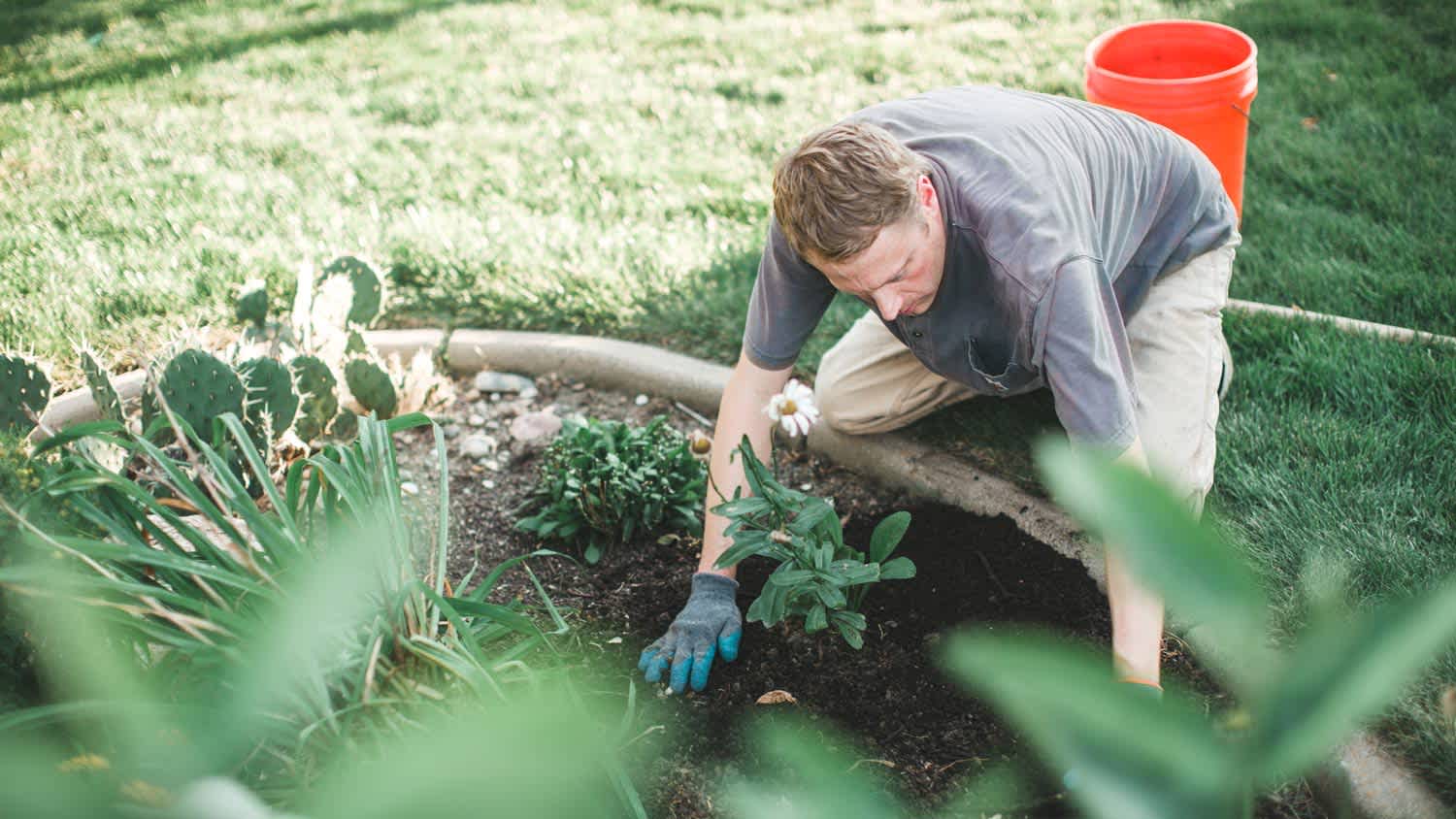
Dig and bag: After cutting back, dig out your plants, leaving enough dirt around the root ball for protection. Place each plant into breathable paper bags or cut small holes in plastic bags. Take precautions during transport to avoid letting your bagged plants get too hot or dry during the move.
Consider potting: Plenty of outdoor plants, like herbs, can move into pots for travel. Give them a couple of weeks to adjust to the pots before moving day for the best outcome.
Growing fresh vegetables is a rite of passage for elementary school children and a passion project for plant parents, so it's easy to see why leaving them behind isn’t a preferred option.
You have two choices for moving your garden plants, depending on the amount of available car space. You can transfer them into a large container, like a five-gallon bucket, or you can take a small cutting and insert it into a floral tube, ensuring it stays moist by covering it with wet paper towels. Either way, make sure you replant them in the ground or a grow room as soon as possible for the best results.

Plant lovers know that even the easiest indoor plant varieties can be finicky, so give yourself about three weeks to prepare your plants for their new home.
Follow these steps for a successful relocation:
Repot with sterile soil: Switch from clay and ceramic pots to plastic early in the packing process so your plants can adjust. If you pack your pretty planters with your household goods, it helps keep them intact until you’re ready to repot again.
Trim and prune: Ideally, you should trim your plants about two weeks before the move.
Inspect carefully: Check your plants for insects and parasites about a week before moving day. Apply insecticides if needed, but use them carefully. Remember that insecticides and fertilizers are household items you can’t pack if you hire professional movers.
Water normally: Give your plants a deep drink two days before moving, but don’t overwater them. You don’t want to worry about freezing temperatures or fungus growth during transit.
Once you’ve chosen how to transport your plants, you can start the prepping process a day or two before moving. Follow these steps:
Use a plastic bag to cover the pots and seal around the base of the plant to keep the soil from spilling.
Find boxes that hold your plants securely, and stuff the open spaces with packing paper. If you seal the boxes, ensure there’s plenty of airflow by poking a few holes into the box.
If you pack cuttings, your primary goal is to keep the plant damp with wet paper towels, a rubber band, and a floral tube.
Wrap large or tall plants with newspaper paper or a thin sheet to avoid breakage.
The unpacking process can be chaotic, but take the time to recreate the environment your plants previously thrived in as soon as possible. Use these steps to get started:
Unpack your plants as soon as you arrive in your new home. Avoid damage by removing them through the bottom of the box.
Let your plants sit still for a couple of days so they can acclimate to their new environment.
Repot your plants back into their original containers.
If you see signs of transplant shock or think your plant is dying, wait a couple of days for recovery to kick in, and then intervene if necessary.
I recently moved to another state and chose United Trust Van Lines after comparing several companies. Their team was punctual, professional, and extremely careful with my belongings. I was especially impressed with how they handled my home office setup and fragile items. Everything arrived on...
 United Trust Van Lines, LLC
Showed up on time and cleaned carpets well, but didn?t move furniture.
 Voda Cleaning & Restoration of Columbus
A reliable team for moves across state. My switch to a new place needed careful lifting through tight hallways. The movers checked the doorway first, then carried heavier pieces with slow, controlled movements. Their patience helped prevent damage, and I?d choose them again.
**Would rate a 0 if i could** NEVER USE THIS COMPANY!!!!! They shattered my tv console and dresser, lost a mirror, and never finished the move. The broken furniture cost me over $600 to replace. They left me with 6+ hours of personal labor moving my 1BR apartment, when I was quoted a FULL...
 All My Sons Moving & Storage
I could not have moved without the help of Jen Stover! I was in my house for nearly 20 years, so the thought of clearing it out while working full time was overwhelming. Jen takes great joy in sorting and organizing while asking the hard questions with patience and compassion. Jen is...
 Go and Stow Home Organizing
Couldn't have been a worse experience. 3 of my belongings were lost and 5 belongings were damaged. My furniture was clearly dragged across the ground. The movers couldn't move the furniture I paid extra heavy weight fees for so I had to help them move my own furniture. The manager gave me...
 US Interstate and Rail
Excellent experience for me! They helped me a lot with my move. very reasonable price. Good communication with the office manager is excellent.
 Goodview Moving and Storage
I was concerned about my possessions safety throughout the move but Bridge View Van Lines took all necessary security measures to make sure everything arrived in mint shape I am really appreciative of their effort and commitment They made my long distance move seem simple
 Bridgeview Van Lines
This moving company is the best in Columbus, Ohio! They rescued me when my movers didnâ t show up. Do not ever use Plane Movers! They never showed up for my move, claiming that I never signed the contract. They didnâ t call me to follow up, communication was awful. The people that work for...
 All My Sons Moving & Storage
Ozie and Tyquese were great and worked fast. It was a good move
 All My Sons Moving & Storage
From average costs to expert advice, get all the answers you need to get your job done.
Moving your favorite tree isn’t exactly a small task, so we’ll break down some common tree transplanting costs so you can be prepared.

Ready to move your tomato plants from one side of the yard to the other? Learn how to transplant plants properly to avoid plant shock.

If you need or want to move a tree to a new spot, it’ll take some effort. Learn how to transplant a tree to move it successfully.

Packing houseplants for a move is often overlooked until the last minute. Learn how to pack your plants for a safe move, even in extreme conditions.
You need to consider various factors when moving or planting flowers. Learn more about when to transplant garden plants for the best success rate.

Knowing when to transplant trees will help ensure they survive and thrive. Our guide breaks down what you need to know.