

•
Discover the true cultured marble cost for your next project. Learn about installation, size, labor, and ways to save on cultured marble.
Flooring costs depend on your project and location. Check with a local pro for your specific job.

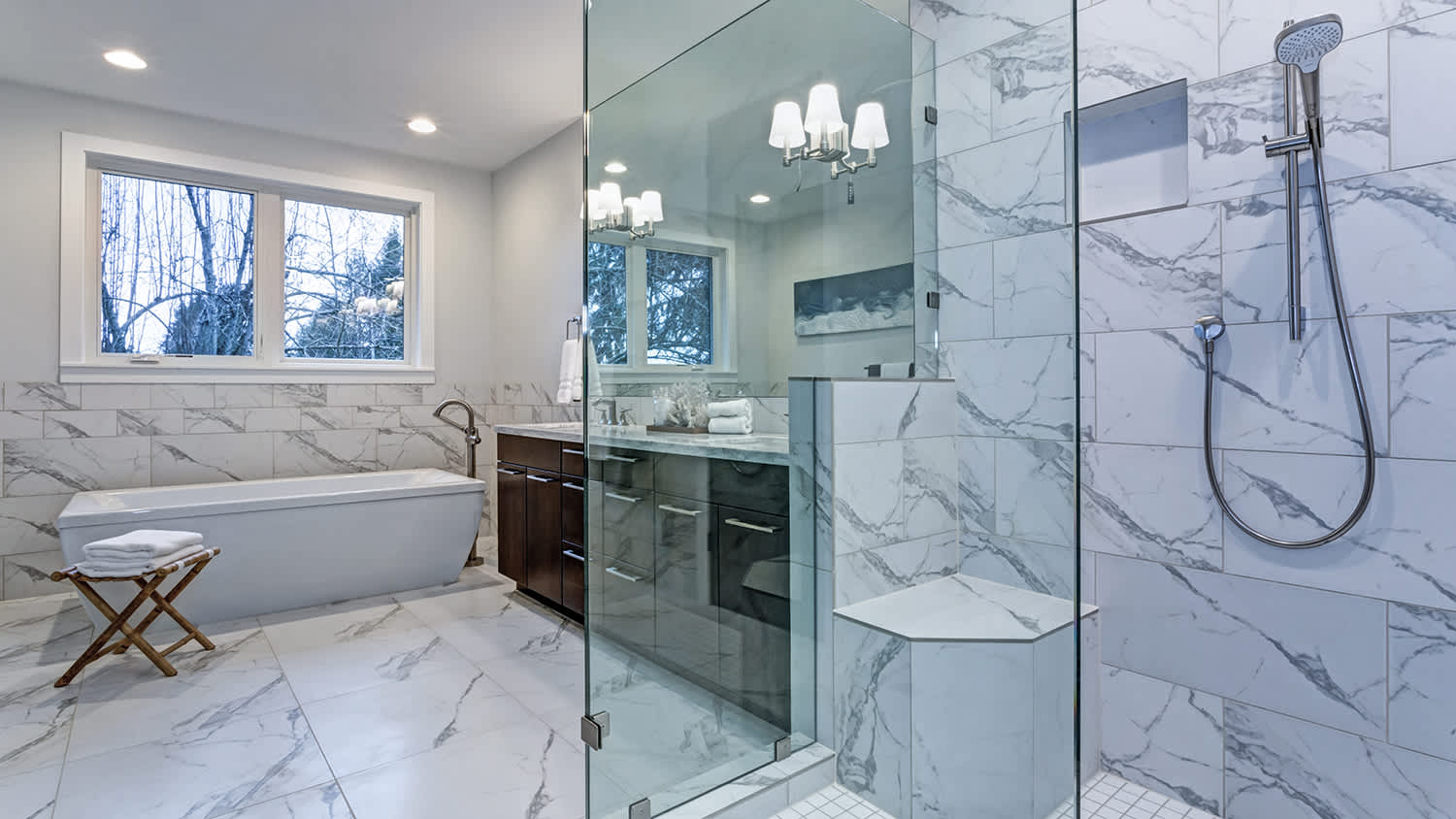
Professional marble flooring installation costs $1,900 to $5,600 for your 250-square-foot room, with material type and grade affecting your final total.
Your marble's rarity, quarry location, color, and finish determine costs, with darker and rarer stones priced higher than common white varieties.
Budget for old flooring removal, subfloor repairs, trim replacement, professional sealing, and optional radiant heating when planning your marble flooring project.
Hiring a local flooring company keeps your marble level and properly sealed, so your floors look great and hold long-term value.
In 2026, the national average cost for marble flooring installation is $3,700. For a 250-square-foot room, most homeowners spend $1,900 to $5,600, with the spread driven by marble grade, quarry origin, and finish type. Square footage and material quality are the biggest factors that move your final number up or down.
Your marble flooring cost depends on factors including your location, room size, marble type, grade, color, pattern, finish, and labor rates in your area.
The cost of your new floor depends heavily on square footage, with professional marble installation running $10 to $20 per square foot on average. Basic marble starts at $8 per square foot on the lower end, while specialty marble can reach nearly $50 per square foot. Costs vary significantly by room size in square feet, as shown in the breakdown below:
| Room Size in Square Feet | Average Cost per Square Foot in 2026 |
|---|---|
| 36 | $288 to $400 |
| 60 | $480 to $3,000 |
| 175 | $1,400 to $8,750 |
| 200 | $1,600 to $10,000 |
The rarity, quarry location, and physical characteristics of each marble type directly shape your overall cost, with less common varieties commanding higher prices due to limited availability and longer transport distances. When shopping for marble, your supplier will present several options, each with its own advantages, drawbacks, and price point, and costs vary significantly by type, as the breakdown below shows.

When you go to purchase marble slabs or tile for flooring, your supplier will likely show you several common types of marble from which you can choose. Each type has its own advantages and disadvantages, and prices vary due to rarity and quarry locations. Here is how common marble types compare by cost per square foot in 2026:
| Type of Marble | Cost (Per Sq. Ft.) in 2026 | Description |
|---|---|---|
| Carrara | $5–$15 | Bright white with gray veins, stains easily |
| Crema Marfil | $10–$20 | Cream, tan, or beige coloring, cracks may weaken it |
| Calacatta | $13–$30 | Porous, must be sealed, only found in Italy |
| Breccia | $13–$40 | Dark colors, rarer and harder to find |
| Emperador | $15–$35 | Light tan stone with spiderweb-like veining, porous |
| Onyx | $20–$60 | Lightweight, beautiful, but prone to cracking and chipping |
Marble tiles cost $5 to $10 per square foot, while marble slabs run $10 to $20 per square foot because they are thicker and heavier to produce and transport. Tiles are better suited for flooring, whereas slabs are more commonly used for countertops and walls. Marble product is a key driver of overall cost, as the breakdown below shows:
| Marble Product | Average Cost per Square Foot in 2026 |
|---|---|
| Tiles | $5–$10 per square foot |
| Slabs | $10–$20 per square foot |
Marble quality grades run from A to D and are assigned based on appearance, color consistency, and the presence of blemishes, defects, or flaws, and grade is one of the clearest cost drivers you can control. Costs vary meaningfully across grades, as the breakdown below shows.
| Grade of Marble | Average Cost (per Sq. Ft.) in 2026 | Grade of Marble Description |
|---|---|---|
| Grade A | $19–$60 | Fewer flaws, subtle veining |
| Grade B | $7–$25 | More flaws, like visible pitting |
| Grade C | $5–$15 | More flaws, like fissures |
| Grade D | $3–$7 | Softer structure, thick veining |
Marble comes in a wide range of colors beyond the classic white with gray veining, and rarer colors typically cost more than common white or gray varieties. Costs vary by color, as the breakdown below shows.
| Marble Color | Cost (per Sq. Ft.) in 2026 |
|---|---|
| White | $2–$10 |
| Green | $5–$20 |
| Black | $15–$75 |
| Pink | $25–$30 |
| Red | $10–$50 |
Straight-set marble is the most affordable installation pattern, but specialty layouts such as herringbone, mosaic, and diamond cost more due to the additional skill and time required to cut and place each piece. If you want a custom pattern, plan to spend 10% to 25% more on labor costs.
Marble comes with a standard polished finish, but custom finishes are available and each adds $10 to $35 per square foot on top of the base marble cost. Textured specialty finishes such as chiseled or flamed marble sit at the higher end of that range because of the additional labor and time involved. Avoid polished marble in bathrooms or other wet areas, where it can become dangerously slippery, a tumbled finish offers better slip resistance and is a safer choice for high-moisture rooms.
Honed (smooth, velvety)
Tumbled (buffed)
Brushed (worn, silky)
Sawed, distressed, or raw (rough, coarse, dull)
Chiseled (deep, uneven grooves)
Sandblasted (smooth-textured)
Bush-hammered (rugged, uniform pitting)
Each costs about $10 to $35 per square foot (on top of the price of the marble itself). Other textured finishes, such as chiseled or flamed marble, can also cost more because of the added labor and time required to create these specialty finishes.
Installing polished marble in your bathroom could be a recipe for disaster because this finish can be slippery, especially when wet. Instead, consider marble with a tumbled finish, which offers more slip resistance and is ideal for rooms with high moisture levels.
Labor costs for marble installation vary by city, region, and the experience level of your contractor, so getting multiple quotes is a smart first step. Because marble is a costly material, hiring an underqualified installer risks a substandard result that can compromise both the appearance and the long-term return on your investment.
Beyond materials and installation, marble flooring comes with several auxiliary costs worth factoring into your budget, from furniture moving and old flooring removal to subfloor repairs and ongoing sealing. Weighing the pros and cons of marble floors before committing can help you plan more accurately.
Clearing furniture from the installation area is a necessary step, and if you have heavy or bulky pieces, some flooring companies will handle the move for you, either included in the job cost or as an add-on. Expect to pay $25 to $75 per room for furniture removal, and confirm your contractor's policy before work begins.
Marble requires a level, solid subfloor, so your existing flooring must come out before installation begins. If you hire a pro, the cost depends on the type of flooring and flooring transition strips being removed, ranging from $0.60 to $4 per square foot for laminate up to $2 to $7 per square foot for tile.
Carpet removal: $1 to $2 per square foot
Tile removal: $2 to $7 per square foot
Hardwood floor removal: $2 to $5 per square foot
Laminate floor removal: $0.60 to $4 per square foot
Marble is heavy and can crack without adequate subfloor support, so address any structural issues before your new floors go in. Subfloor repairs run $2 to $10 per square foot, joist repairs cost $10 to $60 per square foot, and full subfloor replacement falls in the $3 to $10 per square foot range, depending on labor, material thickness, and type.
If your existing trim or baseboards are damaged or no longer suit your design, plan to replace them at $3 to $12 per linear foot for materials and installation, with the final cost depending on quality, material, size, and complexity.
Because marble is a porous natural stone, sealing is essential to protect against liquids, staining, and scratching, starting immediately after installation and repeated regularly as wear breaks down the sealant over time. If you hire a pro to seal your floors, expect to pay $0.50 to $2.50 per square foot, depending on your location, marble type, and sealant used.
Marble conducts heat well, making it an excellent match for radiant floor heating, a worthwhile upgrade if your home runs cold in winter. The system must be installed before your marble goes down, so budget $10 to $90 per square foot, depending on the type of radiant heat system and the specifics of your project.
Hiring a local flooring pro to install your marble floors costs $3 to $10 per square foot. While a DIY installation might sound tempting, a pro can ensure the visual impact you're looking for, correctly measure and cut this costly material, and set the subflooring to prevent cracks, chips, or fractures. Avoid having to replace expensive marble tiles during a DIY project by hiring a skilled flooring installer.
Here are the benefits of hiring a flooring pro to install your new marble floors:
The equipment needed to install marble flooring costs about $300 to $450, but a pro has the necessary tools to get the job done.
Pros can handle the difficulty of working with this heavy stone, which weighs 6.7 pounds per square foot for ½-inch-thick options.
Hiring a flooring contractor means avoiding common DIY mistakes, such as an improperly prepared subfloor and incorrect measurements and cuts.
Pros can install a perfectly level floor and prevent uneven corners that could be a trip hazard.
Your flooring pro can discuss the best materials, including the highest-quality marble within your price range.
Flooring contractors will properly seal the marble and grout for a long-lasting installation.
When ordering flooring materials, first measure the square footage of the floor space. You may need to add an extra 10% for wastage during the installation process. A flooring pro can provide guidance for more challenging layouts or stairs.

Marble flooring simply isn't a low-budget item, and while you can take a few steps to save money on installation costs, if it's still too costly for your budget, you may need to consider a different material. That said, here are ways to get the look you want without breaking the bank.
Different types of marble and different marble materials have a variety of price points; you may be able to find marble that gives you the look you want at a lower cost if you're willing to be flexible. Consider Carrara, Crema Marfil, or other less-expensive types of marble. You can also save money by choosing a lower grade of marble that still meets your quality needs.
Talk with your marble supplier about budget-friendly options that may be marked down because they have less marbling, uneven coloring, or slight damage. Look for mesh-backed tiles or lower-quality tiles that have holes filled with resin. These materials can still look great even though they may be more prone to cracking or need to be placed in lower-traffic locations.
If you don't have a huge space to cover and want to dress it up with a luxury material like marble, you may have luck shopping at a bargain store, the remnant section of a local stone supplier, or sourcing reclaimed marble that's been removed from another building. While the amounts and selection will be more limited, you may just score a bargain that looks like a million bucks.
It might seem counterintuitive, but hiring a more expensive installer might actually save you money. If the contractor charges more per hour but is faster than a less-skilled installer, the job will likely take less time and can end up costing less. You are also less likely to end up with broken tiles or a low-quality installation if you hire someone who knows what they're doing.
Unless you're a pro with experience laying marble floors, go with professional installation to protect your investment in more costly materials. The job will go faster, the installation will be higher quality, and you'll know it was done correctly.
Be prepared to tell your flooring pro where you would like the marble flooring installed, the type of marble you prefer, and the desired color.
Let your pro know the grade of marble you’re looking for, whether it’s Grade A, B, C, or D.
Discuss whether you want a specialty pattern or a custom finish.
Consider if you would like to install new baseboards and trim.
Home is the most important place on earth, which is why Angi has helped more than 150 million homeowners transform their houses into homes they adore. To help homeowners with their next project, Angi provides readers with the most accurate cost data and upholds strict editorial standards. We extensively research project costs to develop the pricing data you see, so you can make the best decisions for you and your home. We rely on reputable sources, including the U.S. Bureau of Labor Statistics, academic journals, market studies, and interviews with industry experts—all to ensure our prices reflect real-world projects.
Want to help us improve our cost data? Send us a recent project quote to [email protected]. Quotes and personal information will not be shared publicly.
If you’re good people wanting to do business with good people, hire Matt. He is a consummate professional and utterly competent. He installed a water heater in my home at a price that beat competitors by hundreds of dollars with a promise to support the unit for its life (even after its 6 yr...
 Greene's Plumbing Services
Joseph did a great job with the staircase and trim. Timely and efficient, clear communication about the work, very fair pricing. For the stairs in particular, done very skillfully in an old house (1893) in a tight spiral, and very creative with how to do the handrail. Did a nice job with...
 Vouis Trim Carpentry L.L.C.
This company does it right. Firstly, I want to say that Landan was a joy to work with. He was so kind, transparent, and had everything under control. His entire team showed up ready to work and they were all very respectful of the fact that we were in an office space. A little backstory – we...
 Krumlauf Floors
Finished Basements Plus was wonderful from beginning to end! First, they came out quickly for an estimate. I had 4 estimates and theirs was by far the best. (2 of the estimates were more than $20K higher than for the exact same work). Beyond their fair pricing, the work was excellent. They...
 Finished Basements Plus Inc.
Very professional, knowledgeable and helpful! Completed the install on time and as expected.
 Ward's Services
Cole has been handling plumbing and general contracting for our four properties over the past three years, and he’s always done a great job. Most recently, he installed a sink and countertop in our retail store where none existed before, and it turned out exactly how we needed. He’s...
 ANB Renovations LLC
Excellent, Prompt, Courteous Service!!! They were super friendly and quite personable. I felt very comfortable with the gentlemen that did the installation. They installed it exactly where I asked them to and they did an excellent job!! I loved their service so much.
 Tether House
Window Depot did an amazing job installing the windows in my basement! The process from start to finish was by far more than what I expected. I would highly recommend Window Depot if you want professionalism from the the consultation to the installation. Dont settle for mediocre when you can...
 Window Depot USA of Central Ohio
AFS was excellent from start to finish. Jess, the sales associate, was fantastic...very knowledgeable and very professional. The installation crew was excellent. I couldn't be more pleased with the process. Best of all, my new floor looks fantastic!
 America's Floor Source
We were having 2”x 2” tile installed . There was a small installation error and the new additional replacement tile was from a different lot and the colors didn’t match. Joe assured us that he would rectify everything , which he did without hesitation. We decided to go with the 18” x 36” tile...
 CarifaTile
From average costs to expert advice, get all the answers you need to get your job done.
Discover the true cultured marble cost for your next project. Learn about installation, size, labor, and ways to save on cultured marble.
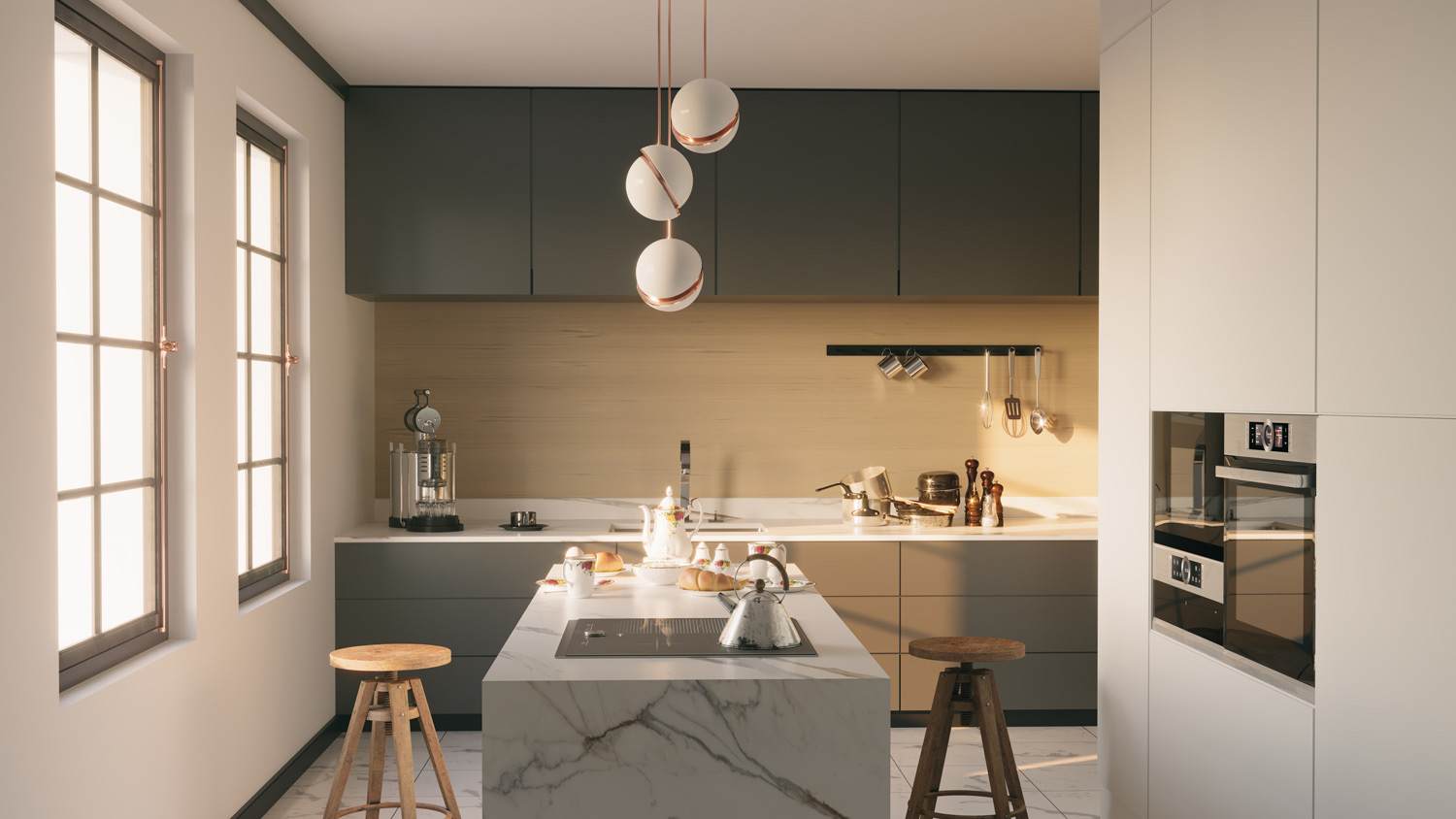
Marble countertops have yet to go out of style, and likely won't any time soon. This strong, durable, and stunning material melds with most kitchen, bathroom, and even dining room designs. But how much do marble countertops cost to install?

Discover natural stone flooring costs for your home. Learn about material, labor, and installation factors to budget confidently for your flooring project.
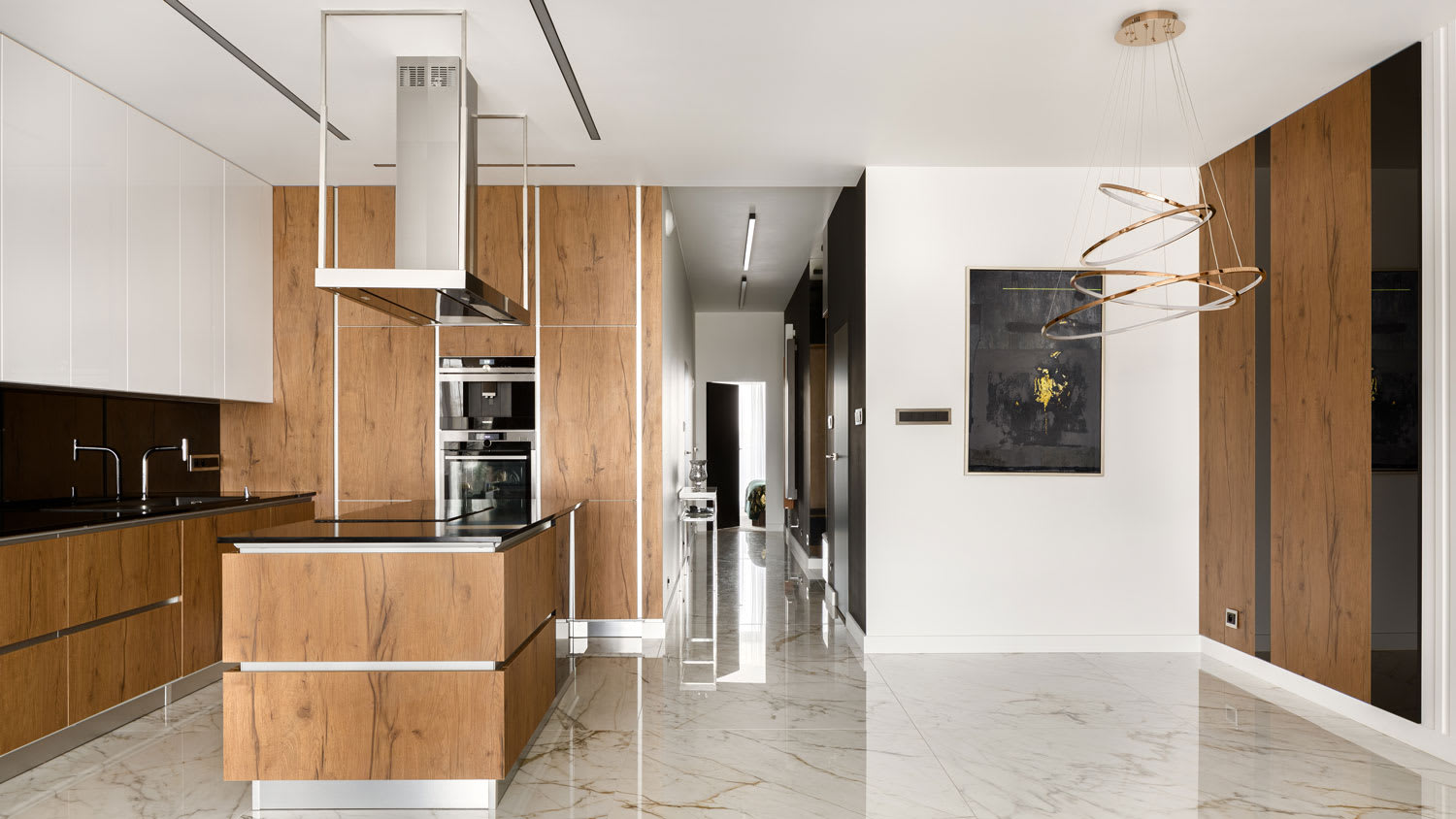
Selecting flooring is no easy feat. If you’ve been contemplating installing marble flooring, we've got your back with the ultimate list of pros and cons.
Dull marble floors got you down? This simple guide on how to polish marble floors can revive your floors to a flawless shine.

Not sure how to clean marble in your home? From floors and tables to countertops and showers, learn how to make marble shine and fix stains and scratches.