

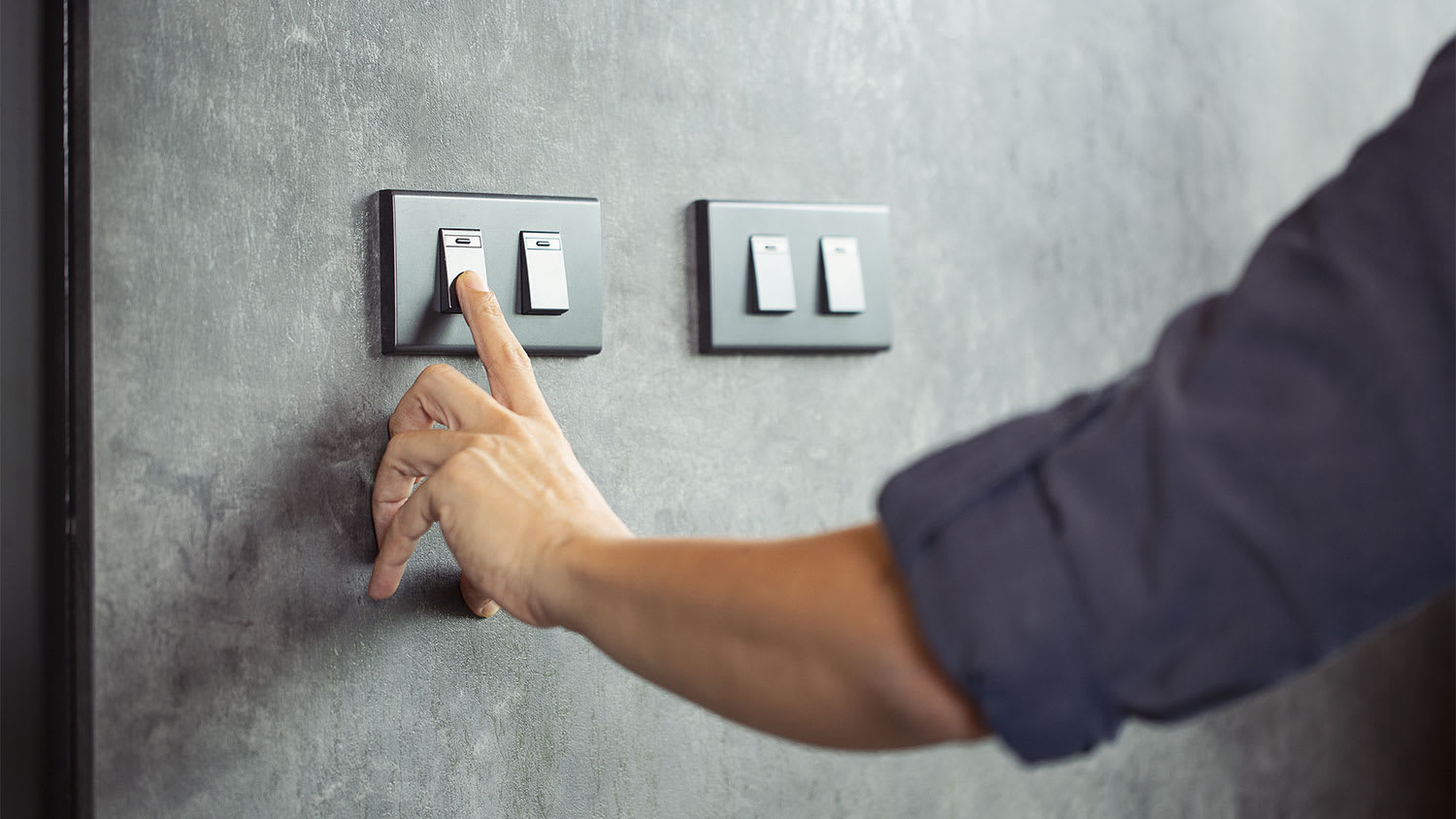
Installing a new light switch is a straightforward job for an electrician and doesn’t have to break the bank. Read on to learn how much it costs to install a new light switch.
Electrical service costs depend on your project and location. Check with a local pro for your specific job.

Light switch replacement runs $60 to $300 for your home, depending on labor rates and switch type.
Your final cost depends on your switch style, standard, dimmer, timer, or transfer, plus wiring complexity.
You should budget for drywall repair, which can add $150 or more if wall cutting is required.
Hiring a local electrical professional prevents fire hazards from improper wiring and ensures all connections meet your local electrical code requirements.
In 2026, the national average cost to replace a light switch is $150. Most homeowners spend between $60 and $300, with the final price determined by switch type—standard, double, dimmer, transfer, or timer—as well as wiring complexity and local labor rates. If wall cutting is required, budget for drywall repair, which can add $150 or more to your total.
The type of light switch you choose is one of the biggest cost factors in this project. Standard switches are the most affordable option, costing $1 to $20 for materials, while dimmers and timers land on the higher end of the price spectrum. The following table breaks down average light switch replacement costs by switch type, excluding installation labor:
| Type of Switch | Average Material Cost in 2026 |
|---|---|
| Standard | $1–$20 |
| Double | $10–$20 |
| Three-way | $3–$15 |
| Four-way | $10–$25 |
| Dimmer | $10–$25 |
| Timers | $20–$150 |
| Smart | $20–$100 |
| Manual transfer | $100–$800 |
| Automatic transfer | $300–$2000 |

A standard light switch replacement costs between $50 and $150 for materials and labor, making it the most affordable and straightforward option. It controls a single light fixture with a simple on-and-off mechanism, which reduces installation time. That price reflects an electrician's average hourly rate of $50 to $100.
Replacing a double, three-way, or four-way light switch costs between $75 and $175, slightly more than a standard switch due to the more complex wiring involved. Double switches operate two items, three-way switches control one fixture from two locations, and four-way switches operate one fixture from three locations. Each requires a different wiring approach than a single switch, which adds a bit of time and cost to the job.
Dimmer switch installation costs between $80 and $200, more than a standard switch because it takes additional time. A dimmer offers a full range of illumination rather than a simple on-and-off setting, making it a practical upgrade for living rooms, dining areas, and bedrooms. If ambiance and energy control matter to you, the added cost is generally worth it.
Timer switch installation costs between $85 and $200, placing it in a range similar to dimmer switches. Timer switches let you set your lights to a schedule, which is useful for security, energy savings, or simply convenience. If you already have a dimmer in mind, upgrading to a timer instead adds little to no extra cost.
Smart light switch installation runs between $85 and $150 nationally, comparable to dimmer and timer switches. Keep in mind that the price covers the switch only—if you are hardwiring smart devices, lights often come in a package deal that includes outlets and other components. Bundling smart device installations together can help you get more value from a single service call.
Professional transfer switch installation averages $200 to $400, based on an electrician's hourly rate of $50 to $100 per hour for a three- to four-hour job. Transfer switches are installed near your home's main breaker and route power from a portable or standby generator to select appliances. The unit itself varies significantly by type: manual models range from $100 to $800, while automatic models run $300 to $2,000. Before committing to a transfer switch, confirm it is compatible with the type of light fixture you have.

Labor makes up most of the cost to install a light switch. A local electrician will usually charge their minimum rate for a single switch, while some will charge an hourly rate. You may be tempted to save money by doing this seemingly small job on your own, but DIY electrical work comes with a serious risk of injury or electrical fire.
When installing a light switch, always hire a pro for the following reasons:
Working with live wiring comes with a risk of shock and injury.
Simple mistakes like using an incorrect wire gauge or loose connections can cause an electrical fire.
Professional electricians know the local electrical code and can install your outlet safely, efficiently, and in the correct location.
DIY electrical work can void your homeowners insurance or the manufacturer's warranty on your appliances.
Pros know how to avoid common issues like improper grounding or overloaded circuits, ensuring an added outlet won’t damage your electrical system or appliances.
Experts know how to choose the right outlet for the job, whether it’s a GFCI outlet or an outlet for 240V appliances.
Electricians have specialized testing tools that ensure proper installation.
Reputable pros carry insurance and might offer a warranty on their work.
Let your electrician know where you want to install the outlet and how you intend to use it so they can give you an accurate quote.
It’s a good idea to understand which outlets are controlled by which circuits in your home, so your pro doesn’t have to do any guesswork.
Consider adding more than one outlet at a time or bundling smaller electrical jobs together in the same service to save.
Home is the most important place on earth, which is why Angi has helped more than 150 million homeowners transform their houses into homes they adore. To help homeowners with their next project, Angi provides readers with the most accurate cost data and upholds strict editorial standards. We extensively research project costs to develop the pricing data you see, so you can make the best decisions for you and your home. We rely on reputable sources, including the U.S. Bureau of Labor Statistics, academic journals, market studies, and interviews with industry experts—all to ensure our prices reflect real-world projects.
Want to help us improve our cost data? Send us a recent project quote to [email protected]. Quotes and personal information will not be shared publicly.
I recently had Mosby Electric perform an electrical installation on 8-14-2026, and I couldn’t be more satisfied with the service. From the moment I called, their team demonstrated fast arrival and professionalism. The electricians were highly knowledgeable, completing the installation...
 Mosby Electric
Great company! Price was competitive, technician showed up on time and completed the job (exterior electric Radon fan replacement) quickly. Would hire them again.
 MaGen Property Inspections and Radon Mitigation
I conferred with 2 other contractors before Armstrong Electric. Nick and his crew showed me that the project was not as convoluted as the other contractors made it appear to be. They completed the entire project on time. They were professional, friendly and cleaned up after at completion. I...
 ARMSTRONG ELECTRIC, LLC
The techs on my project, Shawn and Cliff, were great. They were prompt, courteous, and efficient. I am very happy with the results and would definitely contact Mr. Electric for any future electrical projects.
 Mr. Electric of Columbus
Victor was wonderful. He was on time, professional, and explained everything he was doing. He was thorough and figured out that the problem was electrical instead of with my HVAC system. Very knowledgeable. I will be using this company in the future for any HVAC needs. Thanks!
 Hubbs Heating & Air LLC
They were excellent. They did a great job. I was totally satisfied. They put tremendous effort in making sure the work was completed. They were great. They provided immediate response to any inquires I made. I would hire them again. I would recommend them to anyone who needs electrical work....
 JCB & Associates, LLC DBA Property-Tech Industries
Initially, the repairman could not find the problem. Apparently, there was some electrical shortage, but he could not find the definite problem. He left, but called back later to say he had a new idea. He returned and replaced the light switches on the doors. The refrigerator seemed to return...
 Appliance Pro LLC
The initial quoted price from a walk-through seemed high, but we discussed that the quote represented worst case scenario (re-wiring to two floors) and we were excited about the opportunity to have the work done in a timely manner with closing for fire safety reasons, etc. When the job was...
I have to tell you I am all about customer service - I will go out of my way and even pay more for it if you give me great customer service. <br> <br>In a world where this is hard to find, these guys were awesome! I can not sing their praises enough. They were prompt, personable, funny, got...
 Waibel Electric
When I challenged the markup on the generator, Bruder Electric withdrew its bid. They only want naïve customers.
From average costs to expert advice, get all the answers you need to get your job done.
Installing a new light switch is a straightforward job for an electrician and doesn’t have to break the bank. Read on to learn how much it costs to install a new light switch.

Don’t let broken pool lights keep you in the dark. Learn about pool light replacement costs, including unit prices, labor rates, and add-ons.

Get transparent light fixture repair cost info. Learn what impacts price, compare repair vs. replacement, and find ways to save.
Light switches don’t have to be confusing for non-electricians. If you’re wondering how does a light switch work, here’s what to know.
Common types of light switches include single-pole, double-pole, and three-way switches. Keep reading to learn more about the best light switches for your home.
Understand the standard outlet and light switch height in America and how Electricians and ADA guidelines vary in this regard.