
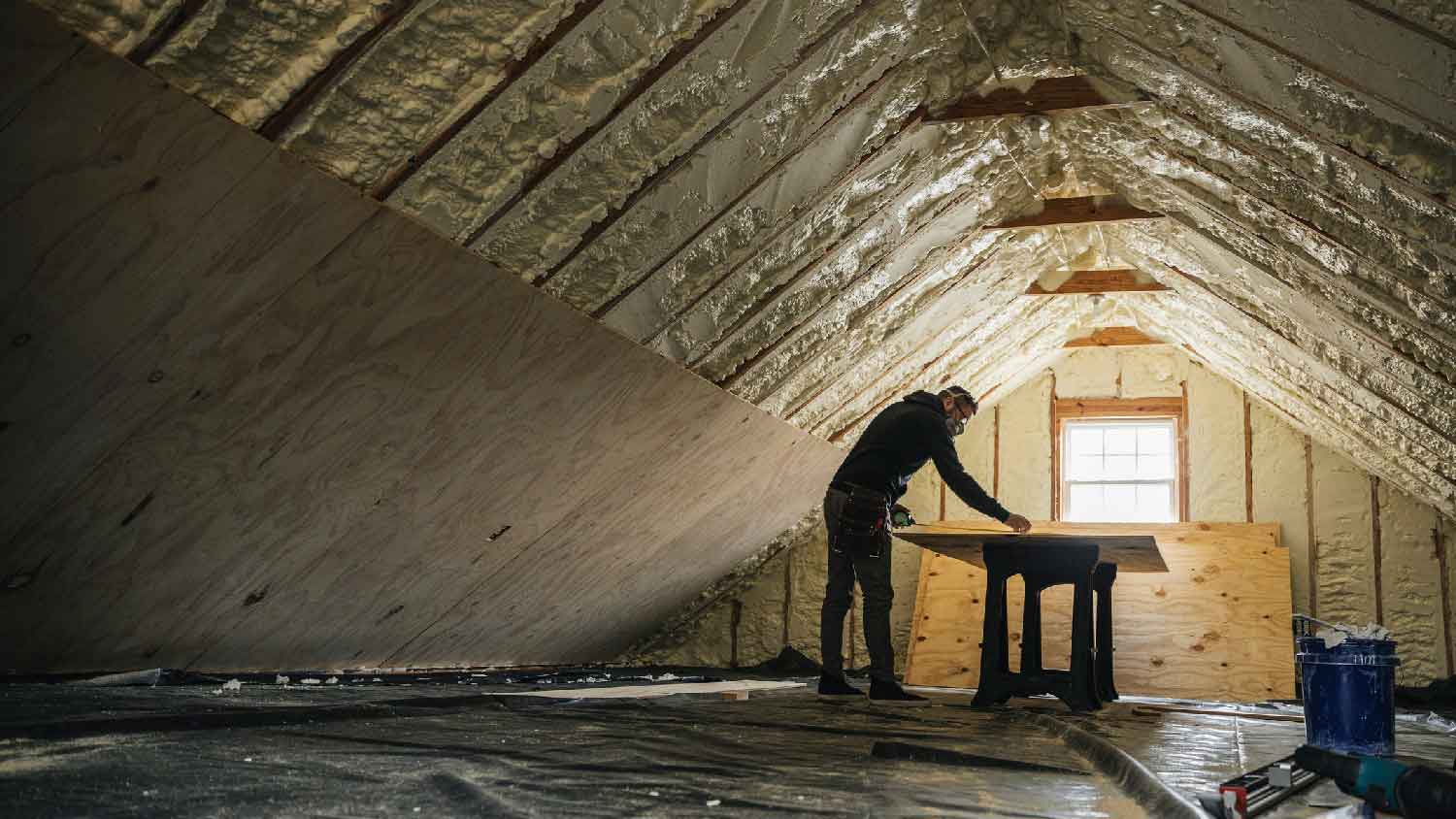
Attic insulation removal costs in Baltimore, MD, vary based on multiple factors, including why you're removing it and how easy it is to complete the task.
Insulation service costs depend on your project and location. Check with a local pro for your specific job.

Attic insulation removal in Washington, DC, costs between $1,200 and $3,500.
Challenging attic access constraints can drive costs higher.
Asbestos abatement in older rowhouses can add thousands to your budget.
Hiring a local insulation contractor in Washington, DC, keeps you and your household safe from asbestos, mold, and other hazardous contaminants.
Attic insulation removal in Washington, DC, costs an average of $980, with most homeowners spending between $653 and $1,307 on typical projects. The unique housing landscape here, dominated by historic rowhouses and pre-war detached homes, means that many attics contain aging insulation materials well past their useful life. The District's hot, humid summers and cold winters demand an attic that performs in both directions, and outdated or contaminated insulation actively undermines that.
Washington, DC, presents a distinct set of cost factors for attic insulation removal, shaped by its dense urban setting, aging housing stock, and above-average cost of living. Tight attic access and the potential for older hazardous materials drive costs above national averages.
The square footage of your attic space will determine the total cost of the insulation removal project. The bigger the space is and the more insulation material it contains, the more it will cost to accomplish the goal of removing it all.
However, the difficulty of reaching particular parts of the attic is also a significant pricing factor that could add up to $1 per square foot to the price tag for parts that are challenging to reach. In Washington, DC, the compact attics common to rowhouses, where access is often a single hatch and standing room is minimal, are a prime example of spaces that routinely trigger access surcharges when it comes time to remove and replace insulation.
| Square Footage | Average Cost |
|---|---|
| 200 | $350–$700 |
| 400 | $700–$1,400 |
| 600 | $1,050–$2,100 |
| 1,000 | $1,800–$3,800 |
| 1,500 | $2,700–$5,200 |
The type of attic insulation your home has will affect the cost of its removal. Attic insulation comes in a few varieties, each requiring a specific approach for removal. Professionals can remove blown-in insulation, which is prevalent in DC's post-war housing, using a large vacuum, whereas batts, rolls, and rigid materials will require hand removal, which is more labor-intensive.
Expect to pay $1.75 to $3.50 per square foot to remove insulation, with blown-in varieties near the lower end and rigid types near the higher end of that range. Keep in mind that those prices are for dry, non-asbestos insulation that’s in good condition.
| Insulation Type | Average Cost |
|---|---|
| Blown-in | $900–$1,600 |
| Batts and rolls | $1,200–$2,000 |
| Rigid | $1,400–$2,300 |
The main difference between attic insulation and roof insulation is where the material is installed. Attic insulation is added to the attic floor—which is also the ceiling of the room below—whereas roof insulation is on the underside of the roof deck. They both use similar materials, but roof insulation prevents heat loss through the roof, while attic insulation helps regulate the living space below.

Attic insulation removal costs can be affected by factors beyond our control. Things like pests, mold, and the presence of asbestos in the old insulation can significantly increase the project's cost.
Washington, DC's large inventory of homes built before 1980 makes asbestos removal costs a serious consideration. Any home built before 1990 should be professionally tested for asbestos before insulation work begins, and DC's experienced insulation contractors are well-versed in this assessment process.
| Hazardous Material | Average Removal Cost |
|---|---|
| Pests | $150–$450 |
| Asbestos | $2,000–$6,000 |
| Mold | $2,000–$5,500 |
The urban rowhouses of Washington, DC, present real constraints on attic access. Many rowhouse attics are only accessible through a single interior hatch, with no dedicated stair access and very limited headroom. Contractors must haul all removed insulation through the living space, which adds time, increases cleanup costs, and can require protective sheeting throughout the home. Expect to pay at the higher end of per-square-foot removal rates, and budget for post-removal cleanup as part of your total project cost.
Rates charged by Washington, DC, insulation contractors reflect the District's high cost of living. Contractors in the DC metro area charge a premium consistent with the region's cost structure, and your estimated budget should account for these elevated rates.
Washington, DC, insulation contractors charge $65 to $110 per hour for removal labor. Removing blown-in insulation skews toward the lower end of the per-square-foot range. For a typical DC home, total labor costs for standard insulation removal fall in the $1,200 to $2,500 range. Disposal and haul-away fees add $125 to $450, depending on material volume.
You generally do not need to get a permit for straightforward insulation removal in Washington, DC, as it is considered ordinary repair and maintenance. However, if your project involves modifications to the attic's ventilation system, structural elements, or electrical components, a permit will be required from the District's Department of Buildings (DOB). Your contractor should pull permits on your behalf.
Simply removing insulation isn't enough; you need to replace it with new insulation that meets DC energy code requirements. New insulation installation costs $2,500 to $5,500 in Washington, DC, for average projects. Slightly above the national average, this cost structure aligns with regional labor markets.
For homeowners in Washington, DC, attic insulation removal and replacement delivers solid returns, driven by the city's year-round climate demands and rising energy costs. Homeowners recoup 55% to 85% of total project costs, primarily through energy savings, but also through increased resale value.
You should insulate your attic with R-38 to R-60 to align with U.S. Department of Energy recommendations and guidelines. A poorly performing attic in Washington, DC, works against your HVAC system in both summer and winter, making effective insulation more valuable here than in many milder markets. Local professionals should be familiar with how to achieve these targets across the District's varied housing types.
To help homeowners plan their next project, Angi provides readers with carefully researched cost data and upholds strict editorial standards. We start with national average project costs, which we collect by analyzing competitor information, retailer material costs, and input from professional contractors. We then apply local price index data to calculate location-specific estimates that reflect what homeowners typically pay in their local area. To do that, we use data from the U.S. Bureau of Economic Analysis (BEA), including its Regional Price Parities (RPPs), which measure price differences across cities. This helps us account for differences in labor, materials, and overall cost of living, so estimates in higher- or lower-cost areas better reflect real-world local pricing.
Every estimate undergoes a thorough editorial review to verify accuracy, consistency, and alignment with observed market conditions.
Want to help us improve our cost data? Send us a recent project quote to [email protected]. Quotes and personal information will not be shared publicly.
I insulated my attic, and upgraded my HVAC system through BGEâ s home performance program. Lumeco was my contractor and they did a fantastic job and pricing was discounted. Great company!
 Lumeco Energy
The work here in 2023 was a re-do of work done in 2016, of the top floor of this house, with a Mansard roof. It was basically uninsulated in 2016, and the work then had a big impact because at least some insulation was blown in. But large regions which I was told had been filled were not. I...
 Discount Energy Services
This is actually the third time I have hired this company, and I continue to be very happy with them. I had a roof leak that created a ceiling leak in an upstairs room. After the roofers fixed the leak, this company came in to fix the interior damage. They cut out a 48”x48” section of ceiling...
 Cabido Design & Build
We had a wonderful experience with this company. We live in a 1920’s rowhouse in NW DC with a very drafty first floor. The crawlspace had old batts and we were looking for an upgrade with foam insulation. The team that completed our project was professional, timely, clean, and very wonderful...
My basement had mold and evidence of water damage in July/August, and I was referred to Exterior Waterproofing Experts. The majority of the mold was on the side of my house, but the salesperson made a strong pitch about the need to waterproof the front of my home by digging up the garden down...
The crew used all sorts of scientific machines to evaluate where I was loosing heat from my 2-bedroom condo. Afterwards they gave me recommendations. We decided that putting insulation above my roof and below the building roof, with special attention to areas where warm air was escaping would...
 Home Energy Medics
Excellent work and reliable company. Our crawl space was mere dirt, full of moisture, critters, cold air. It was disgusting. JES came in to insulate, stabilize foundation, encapsulate, and install dehumidifier. Now it looks amazing clean and dry. Dug out for more room as well.
 JES Foundation Repair
Had to call them back a few times due to insulation blown all over the neighborhood. Some edges of roof looks like it was rushed. They tried to make things work, but they definitely seemed like they rushed the work.
 Brax Roofing
We had them insulate the back wall of our row house on Capitol Hill. David was very patient in explaining all the ins and outs of insulation when we spoke on the phone. Within an hour of when we spoke he had a quote sent out to me. On the day of the installation they came when they said they...
 Prudent Homes
From average costs to expert advice, get all the answers you need to get your job done.
Attic insulation removal costs in Baltimore, MD, vary based on multiple factors, including why you're removing it and how easy it is to complete the task.
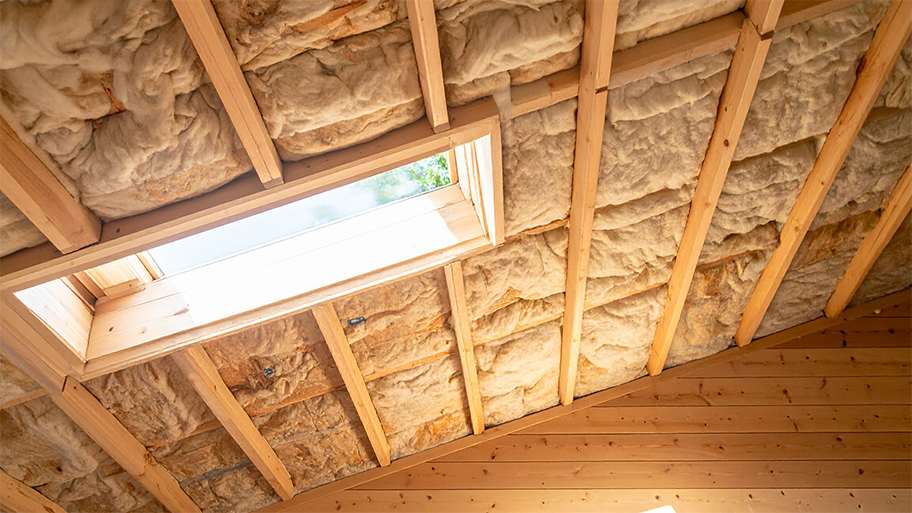
Insulating your attic can improve your home’s efficiency and reduce electric bills. Use this guide to find out what attic insulation will cost you in Washington, DC.
Insulating your attic can improve your home’s efficiency and reduce electric bills. Use this guide to find out what attic insulation will cost you in Baltimore, MD.

Remove blown-in insulation from your attic safely and efficiently by following this step-by-step guide and prep for your attic remodeling project.

This guide breaks down what attic insulation is and its importance in keeping your home the temperature you want. Keep reading to learn more.
Your home likely loses most of its heat through your attic. This guide on different types of attic insulation can help you boost your home’s efficiency.