
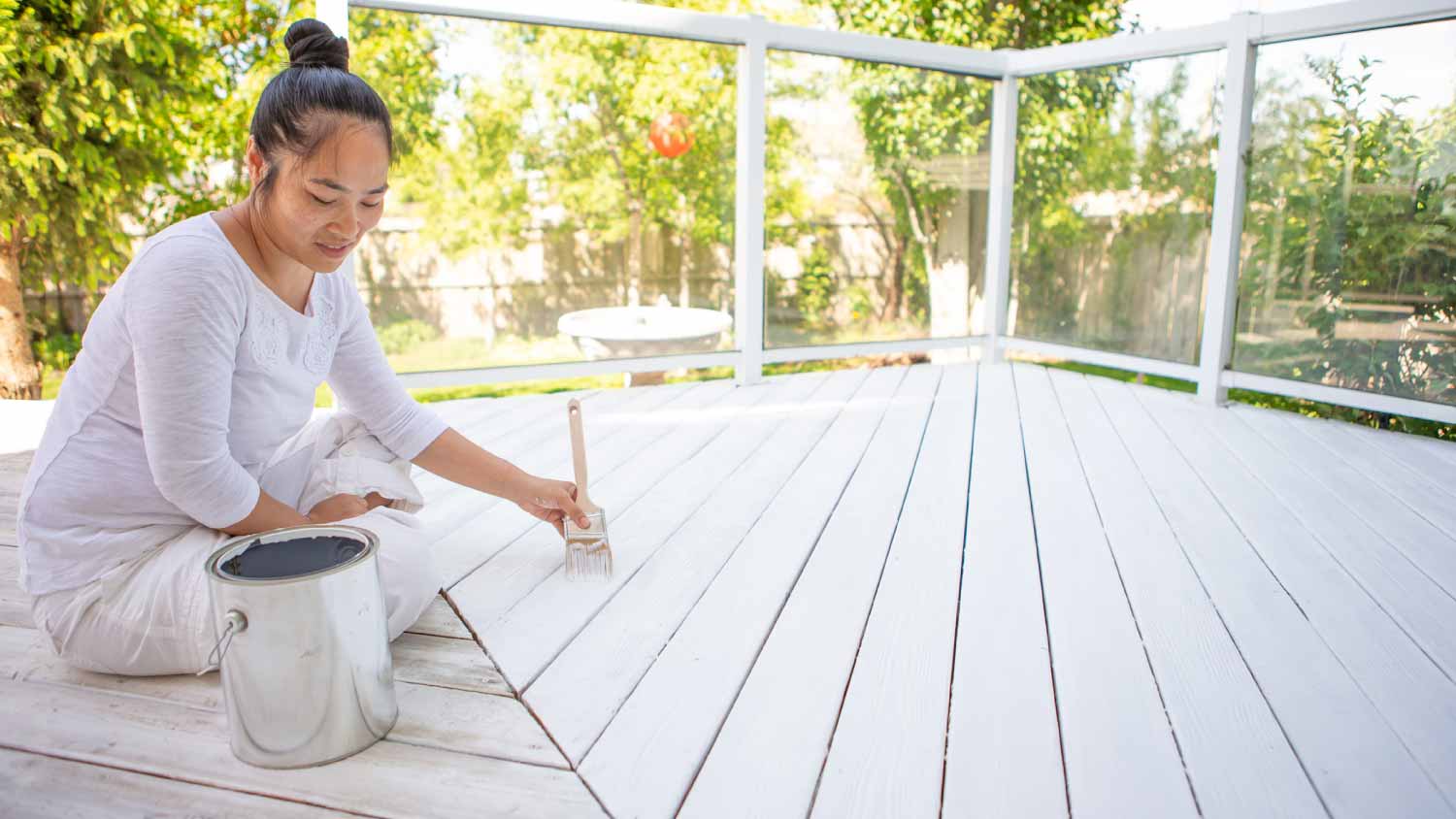
The cost to paint a deck depends on its size, design, and whether you DIY. Read this guide to help set the budget for your deck painting project.
Don’t get too cracked up about it

Deck wood cracking happens when new decking dries too fast in direct sun, causing moisture to evaporate quickly and leaving your boards with small surface checks.
Typical deck repair costs range from $862 to $3,470, with average costs around $2,145 depending on how many boards need replacement and the damage severity.
Fill cracks shorter than 6 inches with flexible polyurethane caulk, or replace boards with longer cracks to keep your deck safe from splinters and tripping hazards.
Hiring a local deck staining professional provides reliable support with sealing, staining, and protecting your deck from sun damage, helping prevent future cracking and extending your deck's lifespan.
Your deck is one of the best places to spend time with your family outdoors or unwind under the sun. But your peaceful space can quickly become an extra item on your “to-worry” list when you see your deck boards cracking. A cracked deck can cause splinters, tripping, and plain old unsightliness. In this guide, find out what’s causing your cracked deck, and learn what to do about it.
All wood expands and contracts over time. But when new decking dries rapidly in direct sun, it can cause the wood to crack because the moisture evaporates so quickly. Most cracks are small and called checks. They’re a natural part of the aging process and don’t cause structural damage or concern. Larger cracks, called splits, run through an entire piece of wood and can weaken your decking.
If your cracks are less than 6 inches long, fill them in with a flexible polyurethane caulk that matches your wood’s tone. Consider using a clamp to hold the piece together, but always follow the manufacturer's instructions.
If the cracks are longer than 6 inches, you’ll need to replace the deck board or unscrew the board to see if there’s damage on the underside. If there’s no damage, screw the board to your joists with the undamaged side up.
If you have a newly installed deck, you can limit your deck boards cracking by slowing the drying process in the sun. Set up a shade or canopy over your newly installed deck to keep it out of direct sunlight. Place the shade in a location where it’ll protect the deck during the sunniest parts of the day.
You should also seal, paint, or stain your deck about 30 to 60 days after installation. The wood needs time to dry and age before you seal it. You can stain or paint the deck yourself, or have a local deck stainer ensure your wood is well-protected from the elements and UV rays.
If you haven’t built your deck yet, pre-drill clearance holes that are slightly larger than the shank of your screws. The extra space around your fasteners allows the wood to expand and contract, limiting cracks in your deck boards.
Pressure-treated wood is usually saturated in chemicals such as chromated arsenicals, causing it to expand before installation. As they dry, they contract, and the chemicals evaporate from the wood, shrinking its surface. If they’re in direct sunlight, they’ll dry too fast, resulting in the wood shrinking around its unshrunk core or fasteners.
To slow the drying process, set up a canopy, sunshade, or umbrella to keep your deck boards out of direct sunlight. Wood typically takes 30 to 60 days to dry out fully. If you haven’t built your deck yet, consider installing it during the spring or fall when there’s less direct sunlight.
While you enjoy your BBQ cookout gatherings on your deck or a calming sunset, it’ll potentially show the signs of usage over time. Foot traffic and pressure from tables, chairs, and grills can result in your deck boards cracking and discoloration.
The best solution for board splitting caused by everyday usage is to replace older, more worn-out ones. You should also re-stain or seal your deck every two to three years, or repaint it every 10 years. Wood sealer, stain, or paint acts as a protective barrier against the elements, foot traffic, and UV rays.
You and your family aren’t the only ones that love a good relaxing deck—carpenter ants and bees, termites, and wood-boring beetles do too. If you see cracked boards and feel like your board is hollow when you step on them, you probably have an insect infestation on your hands. If you notice hollow-sounding wood or wood-colored debris (termite droppings known as frass), contact your local pest control service to help you get rid of your little problem before you replace those boards. The average pest control service costs $200 to $600.
Another culprit of deck board cracking is water damage caused by stagnant water. In instances where it rained on your deck, but the board couldn't dry off properly, its constant contact with water eventually caused it to start rotting and cracking. Once ruined by water damage, your only solution is to replace it.
A solid prevention method is to keep your board protected by removing anything that’ll cause it to be oversaturated, like a rug, or by replacing cupped boards. You should also trim any plants or bushes to be at least a foot away from your deck to avoid excess moisture. You can use a broom or a leaf blower to remove as much water as you can from your board’s surface and help maintain your deck.
To protect your deck from water damage, install a liquid rubber coating. This flexible, waterproof layer goes right onto the wood, sealing out moisture and creating a durable barrier against rain, snow, and humidity—all of which contribute to cracking. Unlike some coatings, liquid rubber expands and contracts with changing temperatures, so it resists peeling and cracking over time. Waterproofing your deck against water damage will give you lasting protection that helps keep your deck strong and looking great.
Pro tip: Water damage is also an issue underneath your deck. If the underside of your deck doesn’t have a proper drainage system in place, it can also cause your wood to rot from the bottom.
In some cases, damage to your beloved deck can be a direct result of improper installation. If you notice excessive wear on your deck after only a few years (or months), look for common problems such as poor quality wood by examining its thickness and knotting.
Also, keep an eye out for installation mistakes: screws placed too close to the edge of deck boards or no staggering. If the edges of every deck board line up in the center of your deck, it has a natural weak point. Another sign of faulty installation is if your boards don’t have enough space. Without the gap, they won’t be able to naturally expand and contract comfortably, resulting in buckling, cracking, and even shifting fasteners.
To prevent a poor installation, learn how to build a deck that lasts or hire a local deck builder. Always read reviews and get quotes from at least two contractors to compare price and quality.

The most common building material for decks is pressure-treated wood (typically pine). While it can withstand everyday wear and tear, it isn’t as stable as other decking materials and is likely to crack. Here are some wood materials that are more resistant to cracks than pine:
Redwood
Cedar
Other options that aren’t wood decking but can mimic its appearance are PVC and composite decking, including Trex decking. If you’re interested in giving your deck an entirely new facelift, these materials are less likely to crack and have a long lifespan with minimal maintenance. However, a more durable material comes at a pretty penny and with its own set of pros and cons for you to consider.
The average cost to repair a deck is about $2,145 but typically ranges between $862 and $3,470. The final price to repair a deck depends on how many boards you need to repair, the decking material, and the problem at hand.
You can repair your deck boards yourself, but if you prefer to leave this task to the pros, contact a deck repair contractor near you.
Whether you can or should repair your deck ultimately depends on your level of expertise and the severity of the damage. Filling a few cracks with caulk is something most amateurs can handle. If you can do basic carpentry, you may successfully replace a few damaged boards and apply stain. On the other hand, leave cracked support posts to the pros, who can also evaluate the structure’s safety and determine if it should be replaced rather than repaired.
If you decide to repair minor problems, expect to pay between $10 and $50 for supplies. Replacing railings can be pricier at $35 to $210 per linear foot.
Supreme Brick & Chimney did a great job with a cleaning and inspection of the fireplace! He was efficient, on time, and very pleasant. The space was kept very clean, and the fireplace was spotless when he was done. He also performed a thorough inspection, and did a great job talking us...
 Supreme brick & chimney
Koby & team weâ re great! Moved our two bedroom apartment in about 4 hours, and weâ re super friendly, quick, and careful with are things.
 All My Sons Moving & Storage
We had our houses windows and back door replace this summer by Window Depot USA of Central. He gave us grate advise and saved my family lots money. The team did a fantastic job with installation. If you need help, they sure get job done right!
 Window Depot USA of Central Ohio
Wonderful. I am going to have them remove and replace my driveway in the spring.
 All Star Paving and Sealing
We were having 2”x 2” tile installed . There was a small installation error and the new additional replacement tile was from a different lot and the colors didn’t match. Joe assured us that he would rectify everything , which he did without hesitation. We decided to go with the 18” x 36” tile...
 CarifaTile
Did an amazing job transforming my yard. Also installed sod in places, would recommend to everyone.
 Cardinal Landscaping & Construction LLC
Ed did a great job in installing stone to the outside of our house at a fair price
 Ochoa Stoneworks
All around they have done a really great job. <br /> I have used JL Landscapes for the past 8 years. I own and operate my own commercial/residential real estate company where we own, operate, and maintain our own properties. JL Landscapes has been our exclusive landscaper for both our...
 J.L. Landscapes
Outstanding experience! I needed my yard/garden/patio prepared for a party the coming weekend. I contacted Rick and he was able to schedule service that same week. He and his crew did a wonderful job removing the fall foliage, weeding, trimming back plants and hedges, even cleaning up the...
 Distinct Designs Residential Enhancements
We first had Mark fix the back patio and liked his work so much we had him make a brick patio on the side of the house. When we decided to change our concrete walkway to brick, we wanted Mark to do the job because his prices were fair and he did such good work on t he other two projects.
 Mark Monnette Masonry
From average costs to expert advice, get all the answers you need to get your job done.
The cost to paint a deck depends on its size, design, and whether you DIY. Read this guide to help set the budget for your deck painting project.
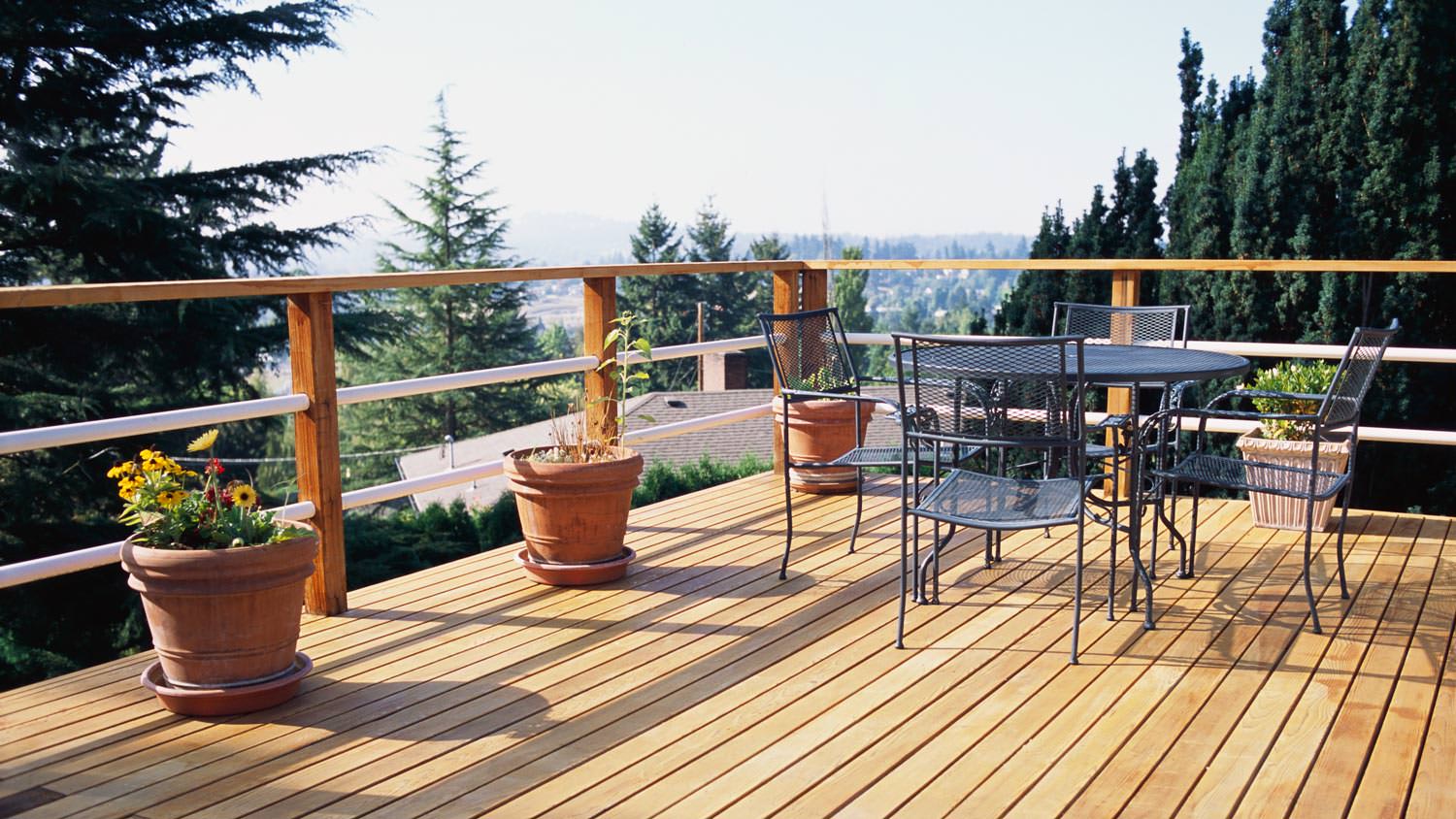
Deck problems can crop up when you least expect them. Luckily, you can fix many of the most common issues with decks on your own without expert assistance.
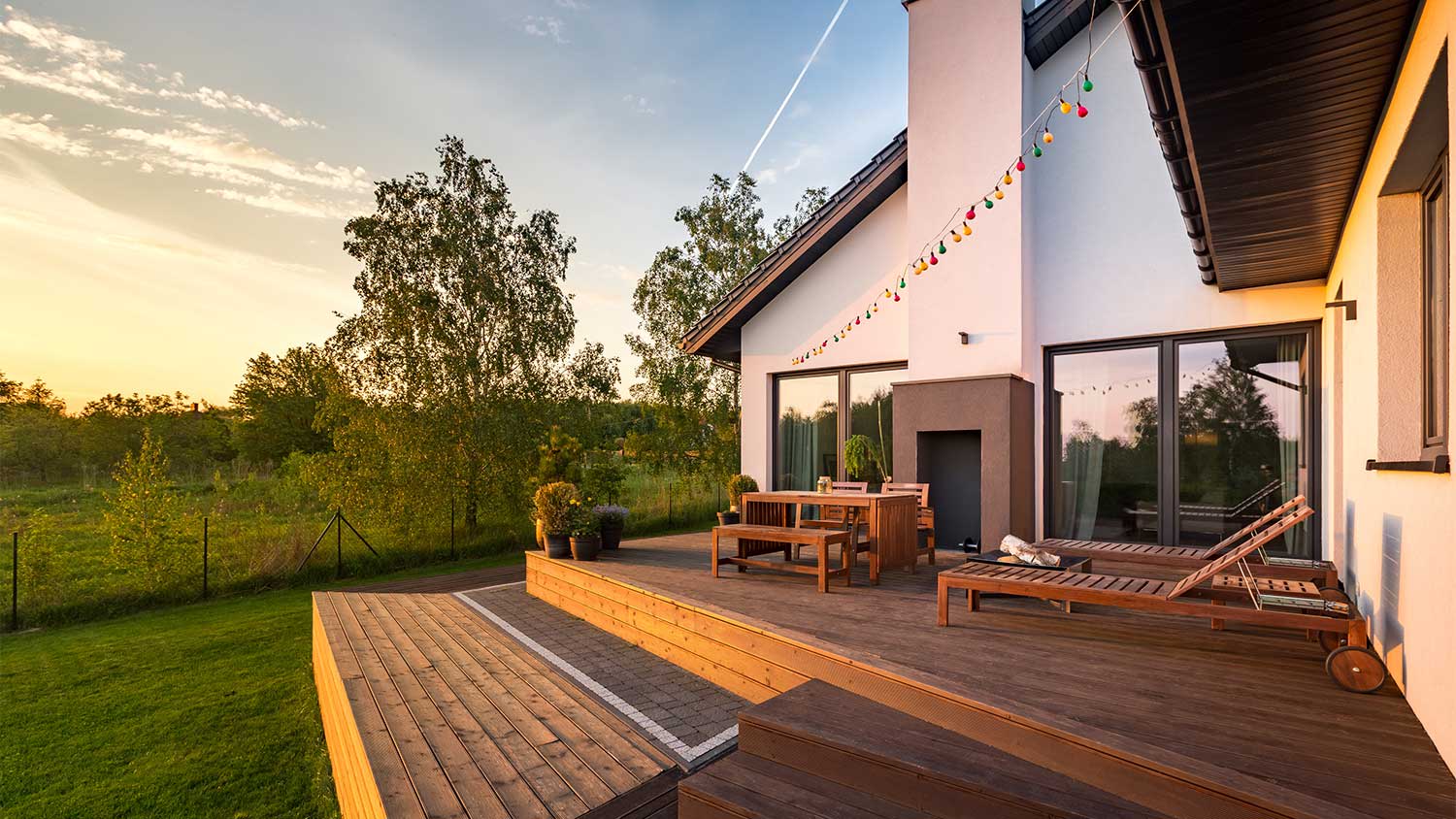
A sinking deck can be a major problem. Learn about the potential answers to the question, “Why is my deck sinking?” as well as their solutions.
A tired-looking deck doesn’t mean you have to replace the entire thing. Learn about these common PVC decking problems and how you can fix them.
Composite decking is a popular alternative to wood, but it has several downsides. Learn about the most common composite decking problems.
A worn-out pool deck is more than just unsightly. Learn the signs your pool deck needs to be resurfaced so you can address the issue ASAP.