

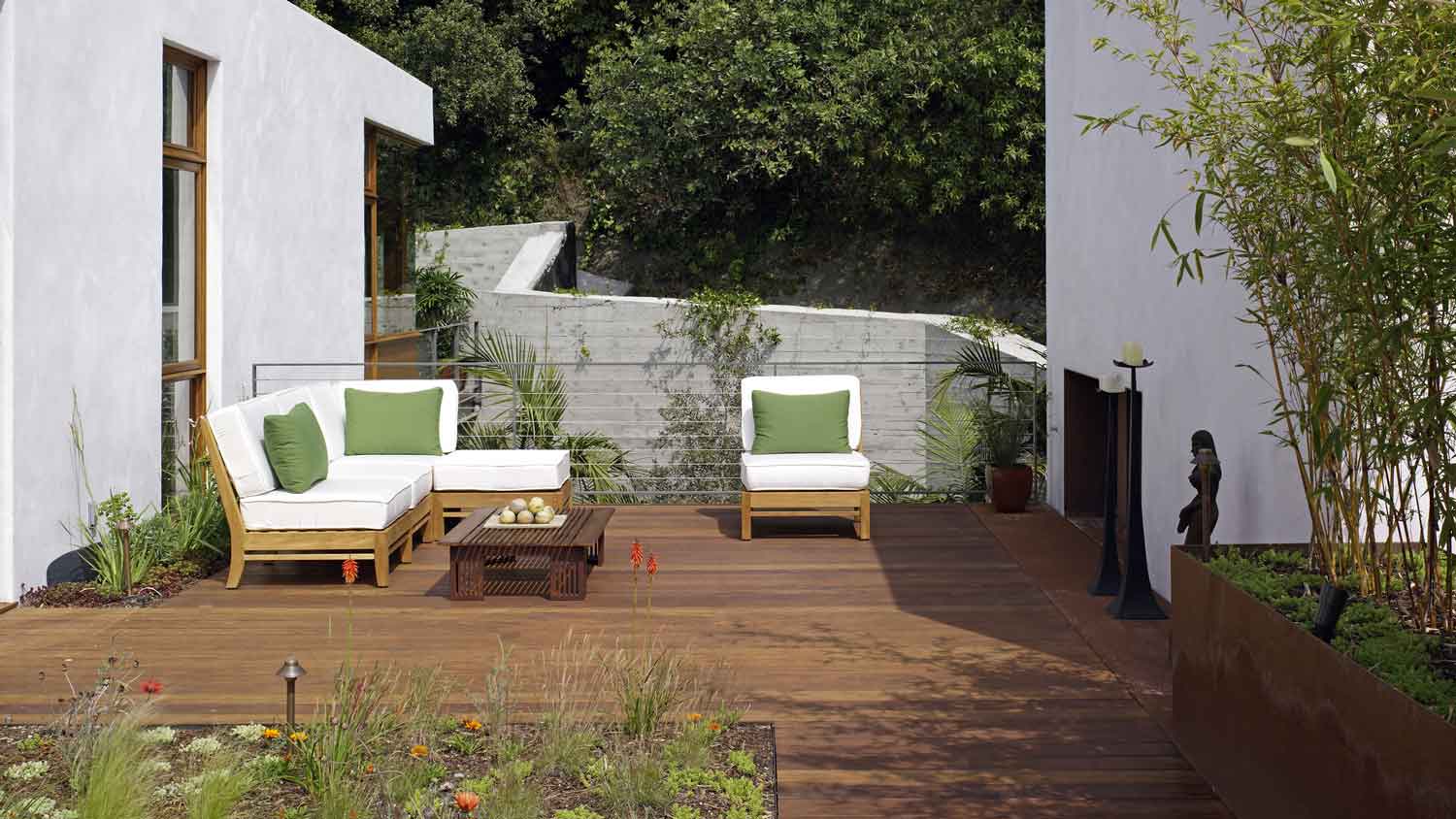
The cost to pressure wash a deck depends on its size, condition, material, and whether you DIY the job. Help set your budget with this cost guide.
Deck and porch service costs depend on your project and location. Check with a local pro for your specific job.

Pressure-treated deck installation ranges from $4,000 to $12,000 for your full project total, including materials and labor.
Your deck type, size, and layout drive costs, with ground-level builds simpler than multi-level or second-story designs.
You should budget for foundation prep at $150 to $300 per post, especially on uneven or soft soil.
Hiring a local deck building professional ensures your outdoor space meets code and adds lasting value to your home.
In 2026, the national average cost for a pressure-treated wood deck is $8,000. Most homeowners spend between $4,000 and $12,000, with deck size, layout complexity, and site conditions being the primary cost drivers. Budget $150 to $300 per post for foundation prep if your yard has uneven or soft soil.
What you pay for a pressure-treated wood deck depends on several key factors, including deck type, size, materials, labor, and site conditions. Understanding each factor helps you build a realistic budget before work begins. The sections below break down the most important cost drivers to review with your contractor.
The average pressure-treated deck costs $40 per square foot, with prices ranging from $15 to $75 per square foot depending on deck type, location, and the number of footings required. Larger decks often come with per-square-foot discounts from contractors, but your overall total will still increase as the deck size grows.
The table below breaks down the average cost of installing a pressure-treated wood deck based on size:
| Deck Size | Average Cost in 2026 | Cost Range in 2026 |
|---|---|---|
| 10 x 10 | $4,000 | $1,500–$7,500 |
| 12 x 12 | $5,800 | $2,200–$10,800 |
| 12 x 16 | $7,700 | $2,900–$14,400 |
| 12 x 20 | $9,600 | $3,600–$18,000 |
| 14 x 20 | $11,200 | $4,200–$21,000 |
| 16 x 20 | $12,800 | $4,800–$24,000 |
| 20 x 20 | $16,000 | $6,000–$30,000 |
| 20 x 24 | $19,200 | $7,200–$36,000 |
| 24 x 24 | $23,100 | $8,700–$43,200 |
Deck builders typically use ground-contact pressure-treated lumber for structural components (joists and footings) and reserve standard pressure-treated lumber for above-ground deck boards. While ground-contact lumber costs 30% to 50% more, it offers superior resistance to rot, moisture, and wood-destroying insects, making it a durable upgrade for surface boards as well.
Materials for a pressure-treated wood deck—including concrete for footings, hardware, brackets, and lumber—average $10 to $25 per square foot. This figure covers the full range of components needed across most deck builds. The remainder of your project total goes toward labor costs.
For a standard-size deck, labor runs $8 to $40 per square foot, or $4,000 to $5,600 overall. Labor accounts for between 50% and 70% of your total project cost, making it the single largest line item. Deck complexity, design, and your local cost of living can all push labor costs toward the higher end of that range.

Foundation preparation can add $25 to $300 per foundation post to your total, depending on your site conditions and deck type. This cost applies when you don't already have a usable foundation in place. If you're replacing existing decking with new pressure-treated wood, you may be able to reuse your current foundation and skip this expense entirely.
Where you install your deck has a major impact on what you'll pay. A second-story deck costs more than a first-story deck because it requires additional materials and structural reinforcement. If your yard limits access for machinery to transport materials or pour concrete footings, expect to pay more for manual labor as well.
Decks with footings are classified as permanent property improvements and typically require a permit, adding $50 to $250 to your total depending on your location. Some municipalities don't require permits at all, so the cost can vary significantly by region. Check with your contractor or local building department early in the planning process to confirm what's required before work begins.

The type of deck you build is one of the biggest factors in your total project cost. Simpler designs like ground-level decks are the most affordable, starting at $5,300, while attached and multi-story decks carry higher price tags due to added complexity—sometimes up to $26,300. Building a floating deck falls in the middle range ($7,000 to $21,000), offering a freestanding option without the structural demands of a raised or multi-level build.
The table below breaks down the average cost to install different types of pressure-treated wood decks measuring 350 square feet:
| Type of Deck | Average Cost in 2026 |
|---|---|
| Floating | $7,000–$21,000 |
| Ground-level | $5,300–$6,300 |
| Multi-level | $10,500–$26,300 |
| Second-story | $14,000–$17,500 |
A floating deck costs $20 to $60 per square foot, reflecting the added materials and footings required for a freestanding structure. Unlike attached decks, floating or freestanding decks stand independently and don't connect to your home. These builds are popular around pools and in larger yards where homeowners want a dedicated outdoor entertaining space. The need for additional framing and concrete footings is what pushes costs above a basic ground-level build.
A ground-level pressure-treated deck costs $15 to $25 per square foot, or $20 per square foot on average, making it the most affordable deck type. It attaches to the back of the house on one end and rests on footers on the other. Because these decks typically don't include a stairway or railings, installation costs stay relatively low.

Multi-level decks are the most complex and expensive option, averaging $30 to $75 per square foot. These builds require more design components than any other deck type, including steps, a stairway, and pillars or posts. That added complexity in both materials and labor is what places multi-level decks at the top of the price range.
A second-story deck, also called a raised deck, costs $40 to $50 per square foot to install. This deck type requires footings and uses larger posts—6-inch-by-6-inch or 8-inch-by-8-inch—for the structural support needed at height. Those added materials and engineering demands are what drive the higher cost per square foot compared to ground-level builds.
Beyond the upfront installation cost, a pressure-treated deck comes with ongoing expenses you should plan for. Maintenance, repairs, and potential increases to your insurance and property taxes are the most common recurring costs. Factoring these in early helps you budget accurately for the full lifetime of your deck.
Deck maintenance is essential to keeping your pressure-treated deck safe and structurally sound. You'll need to inspect the surface annually, clean it as needed, and seal it every one to two years—sealing a deck costs $0.75 to $4 per square foot professionally, or as little as $30 to $80 if you do it yourself. Removing leaves regularly and inspecting after extreme weather helps prevent rot and catch damage early.
The cost to repair a deck ranges from $800 to $3,200 on average, with your total depending on the extent and location of the damage. Replacing pressure-treated lumber runs $10 to $25 per square foot, which is the primary material cost driving repair estimates. Catching damage early through regular inspections can help you avoid the higher end of that range.
Adding a deck can increase your home's value, but it may also raise your homeowner's insurance premium and, for decks with footings, your property taxes. These are ongoing costs that don't show up in your installation estimate but can affect your annual budget. Contact your insurance provider and local department of taxation and finance before breaking ground to avoid unexpected charges.

A deck-building pro near you will charge around $4,000 in labor fees. However, this is a large project where the experience of a pro is absolutely worth the initial sticker shock.
DIYing this job would be an enormous project, which is why you should hire a pro. Some other reasons to leave this to a professional are:
A pro will know exactly which materials to use based on your wood type and its age.
It’s easy to cause damage, and an experienced pro will know how to avoid this.
In case there is damage down the road, the warranty of a pro and their insurance will come in handy.
The work of a pro tends to be more consistent and long-lasting.
Professional work avoids a splotchy final product.
Hiring a pro saves DIYers days or even weeks of difficult work.
We recommend you leave the work to a pro, but there are still some things you can do to assist with the project:
Thoroughly clean the deck, but do not pressure wash it.
Move all furniture away from the area.
If you have tree limbs or bushes against the deck, trim them back.
Make sure the deck has a solid foundation and is in good condition.
Several add-on services can enhance your pressure-treated deck and increase your property's value, each carrying its own cost to factor into your overall budget. Options range from functional upgrades such as stairs and lighting to comfort features such as fire pits and awnings. Reviewing these additions before finalizing your project scope helps you prioritize what fits your budget.
The table below breaks down some common add-ons for a pressure-treated wood deck installation project, along with their average costs:
| Add-On | Cost in 2026 |
|---|---|
| Deck stairs | $100–$200 per step |
| Landscaping lighting | $3,000–$6,000 |
| Fire pit | $200–$3,000 |
| Outdoor furniture | $200–$1,800 |
| Retractable awning | $1,500–$3,500 |
The cost of building a deck can quickly get out of hand and push you over budget. As such, finding ways to save on your total cost can help you keep some of that investment safe and sound in your wallet. Follow these tips to reduce the cost of your pressure-treated deck.
Build a smaller deck. Every additional ten square foot you install will bump up your total by an average of $4,000.
Choose materials wisely. You should always use ground-contact lumber for posts and any portion that may come in contact with the soil or vegetation, but you could save 30% to 50% on the cost of some materials by choosing aboveground deck boards and railings.
Pick a ground-level deck instead of a raised or multi-level deck. If your space allows for it, a ground-level deck can easily be half the cost of more complex deck types.
Compare local installation prices to find the best deal. Shop around and get at least three estimates to compare.
Pick an off-season time to build. Landscaping companies are busiest in the spring and summer. Consider installing your deck in the fall or winter to save.
Maintain your deck yourself. You can save in the long run by resealing your deck and carrying out minor repairs yourself rather than hiring a pro. Maintenance will also help your deck last longer.
Gather multiple quotes and compare their hourly rate and materials used (many pros mark up the materials required).
Plan the work to be done in stable weather conditions. This is important for the curing process.
Ask the pro what you can do to prep the wood, but don’t be surprised if they don’t want you taking any steps yourself. They need control over each step to deliver a consistent final product.
Home is the most important place on earth, which is why Angi has helped more than 150 million homeowners transform their houses into homes they adore. To help homeowners with their next project, Angi provides readers with the most accurate cost data and upholds strict editorial standards. We extensively research project costs to develop the pricing data you see, so you can make the best decisions for you and your home. We rely on reputable sources, including the U.S. Bureau of Labor Statistics, academic journals, market studies, and interviews with industry experts—all to ensure our prices reflect real-world projects.
Want to help us improve our cost data? Send us a recent project quote to [email protected]. Quotes and personal information will not be shared publicly.
One of my old tall evergreen trees was suddenly leaning toward the busy street in front of my house. I submitted a request for an emergency tree inspection, and Alejandro, owner of Cajete Tree Service, contacted me immediately and arrived to look at it just 20 minutes later. We agreed the...
 Cajete Tree Service LLC
Mitchell and the crew were top tier i am so happy with my new roof
 Home Genius Exteriors
1 tree was cut down and 5 others including a large willow tree were trimmed. The Grant Tree Service men were professional and cleaned up afterwards. The cost of the 6 trees were affordable. I am very happy with the results. I would hire them again.
 Grants Tree Service
Archie did a good job cleaning up the driveway before he laid down the sealer. It looks good. He was gracious and even helped me bring up my groceries. His rate was comparable to another company who came out to give me a quote and he talked to me personally rather than just text me a quote...
 Pro Seal Roofing & Paving
We have bought and sold numerous times over the past 50 years. Sherman Hall and Top Line are top notch. Thorough and detailed, he explains every possibility, probability, and eventuality. High class and pleasant. The best.
 Top Line Home Inspections, LLC
D1 Roofing delivers outstanding service from beginning to end, backed by a strong warranty and expert teams. I highly recommend them for their excellence in meeting and surpassing expectations with unmatched communication. Choosing D1 Roofing was flawless decision
 Division 1 Roofing LLC
Supreme Brick & Chimney did an excellent job restoring the brick and mortar joints on my home. Their team was professional, knowledgeable, and completed the work on time. I highly recommend them and will hire them again in the future! Thanks!
 Supreme brick & chimney
Window Depot did an amazing job on my deck. I wasnt sure what I wanted to do, but their composite decking was affordable and will last a long time. I am excited to have family over, and I am no longer embarrassed by my backyard. Jeff and the ground crew were polite, respectful, and caring for...
 Window Depot USA of Central Ohio
We were having 2”x 2” tile installed . There was a small installation error and the new additional replacement tile was from a different lot and the colors didn’t match. Joe assured us that he would rectify everything , which he did without hesitation. We decided to go with the 18” x 36” tile...
 CarifaTile
Maple Tree Service should serve as a mentor for other business! Customer service was superior and beyond expectation. Response to request was prompt. The representative was very courteous and proud of the company. Quote was given during initial visit and work date established. A follow up...
 Maplewood Tree Service
From average costs to expert advice, get all the answers you need to get your job done.
The cost to pressure wash a deck depends on its size, condition, material, and whether you DIY the job. Help set your budget with this cost guide.
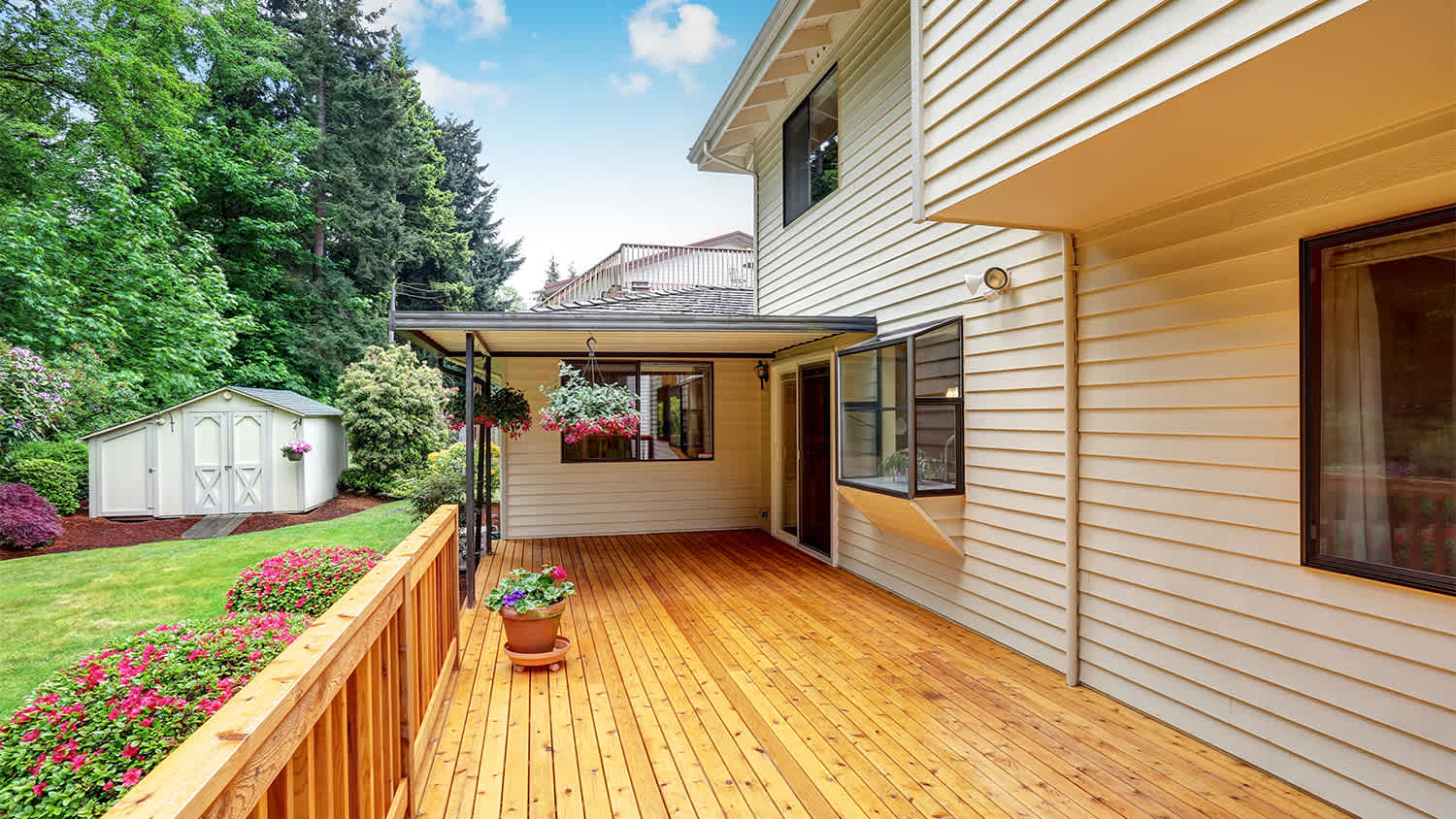
Deck replacement costs depend on materials, any structural damage you need to fix, and more. This guide explores how much it costs to replace or repair a deck.
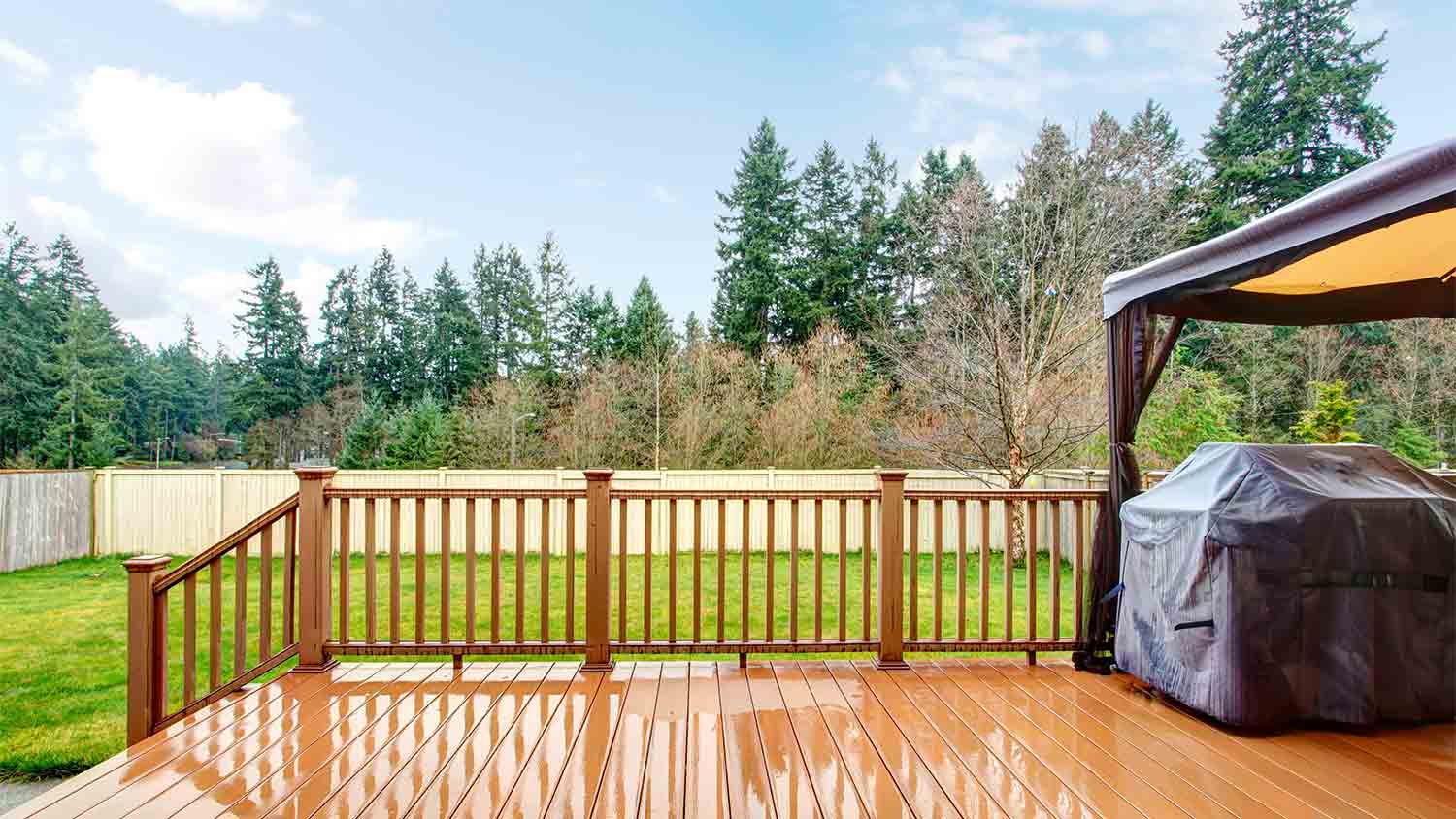
Sealing a deck is important for protecting it against the elements. Find out the cost to seal a deck, whether you DIY or hire a pro to do the job.
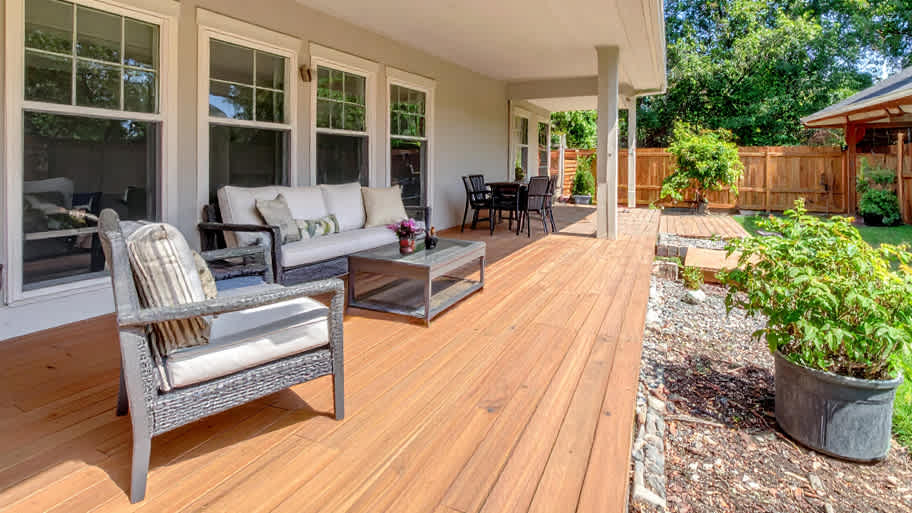
Homeowners are turning to pressure treatment to shield their wood from the elements and pesky insects. Discover how much longer you can make your wood last.
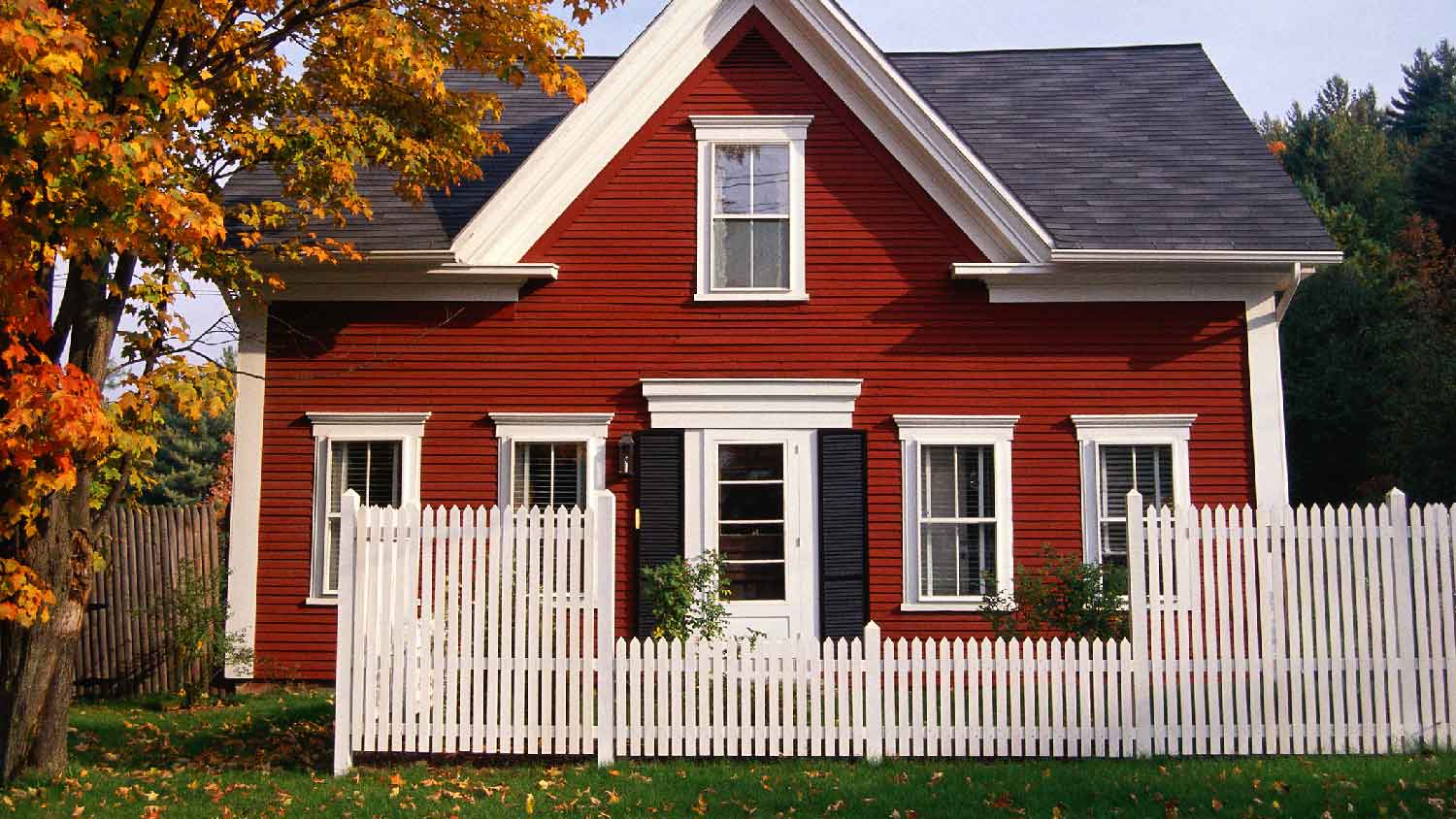
Can you paint pressure-treated wood? Learn why painting pressure-treated wood is a good way to extend the lifespan of the material.

This guide to how to pressure wash a deck covers all the essential steps for safely prepping and washing a deck.