

Top-rated septic tank pros.

Get matched with top septic tank pros in Node, WY

Enter your zip and get matched with up to 5 pros

Need a pro for your septic tank service project in Node, WY?

Select your specific project to find the pro for you.

Find Septic tank pros in Node

Avatar for Zell Heating & Cooling, LLC
Zell Heating & Cooling, LLC
4.6(
6
)
Septic System - Install or ReplaceSeptic System - Install or Replace - For BusinessSeptic System - Repair+3 more

Serving Node, WY and surrounding areas

In business since 1979

Free estimates

Emergency services offered

Zell, LLC is the premier professional company offering residential services to our clients in the Fort Laramie area. We are known to pay exquisite attention to detail while making your satisfaction our number one priority. Please call us today to schedule your appointment with Wyoming's true professionals at work for you!
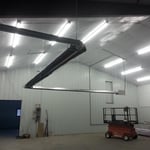
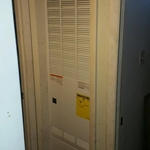
Shop Furnace
Mobile Home Furnace
Shop Heater
Commercial Refrigeration

+9

Recommended by100%of homeowners

Avatar for American Home Shield – Home Warranty
American Home Shield – Home Warranty
3.5(
5,688
)
Septic System - Install or ReplaceSeptic System - Install or Replace - For BusinessSeptic System - Repair+3 more

Serving Node, WY and surrounding areas

In business since 1971

Credit card accepted

"The technician emptied the freezer, which was in the basement, to work on the part that needed repair. Then he neglected to put anything back into the freezer, including a turkey I had bought for Christmas and a rack of ribs. Two days after he left, I went out of town for two weeks. The turkey actually exploded and spewed its liquid all over everything, which had to be discarded. I let AHS know and they couldn't even bother to call me or follow up on this. I'm considering not renewing my contract with them because of the quality (or lack thereof) of many of the providers they send."
Additional Photos
Additional Photos
Additional Photos
Additional Photos
Additional Photos

+2

Recommended by65%of homeowners
Septic Tanks questions, answered by experts

Common signs that your well pump is failing include fluctuating or consistently poor water pressure, sputtering water from faucets, or a complete loss of water. Other indicators are unusual noises coming from the pump, the pump running continuously, dirty or cloudy water, or a sudden, unexplained spike in your utility bills. While some issues, especially after a power outage, might be resolved by simply restarting the power or priming the pump, persistent problems suggest a more serious issue. If you notice any of these red flags, it is recommended to call a professional well pump service to inspect the system and determine whether it needs to be repaired or replaced.

A septic alarm can sound different depending on your system, but often, it’s a loud, repetitive beeping noise or a steady, high-pitched noise. It may also be a loud buzzing noise. To confirm the noise is your septic alarm, check your alarm box for a red light. You can also silence your alarm with a red button or switch on the box. Look for something that says “Test” or “Mute.”

Getting well water tested costs $100 to $350 if done by a pro. You can also buy DIY test kits for $20 to $100, but professional tests are more reliable. You can get a comprehensive well inspection, which includes advanced water testing, for $700 to $750, which you should do yearly anyway.

The pressure in a well pressure tank should be set 2 to 3 PSI below the pump's cut-on pressure. The cut-on pressure is the lower number in the pressure setting (e.g., the '30' in 30/50 PSI) and is the point at which the pump starts. The cut-out pressure is the higher number, where the pump stops.

For example:

  • If your pressure switch is set to 30/50 PSI, the tank pressure should be 27-28 PSI.

  • If your pressure switch is set to 40/60 PSI, the tank pressure should be 38 PSI.

Common pressure settings for household applications include 20/40, 30/50, and 40/60 PSI. The difference between the cut-on and cut-out pressure is typically 20 PSI.

Drain fields often include three to five trenches that are 18 to 24 inches deep. The pipes connecting the drain field to the septic tank will be placed between 12 and 18 inches deep, and the field as a whole will be about 100 feet long.

The Node, WY homeowners’ guide to septic tank services

From average costs to expert advice, get all the answers you need to get your job done.