






Top-rated energy efficiency auditors.

Best energy efficiency auditors near Pewaukee, WI

Enter your zip and get matched with up to 5 pros

Need a pro for your energy efficiency auditing project in Pewaukee, WI?

Select your specific project to find the pro for you.

TRUSTED BY PEWAUKEE, WI HOMEOWNERS

  • Average homeowner rating star icon4.4
    Average homeowner rating
  • Verified reviews icon25
    Verified energy efficiency auditing services reviews

Top-Rated Energy efficiency auditors in Pewaukee - Updated Nov 2026

Goodman Home Inspections, LLC
New to Angi
Energy Audit - For BusinessHome Energy Audit

Serving Pewaukee, WI and surrounding areas

Approved

My name is Darryl Goodman and I am retired from the military after 26 years of successful service. As a home inspector, I bring with me a strong foundation of professionalism, hard work, and a meticulous attention to detail. Leveraging extensive experience in both civilian and military construction, I possess a unique skill set that enhances my ability to assess and ensure the safety and integrity of residential properties.

Avatar for A-1 Milwaukee Heating And Cooling
A-1 Milwaukee Heating And Cooling
4.9(
34
)
Energy Audit - For BusinessHome Energy Audit

Serving Pewaukee, WI and surrounding areas

In business since 1997

Free estimates

Emergency services offered

"Our furnace stopped working, bad news. Mike was here quickly, and fixed the unit we have so we again would have heat! He explained what problems we were having and what we can do in the future to limit additional problems. Very knowledgeable, professional and personable! Our hero for the week!"
Mlk
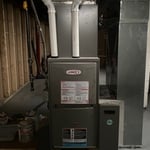
New Installation
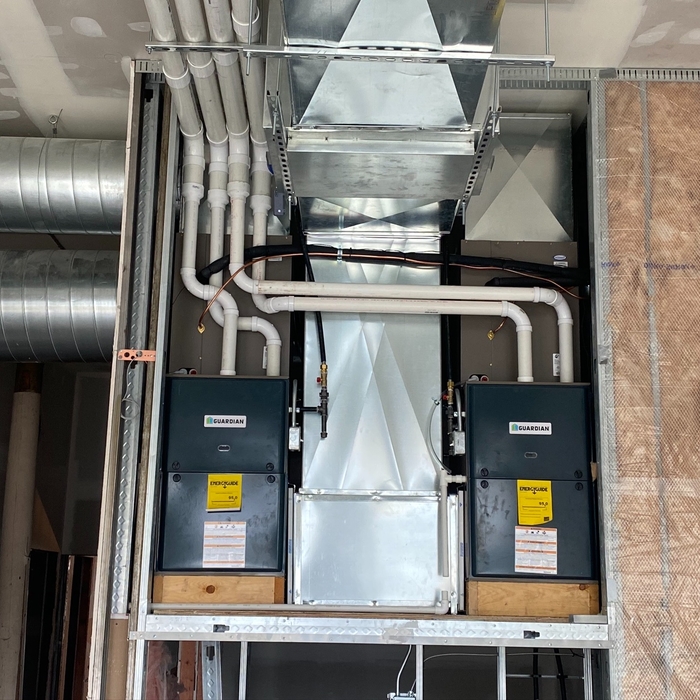
Twin Installation
New Installation
Twin System

+40

Recommended by100%of homeowners
Avatar for Green Homeowners United, LLC
Green Homeowners United, LLC
5.0(
3
)
Home Energy Audit

Serving Pewaukee, WI and surrounding areas

In business since 2020

Free estimates

Credit card accepted

"Tyler, the representative who inspected my home, was extremely professional and friendly. His communication was excellent, and he made very clear and sensible recommendations to improve my home's energy efficiency."
1
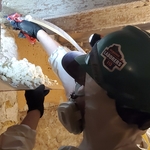
Spray foam
2
3
3

+1

Response time9 hrs
Recommended by100%of homeowners
Energy Efficiency Auditing FAQs, answered by experts

Homeowners can often access federal tax credits, such as the Investment Tax Credit (ITC), which covers a percentage of installation costs. Many states and utilities offer additional rebates, grants, or performance-based incentives. These programs can significantly lower your upfront investment. Check the Database of State Incentives for Renewables and Efficiency (DSIRE) or contact your local energy office for current offers.

Blower door tests are measured in a few different ways, but the most popular are air changes per hour (ACH) and cubic feet of air (CFM) moving through the house per hour. A good ACH score is less than 2ACH, but 1ACH is better. This means the house experiences a total air change within 60 minutes (for 1ACH). For 2ACH, there’s a complete change every 30 minutes, and so on. CFM scores are similar in that a lower score means less air change, and therefore less leakage.

An average, 400-square-foot electric heated driveways consume approximately $3 per hour in terms of electricity. The price may slightly fluctuate depending on your local energy cost. A simple formula to calculate your heated driveway’s total wattage consumption is by multiplying the square footage by 50 watts and then dividing it by 1,000 to get the kilowatt number. Multiply that with your local energy cost per hour and there you have the hourly operating cost.

Motion-sensor lights use one watt while on standby and five watts while turned on. They’re usually on for one hour over a 24-hour period, bringing the total wattage to about 28 watts per day. LED lights use around 6.5 to 8 watts while on. If you leave an LED light on all night, with night ranging from 10 to 14 hours, you’re looking at using 65 to 112 watts a night. You can minimally cut your wattage in half by switching to a motion-sensor light.

A small sump pump running infrequently uses an average of 10 kilowatt-hours (kWh) of electricity per month. The average cost for electricity is $0.171 per kWh. The size and use frequency affect how much electricity it uses. Sump pumps average one-third to one horsepower (hp) motors. One hp is equal to 745.7 watts. Watts multiplied by the time your pump is running divided by 1,000 equals your average kWh. Multiply kWh by your average cost of electricity. In areas with high rain or a marsh basin, the average cost can be as high as $15-$25 a month.

The Pewaukee, WI homeowners’ guide to energy efficiency auditing services

From average costs to expert advice, get all the answers you need to get your job done.