




Top-rated plaster repair specialists.

Best plaster repair specialists near Onalaska, WA

Enter your zip and get matched with up to 5 pros

Need a pro for your plaster repair project in Onalaska, WA?

Select your specific project to find the pro for you.

TRUSTED BY ONALASKA, WA HOMEOWNERS

  • Average homeowner rating star icon4.6
    Average homeowner rating
  • Verified reviews icon10
    Verified plaster repairs reviews

Top-Rated Plaster repair specialists in Onalaska - Updated Nov 2026

Avatar for JBC Group Solutions Inc
JBC Group Solutions Inc
4.0(
4
)
Plaster - InstallPlaster - Install - For BusinessPlaster - Repair+1 more

Serving Onalaska, WA and surrounding areas

In business since 2007

Emergency services offered

"They did a real good job. They were real professional. We can now open the garage door from the inside of the house and now it is so smooth that we have to check to see if we hit the button to open it or close it.  Before we used to know when it was opening or closing because it used to make a noise. It helps when you move to a city where you are new. "
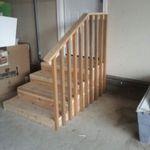
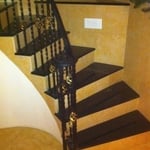
Custom Staircases
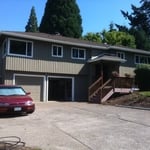
Custom Exterior Restoration
Custom Bathrooms
Recommended by75%of homeowners
Avatar for Yet&Tarr LLC
Yet&Tarr LLC
New to Angi
Plaster - InstallPlaster - Repair

Serving Onalaska, WA and surrounding areas

My goal is to provide accurate, clear, and useful responses while being transparent about uncertainty. If I don't know something or can't verify it, I'll say so rather than guess. I been in business for over two decades.

Pacific Northwest drywall
New to Angi
Plaster - InstallPlaster - Install - For BusinessPlaster - Repair+1 more

Serving Onalaska, WA and surrounding areas

Pacific Northwest Drywall is a trusted name in the industry, backed by over 30 years of hands-on experience. We specialize in delivering high-quality drywall installation, finishing, and repair services for residential and commercial projects. Our team is committed to precision craftsmanship, reliability, and exceeding client expectations on every job. At Pacific Northwest Drywall, we take pride in building strong foundations—one wall at a time.

Avatar for J.S. Chappell LLC
J.S. Chappell LLC
New to Angi
Plaster - Repair - For Business

Serving Onalaska, WA and surrounding areas

In business since 2022

Free estimates

Emergency services offered

We offer a full service one stop shop… From Dust to drapes we cover everything in between. We are leaders in Residential New Construction and Home Renovations, New Development, Decks, Sheds, Shops, Additions. Our services also include our Commercial Remodeling side, no job too big or to small we’re here to be a pillar in our community and grow in the right direction. \n \nWe take great pride in our experience, expertise, quality, and customer service that we provide to meet the consumers needs. It is our mission to provide excellent workmanship and complete customer satisfaction from start to completion of a project. In order to understand the needs and expectations of our customers, we take great care to work and communicate with every customer in a professional manner. Our reputation is based on service, safety, and quality, regardless of how large or small the job.

Jesse Chappell
First Coat
New Look
Sand
Remodel

+29

Response time2 days
Response rate86%
Showing 1-10 of 15
Plaster Repair FAQs, answered by experts

Yes, you can apply new plaster over an existing plaster surface, such as a wall or ceiling, provided the old plaster is in good condition. Before you begin, check the stability of the existing plaster. The surface must be clean, free of loose material, and have no peeling paint. It is also recommended to roughen the surface slightly to promote adhesion. For older plaster, applying a base coat like a PVA emulsion or a specific bonding agent or primer is crucial. This step makes the existing plaster less porous and ensures the new and old layers adhere properly for a smooth, long-lasting finish.

It’s not a good idea to plaster over broken plaster (unless by broken you’re referring to cracked, in which case that’s perfectly fine). However, broken plaster can be a sign of a larger underlying issue like foundation damage or severe damage to the lath holding up the plaster, so it’s worth investigating before you simply plaster on top of the damage.

If your home was built before the 1940s and was not remodeled in the past 50 or so years, you probably have plaster walls. Aside from assuming, there are some practical ways to tell if you have plaster walls, including the following: If you knock on the wall and it feels solid, not hollow, if you can’t insert a thumbtack easily, if there are cracks that look like spiderwebs, or if your home has curved, arched, or swirled walls, doorways, or window openings.

If you have an unfinished basement or attic, you could examine the backs of any finished walls to check, too.

All plaster walls will crack over time due to normal house settling and expansion and contraction from temperature and moisture changes. Small, thin hairline cracks are generally not serious and are mostly a cosmetic issue. However, larger or more significant cracks can indicate structural problems.

Here's how to tell the difference:

  • Cosmetic Cracks: Cracks that are 0.5 cm (0.2 inches) or thinner are typically cosmetic.

  • Structural Cracks: Cracks wider than 0.5 cm, excessive or deep cracks, multiple cracks in the same area, or cracks that span around corners can signify a structural or foundation issue. Cracks along the joints where walls meet the ceiling also warrant attention.

For cracks wider than 0.5 cm, structural repair is needed. If a crack is 2.5 cm (1 inch) or wider, or if you notice any signs of a structural problem, it is best to contact a plaster repair professional to assess the damage.

Although they have similar applications, spackle and joint compound are not the same. Their primary differences lie in their composition, consistency, and ideal use cases.

Spackle is composed of gypsum and binding agents, making it thicker than joint compound. It dries quickly and is easy to sand, which makes it ideal for small wall repair projects like filling nail holes or patching minor damage.

Joint compound, also known as drywall mud, consists of limestone and gypsum. It is primarily used for large-scale projects, such as taping and finishing the seams on newly installed drywall. It tends to shrink more than spackle and can be more difficult to spread.

While both products can be used to fill small depressions and cracks, spackle cannot replace joint compound for taping and mudding new drywall. Conversely, you can often use joint compound for small patching jobs typically done with spackle.

The Onalaska, WA homeowners’ guide to plaster repairs

From average costs to expert advice, get all the answers you need to get your job done.