




Top-rated excavation pros.

Get matched with top excavation pros in Colfax, WA

Enter your zip and get matched with up to 5 pros

Need a pro for your excavation project in Colfax, WA?

Select your specific project to find the pro for you.

Find Excavation pros in Colfax

Avatar for DALTON IRONWORKS LLC
DALTON IRONWORKS LLC
5.0(
12
)
Landscape - Minor Grading or Resloping

Serving Colfax, WA and surrounding areas

Approved

In business since 2014

Credit card accepted

Offers commercial services

"Dalton worked diligently tp design unique and beautiful steel railings for my front steps and did so within my tight budget. I would use them again for any steel project."
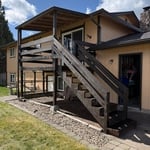
south stairway
North stairway
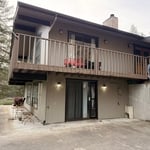
Glamour shot buttoning up the balcony
finished product street view
dent repaired

+14

Response time2 days
Response rate86%
5 neighbors recently requested a quote
Avatar for Blue ridge construction
Blue ridge construction
New to Angi
Excavation - Major Grading or ReslopingExcavation - Major Grading or Resloping - For Business

Serving Colfax, WA and surrounding areas

Approved

Free estimates

Emergency services offered

Warranties offered

with over 30 years experience installing commercial and residential sprinkler systems, fencing, retaining walls and excavation. We know what it takes to make a top quality product that lasts for decades and that's why we only use professional grade products and materials and we never cut corners.. So if you want quality and expertise please give us a try.

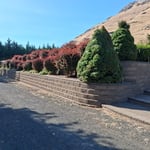
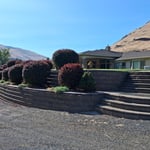
Retaining walls
Retaining walls
Retaining walls
Retaining walls
Small retaining wall

+7

Avatar for Gelderman Excavation, LLC
Gelderman Excavation, LLC
5.0(
1
)
Building Site - Preparation and ClearingExcavation - Major Grading or ReslopingLandscape - Minor Grading or Resloping

Serving Colfax, WA and surrounding areas

In business since 2022

Free estimates

Credit card accepted

Gelderman Excavation is committed to excellence in every aspect of our business. We uphold a standard of integrity bound by fairness, honesty, and personal responsibility. Our distinction is the quality of service we bring to our customers. Accurate knowledge of our trade combined with ability is what makes us true professionals. Above all, we are watchful of our customers' interests, and make their concerns the basis of our business.

Various Projects
Various Projects
Various Projects
Various Projects
Various Projects

+1

Response time1 day
Response rate89%
Recommended by100%of homeowners
Showing 1-10 of 20
Excavating questions, answered by experts

The best way to protect tree roots is to avoid the roots entirely by excavating outside the root radius of the tree. For nearby projects, it’s a good idea to construct a temporary retaining wall. But that’s not always possible, depending on the project and the root system. In these cases, consider using alternative equipment like an auger to tunnel under the ground.

Remember, tree roots can damage nearby cement foundations as they grow. If a tree is close enough to interfere with large excavations, it may be better to remove the tree than risk future problems.

Septic drain lines (or leach lines) are typically buried between 18 and 36 inches underground, and should be at least 6 inches below the surface. These pipes are perforated and surrounded by filtering materials like sand or gravel. Burying the lines at this depth helps minimize odors and allows bacteria and other biological processes in the soil to effectively treat the wastewater. Burying lines too close to the surface can cause issues unless the soil is very compact and stable.

To determine whether your homeowners' insurance will cover crawl space repair, consider the cause of the issue. Repair may be covered if the problems were caused by an event that the insurance covers, such as vandalism or a windstorm. However, companies won't cover the repair if the issues are caused by neglect or wear and tear.

The digging depth will depend on the size of the trencher you use. Even smaller units can dig up to 4 feet deep, which is plenty for a DIY job. However, much larger trenchers can reach a depth of 18 feet and are better used by a team of pro contractors, not a single DIYer. As with all home improvement projects, use the right tool for the job and proceed with caution.

A trench that is less than 5 feet deep often doesn't require a protective system. Most residential trenches will not go this deep (the typical residential drainage trench is just 18 inches deep). In the event that an excavator needs to dig more than 5 feet beneath the surface, a protective system is required unless the excavation is in entirely stable rock.

The Colfax, WA homeowners’ guide to excavation services

From average costs to expert advice, get all the answers you need to get your job done.