




Top-rated excavation pros.

Get matched with top excavation pros in Palouse, WA

Enter your zip and get matched with up to 5 pros

Need a pro for your excavation project in Palouse, WA?

Select your specific project to find the pro for you.

Find Excavation pros in Palouse

Avatar for Blue ridge construction
Blue ridge construction
New to Angi
Excavation - Major Grading or ReslopingExcavation - Major Grading or Resloping - For Business

Serving Palouse, WA and surrounding areas

Approved

Free estimates

Emergency services offered

Warranties offered

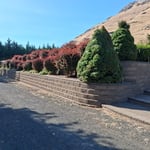
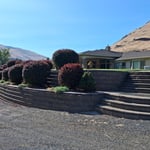
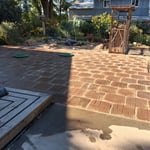
with over 30 years experience installing commercial and residential sprinkler systems, fencing, retaining walls and excavation. We know what it takes to make a top quality product that lasts for decades and that's why we only use professional grade products and materials and we never cut corners.. So if you want quality and expertise please give us a try.

Retaining walls
Retaining walls
Retaining walls
Retaining walls
Small retaining wall

+7

Avatar for Gelderman Excavation, LLC
Gelderman Excavation, LLC
5.0(
1
)
Building Site - Preparation and ClearingExcavation - Major Grading or ReslopingLandscape - Minor Grading or Resloping

Serving Palouse, WA and surrounding areas

In business since 2022

Free estimates

Credit card accepted

Gelderman Excavation is committed to excellence in every aspect of our business. We uphold a standard of integrity bound by fairness, honesty, and personal responsibility. Our distinction is the quality of service we bring to our customers. Accurate knowledge of our trade combined with ability is what makes us true professionals. Above all, we are watchful of our customers' interests, and make their concerns the basis of our business.

Various Projects
Various Projects
Various Projects
Various Projects
Various Projects

+1

Response time1 day
Response rate89%
Recommended by100%of homeowners
REVIVAL EXCAVATION, LLC
New to Angi
Excavation - Major Grading or ReslopingExcavation - Major Grading or Resloping - For BusinessLandscape - Minor Grading or Resloping

Serving Palouse, WA and surrounding areas

In business since 2020

Free estimates

Credit card accepted

Here at Revival Excavation we are a fully licensed and insured excavation company working with residential and commercial properties. No job is too large or small for us and we pride ourselves on our professionalism and skillset.

Showing 1-10 of 16
Excavating questions, answered by experts

Trenching and boring are two distinct methods for installing underground utilities. Trenching involves digging a channel using equipment like an excavator, trencher, backhoe, or shovel. While it is a simpler process, it causes significant disruption to the surface, landscaping, and surrounding ecosystems.

Boring, also known as directional boring, is a less invasive alternative that uses a drill to create a tunnel for utility lines without disturbing the surface. This method is more precise and is ideal for installations that need to go underneath buildings, roads, or bodies of water. Although boring is less disruptive, it is generally more expensive than trenching.

Yes, you can technically make a crawl space liveable, but the only way to do so is by converting it into a basement. While some crawl spaces are big enough to walk through and store large items, they lack appropriate insulation and space to be liveable.

Prior to excavation, you should prepare the dig site and call 311 before you sign anything.

To get your site ready for excavation, you should move anything in the area that isn’t affixed to the land. You can save money on the excavation by removing hardscaping, including walkways, decks, concrete patios, and paver patios.

Before you carry out any digging, you should call 311 to confirm that there are no utility lines running through your excavation site. Skipping this step could lead to severe injury and property damage if your excavator hits a water, sewage, or gas line.

There are many ways to cut through roots when digging, especially if your trencher doesn’t seem to be removing the roots. First, use a shovel to expose the roots. Then, use gardening shears to clear out smaller roots or a reciprocating saw to remove larger plant roots. If you plan on keeping the plant, avoid cutting any roots over 2 inches thick.

Most residential basements are 8 to 10 feet deep. You can dig deeper depending on building codes, but it does become more difficult. You’ll likely need to install stronger foundation walls and additional supports to handle the increased load. Depending on the water table, you may also need a water management system. Clay soil can support a deeper foundation than sandy soil. A structural engineer will be able to tell you the maximum, feasible depth.

The Palouse, WA homeowners’ guide to excavation services

From average costs to expert advice, get all the answers you need to get your job done.