




Top-rated electricians.

Get matched with top electricians in Waterbury, VT

Enter your zip and get matched with up to 5 pros

Need a pro for your electrical service project in Waterbury, VT?

Select your specific project to find the pro for you.

TRUSTED BY WATERBURY, VT HOMEOWNERS

  • Average homeowner rating star icon4.8
    Average homeowner rating
  • Verified reviews icon72
    Verified electrical services reviews

Find Electricians in Waterbury

Avatar for Michael J. Electric
Michael J. Electric
4.3(
42
)
Electrical Wiring or Panel UpgradeElectrical Wiring or Panel Upgrade - For Business

Serving Waterbury, VT and surrounding areas

Approved

In business since 2004

Free estimates

Emergency services offered

"They were prompt and professional from start to finish. Mike offered us suggestions that made a lot more sense then the prior two electricians that had worked on the same problem. Because of Mike we were able to eliminate the power pole in the middle of our back yard. It looks to wide open now. We can't thank him enough for everything he did for us."
Response time7 hrs
Response rate92%
Recommended by83%of homeowners

Woodbury Electric - Home Facebook
5.0(
3
)
Electrical Wiring or Panel UpgradeElectrical Wiring or Panel Upgrade - For BusinessElectrical for Addition or Remodel - Install - For Business+1 more

Serving Waterbury, VT and surrounding areas

In business since 2018

Free estimates

Woodbury Electric, is a local, owner operated electrical service. We have over 13 years experience in all aspects of electrical work. I take pride in making customer satisfaction my #1 priority, so call for a free estimate today!

Response time5 hrs
Response rate96%
Recommended by100%of homeowners
Showing 1-10 of 43
Electrical questions, answered by experts

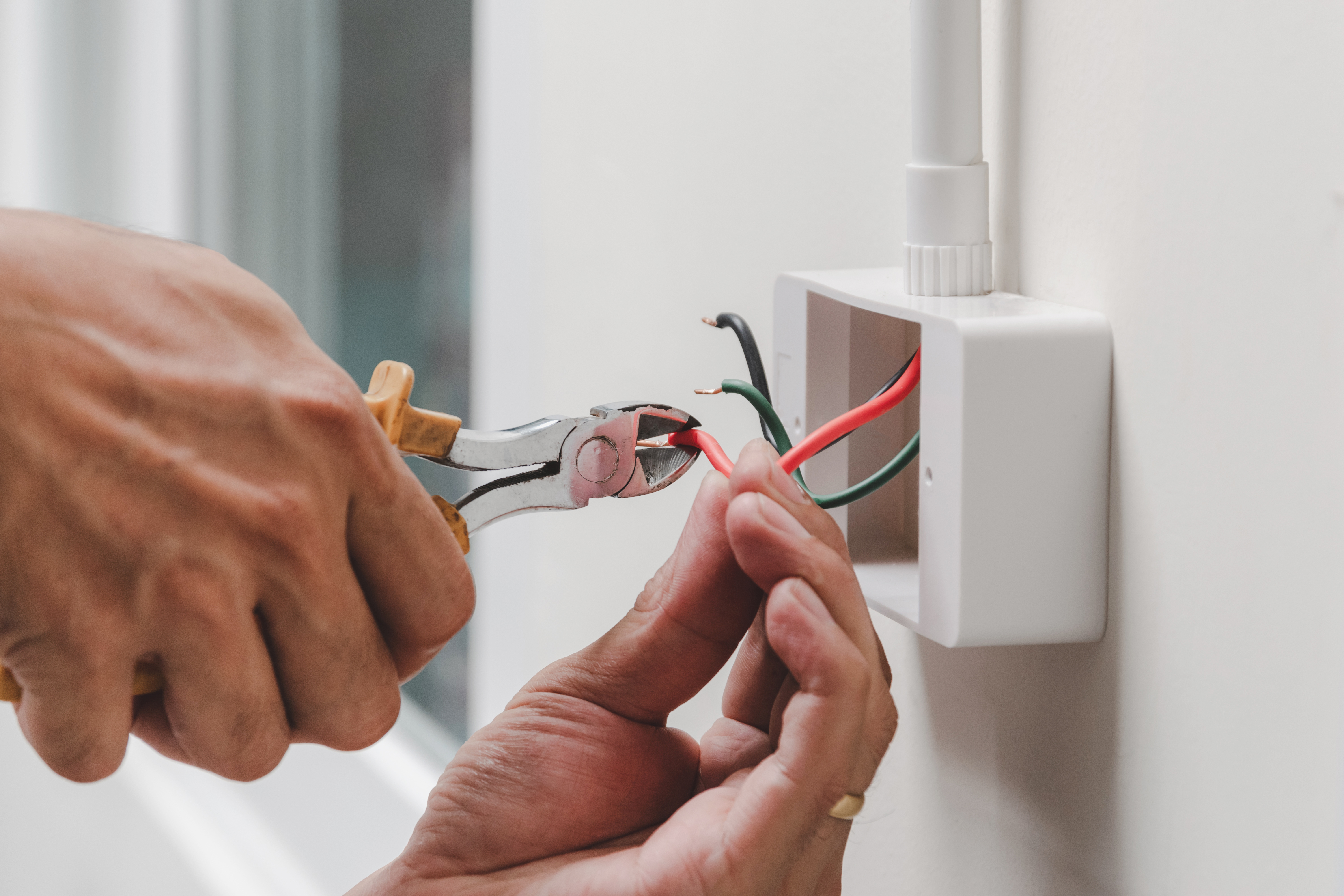
Using a wire stripper/cutter, strip about 1/2 inch to 1 inch of sheathing from electric wires, depending on the application. A self-adjusting wire stripper/cutter works best, but a standard wire stripper/cutter with holes for different gauges of wire works as well to cut and strip away the sheath without damaging the copper wire inside.

In the case of electrical overflow, an ungrounded outlet should trip the circuit breaker, staving off dangerous scenarios. However, this is not always the case, especially if the wires and circuit breaker are worn down or damaged in some way. Ungrounded wires melt over time as they are introduced to more and more electricity. In other words, a circuit breaker offers protection in most instances but not always, and that’s where the danger lies with ungrounded outlets.

For most applications, you won’t need a neutral for 240V. There are certain codes and regulations that differ between areas so just because you technically may not need one in order for the device to function properly, it may still be a local requirement. Professionals in your area know the requirements, which is just another reason to hire one instead of taking on a project that is frankly not very DIY-friendly.

The color of your cable will help you to identify its function. In the U.S., the National Electrical Code (NEC) designates the color code for electrical cables. “Hot” cables are black, red, and blue. In cases of higher voltage lines, orange might also be used to indicate a hot cable. White or gray indicates a neutral, and green or green with a yellow stripe indicates a ground.

No, wiring does not need to be redone to get a dimmer switch, as they work with single-pole and three-way switches. Just ensure you choose a dimmer that is compatible with your wiring, fixture, and lightbulbs. Most homes built after 1985 have neutral wiring and work with almost all dimmers. If your home was built before 1985 and you don’t have an updated electrical system, you may have to use a non-neutral wiring dimmer.

The Waterbury, VT homeowners’ guide to electrical services

From average costs to expert advice, get all the answers you need to get your job done.