






Top-rated electricians.

Get matched with top electricians in Victoria, VA

Enter your zip and get matched with up to 5 pros

Need a pro for your electrical service project in Victoria, VA?

Select your specific project to find the pro for you.

TRUSTED BY VICTORIA, VA HOMEOWNERS

  • Average homeowner rating star icon4.8
    Average homeowner rating
  • Verified reviews icon36
    Verified electrical services reviews

Find Electricians in Victoria

Soto Remolding
5.0(
1
)
Appliance (Major Electric Appliance) - Install or Replace

Serving Victoria, VA and surrounding areas

Approved

Professional & confident:\nReliable, skilled handyman with a strong eye for detail and pride in quality work. Experienced in repairs, installations, maintenance, painting, drywall, light carpentry, and home improvement projects. Known for being dependable, honest, punctual, and treating every home with care. My goal is simple: deliver excellent workmanship and leave every customer satisfied.

...
Showing 1-10 of 68
Electrical questions, answered by experts

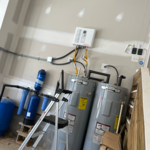
Most standard residential water heaters, which are typically around 40 gallons and use 240 volts and between 3,500 and 5,500 watts, require a 30-amp, two-pole circuit breaker. For smaller, point-of-use water heaters using 120 volts and between 1,500 and 3,000 watts, a 30-amp breaker is also often adequate. However, some models may have different needs; units that use more watts than average may require a 40-amp breaker, while smaller units might only need a 20-amp breaker. Newer, tankless, or more energy-efficient models can also require a higher amperage. Having the correct breaker size is crucial for safe and efficient operation, so it's best to consult a licensed electrician to determine the specific needs of your water heater.

At a minimum, you need an electrician to inspect the house wiring after a fire. The electrician will need to replace damaged or melted wires. If the electrical wiring is old, about 25 years or more, you should rewire the house after a fire. Old wiring can increase the risk of another fire, so replacing the wires is the safest option.

The most common gauge for indoor outlets around your home is 12- and 14-gauge wires. But if you’re working with larger appliances like ovens, washing machines, or dryers (all of which require more amplitude), you might find 10-, eight-, or six-gauge wires to help support those hefty appliances.

No, there aren’t additional code requirements for kitchen lights. Kitchen lights and other electrical circuits in the kitchen have different code requirements. Outlets need to be particularly robust because of their frequency of use and proximity to liquids. If you need help determining where to install outlets in your kitchen, consult a local electrician who can ensure that placement is functional and up to code.

In the majority of cases, you can replace an outlet with a USB outlet. USB charging receptacles install in the same spot as standard outlets and any electrician worth their salt is more than familiar with the replacement process. Additionally, it’s possible to replace yourself, but only if you have prior experience with your home’s electrical system, as it requires handling of wires.

The Victoria, VA homeowners’ guide to electrical services

From average costs to expert advice, get all the answers you need to get your job done.