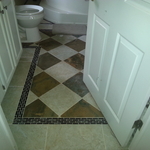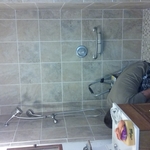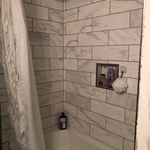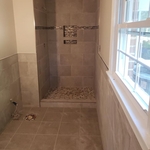





Top-rated ceramic tile pros.

Get matched with top ceramic tile pros in Glade Hill, VA

Enter your zip and get matched with up to 5 pros

Need a pro for your ceramic tile service project in Glade Hill, VA?

Select your specific project to find the pro for you.

TRUSTED BY GLADE HILL, VA HOMEOWNERS

  • Average homeowner rating star icon4.7
    Average homeowner rating
  • Verified reviews icon29
    Verified ceramic tile services reviews

Find Ceramic tile pros in Glade Hill

Mudd Master Drywall & Paint
3.8(
13
)
Tile: Ceramic and Porcelain - InstallTile: Ceramic and Porcelain - Install - For BusinessTile: Ceramic and Porcelain - Repair+1 more

Serving Glade Hill, VA and surrounding areas

In business since 2003

Free estimates

"After some initial discussion as to the scope of the work, Mud Masters hung and finished an area of about 200 sq.ft.  The room had a cathedral ceiling and and walls up to 16 ft high.  The work was done in a timely and professional manner. They returned at least twice to insure that the walls were finished correctly.  The job was more difficult than normal due to some of the walls having framing issues.  They took the time to assure that the finish work was done to our satisfaction.  They cleaned up every day after the work was finished.  We would definitely use them again.
"
Recommended by80%of homeowners
...
Showing 1-10 of 53
Ceramic Tile questions, answered by experts

Porcelain is a relatively affordable, mid-range countertop material. It typically costs between $50 to $70 per square foot.

Compared to quartz, porcelain is slightly more affordable, as quartz generally ranges from $50 to $200 per square foot. However, lower-quality, builder's grade quartz can be similar in price to porcelain.

Compared to granite, the price can be similar, depending on the quality of the stone. While granite slabs can range from $50 to $200 per square foot, you can find lower-end granite in the same price range as porcelain. High-end granites will cost significantly more.

Porcelain is generally more expensive than laminate, acrylic, and ceramic, but less expensive than high-end slate, concrete, and marble. A key benefit is that porcelain does not require sealing, which reduces long-term maintenance costs.

Installing kitchen countertop tiles on a mold and moisture-resistant cement backer board is one of the best options. When fitted correctly on top of a plywood base, it’s stable and long-lasting. Old-fashioned cement board is economical, cuts neatly and easily with a circular or jigsaw, and screws into plywood without any difficulty.

When choosing between porcelain and ceramic tile, the best option depends on your specific needs, budget, and project application. Porcelain tile is generally more durable, denser, and harder than ceramic, making it a good choice for busy, high-traffic areas. It also offers superior moisture resistance, making it ideal for moisture-retaining spaces. However, porcelain is typically more expensive, and its hardness can make it brittle, potentially causing it to crack if a heavy object is dropped on it. In contrast, ceramic tile is a more budget-friendly option with lower material and installation costs. It is softer and easier to work with, making it a great choice for DIY projects. While not as durable as porcelain, ceramic is still a quality material suitable for many home applications, particularly small, decorative projects.

If the hearth ends against a wall, you can use a tile cutter as you normally would. However, if the edge of your hearth ends with no surface pressing against it,you may want to look into rounded tiles. These give a smooth edge to your hearth and make sure cut edges aren’t visible. You can also see if the tile you have has pieces that have been glazed or rounded on one edge. You’d then cut the tile and place it normally, with the cut edge facing inward. 

The easiest tile size to install is large tiles, and they’re easier to install than small tiles—the job is faster and simpler when there’s less placing, adhering, and grouting to do. However, when tiles get really big, they’re more difficult to handle, cut, and fit. Standard floor tile sizes are 12-by-12 inches, 18-by-18 inches, and 12-by-24 inches.

The Glade Hill, VA homeowners’ guide to ceramic tile services

From average costs to expert advice, get all the answers you need to get your job done.