


Top-rated tree service pros.

Get matched with top tree service pros in Washington Terrace, UT

Enter your zip and get matched with up to 5 pros

Need a pro for your tree service project in Washington Terrace, UT?

Select your specific project to find the pro for you.

TRUSTED BY WASHINGTON TERRACE, UT HOMEOWNERS

  • Average homeowner rating star icon4.7
    Average homeowner rating
  • Verified reviews icon512
    Verified tree services reviews

Find Tree service pros in Washington Terrace

Montross Landscaping
4.7(
124
)
Tree RemovalTree TrimmingTree Stump - Remove+1 more

Serving Washington Terrace, UT and surrounding areas

Approved

Super Service Award Winner

In business since 2007

Free estimates

Credit card accepted

"We had an overgrown tree that was damaging our fence, along with several other trees that needed removal. I received the quote on Tuesday and they came on Wednesday and had the entire job completed before noon, including a 30 foot tree, large pine tree, I don't even know how many quakies, grinding down the stumps AND hauling everything off. Great communication, nice guys. We'll use them again for future projects."
Response time6 hrs
Response rate97%
65 neighbors recently requested a quote
...
Showing 1-10 of 175
Tree Service questions, answered by experts
Generally, no, tree topping isn’t a good technique, and you should avoid using it in most cases. Tree topping may be the only good option to save a tree following severe damage after a storm, but in most other cases, it’s not the right choice. Tree topping can leave trees vulnerable to disease and further damage, and most pros will suggest against it.

While trees can grow in the curb strip between the sidewalk and the street, this placement often poses the problem of interfering with overhead power lines. It’s best to consult your local utility provider and tree planting service before transplanting a tree that might grow into power lines. Also, you should never work within 20 feet of a live power line to avoid the risk of electric shock. Tree branches should never touch nearby power lines, so it’s essential to ensure your tree isn’t in danger of growing too close to them.

It takes anywhere from three to seven years for a stump to decompose on its own. This timeframe can depend on the kind of tree and your climate. The lower to the ground the stump is, the faster it rots. If you kill a tree stump with salt, boiling water, herbicide, light deprivation, or burning, the tree stump decomposes faster. 

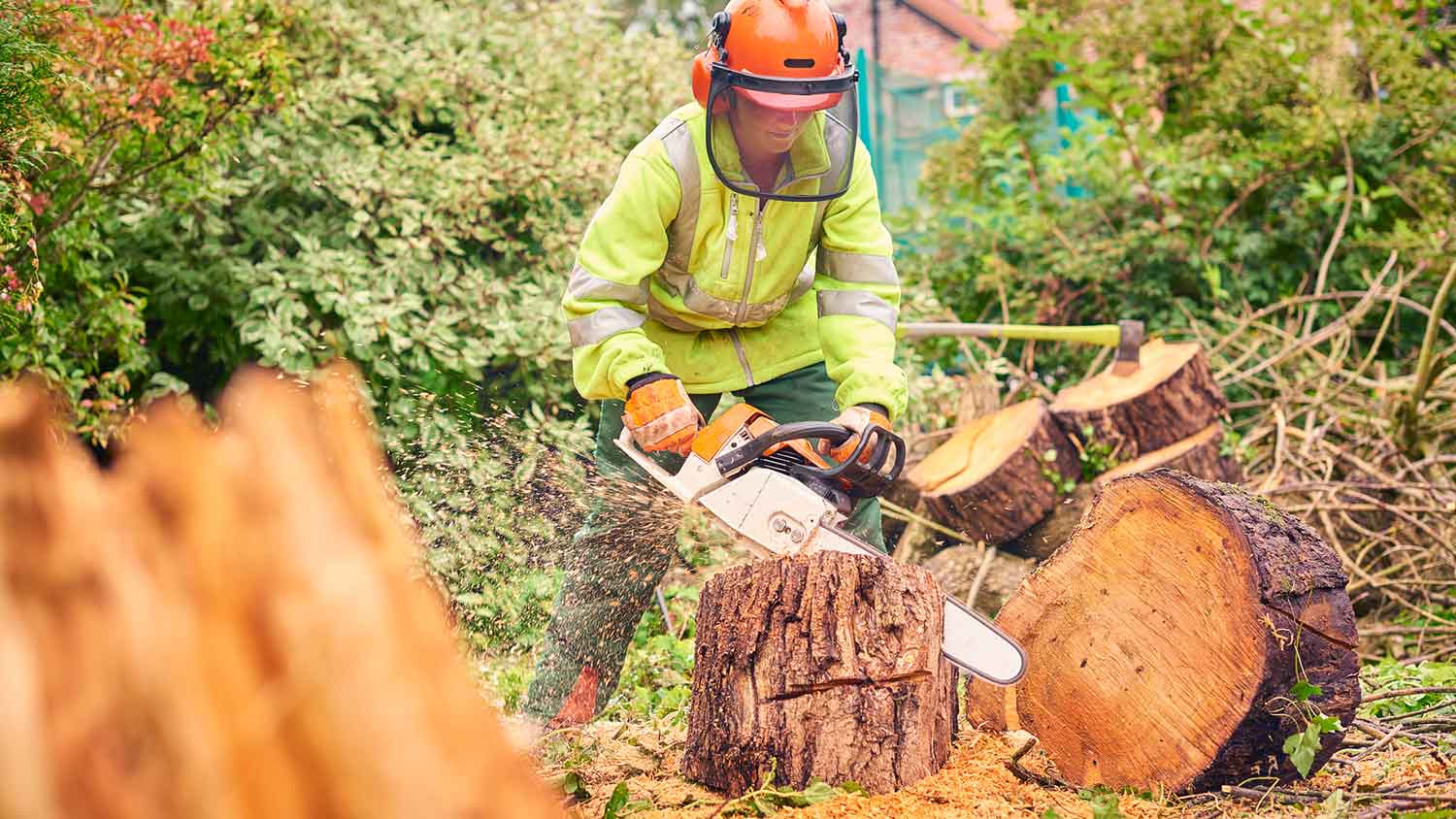
There are several methods to hollow out a tree stump, and the best one depends on your tools, experience, and priorities. Common methods include using a chisel and hammer, a chainsaw, or burning.

  • Chisel and Hammer: This is often considered the easiest approach for those with limited tools or experience, though it is the most time-consuming.

  • Chainsaw: Using a chainsaw is the fastest method, but it comes with significant safety risks, especially for inexperienced users.

  • Burning: This can be an effective method, but it is not recommended unless you can first drill holes into the stump. Without holes, the stump will be difficult to light and may not burn completely through.

A power drill with at least a ⅜-inch diameter bit can make the job quicker and easier, regardless of the primary method. While you can use a chisel or chainsaw without a drill, it will require more time and effort. Always wear protective goggles and thick gloves, as splinters are an inevitable risk.

Trees should be pruned every two to five years, depending on its age and type. Young trees should be inspected and pruned every two to three years. Mature trees should be inspected and trimmed every three to five years, and fruit trees should be pruned annually with a careful eye on seasonal growth. Evergreens typically don’t need pruning, unless branches or limbs are damaged, diseased, or harboring pests.

The Washington Terrace, UT homeowners’ guide to tree services

From average costs to expert advice, get all the answers you need to get your job done.