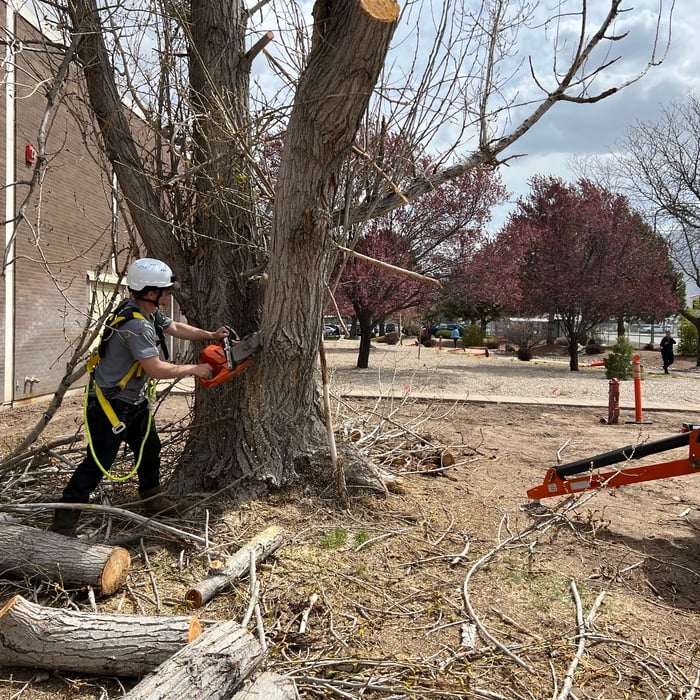


Top-rated tree service pros.

Get matched with top tree service pros in South Weber, UT

Enter your zip and get matched with up to 5 pros

Need a pro for your tree service project in South Weber, UT?

Select your specific project to find the pro for you.

TRUSTED BY SOUTH WEBER, UT HOMEOWNERS

  • Average homeowner rating star icon4.7
    Average homeowner rating
  • Verified reviews icon510
    Verified tree services reviews

Find Tree service pros in South Weber

Montross Landscaping
4.7(
124
)
Tree RemovalTree TrimmingTree Stump - Remove+1 more

Serving South Weber, UT and surrounding areas

Approved

Super Service Award Winner

In business since 2007

Free estimates

Credit card accepted

"We had an overgrown tree that was damaging our fence, along with several other trees that needed removal. I received the quote on Tuesday and they came on Wednesday and had the entire job completed before noon, including a 30 foot tree, large pine tree, I don't even know how many quakies, grinding down the stumps AND hauling everything off. Great communication, nice guys. We'll use them again for future projects."
Response time6 hrs
Response rate97%
66 neighbors recently requested a quote
...
Showing 1-10 of 181
Tree Service questions, answered by experts

Yes, cutting a tree's roots can cause it to fall, particularly if major support roots are severed. In extreme cases, trimming roots can affect the tree's structure and stability. Many crucial roots are located just below the soil's surface. If you make severe cuts to roots more than 2 inches in diameter, you risk impacting the tree's water flow and its ability to withstand severe winds or storms. Even cutting roots less than half an inch in diameter under or outside the tree's canopy can cut off its water supply, causing it to decline, die, and eventually topple.

After a big storm, you may not be sure if a tree was struck or not. Look for the telltale long scars, like strips or gouges in the bark of the tree, running in sometimes jagged lines down the length of the trunk. These scars will often show vulnerable living wood inside the tree. It’s also common to see scorched or wilted leaves on the side or top of the tree where lightning struck.

Dead trees are dangerous for several reasons. They are structurally compromised and prone to branch or trunk failure, which can pose a significant safety risk to people, vehicles, and nearby structures. Dead trees can also harbor pests like termites, which may spread to other trees or your home. If a tree died from a disease, it could spread the illness to healthy trees. Additionally, the dry wood is highly flammable, increasing fire risk.

Unfortunately, palm tree stumps are one of the most difficult types to remove due to how their roots grow. Unlike other trees, palm tree roots grow horizontally and vertically. Palm tree roots grow as deep as three feet into the ground, although soil and growing conditions could mean they go as far as 50 inches into the earth. 

If you want to be able to repurpose the grass in the area where you removed a stump later, you’ll have to dig quite deep—and perhaps wide—to trim away all the roots.


A tree can split because of high winds, a change in temperature, or from an infestation or tree disease. All of these factors can overlap, making a single cause difficult to pinpoint. While winter storms are some of the most common causes for a tree to split, it can also happen because of termites or rot.

The South Weber, UT homeowners’ guide to tree services

From average costs to expert advice, get all the answers you need to get your job done.