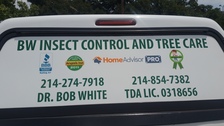
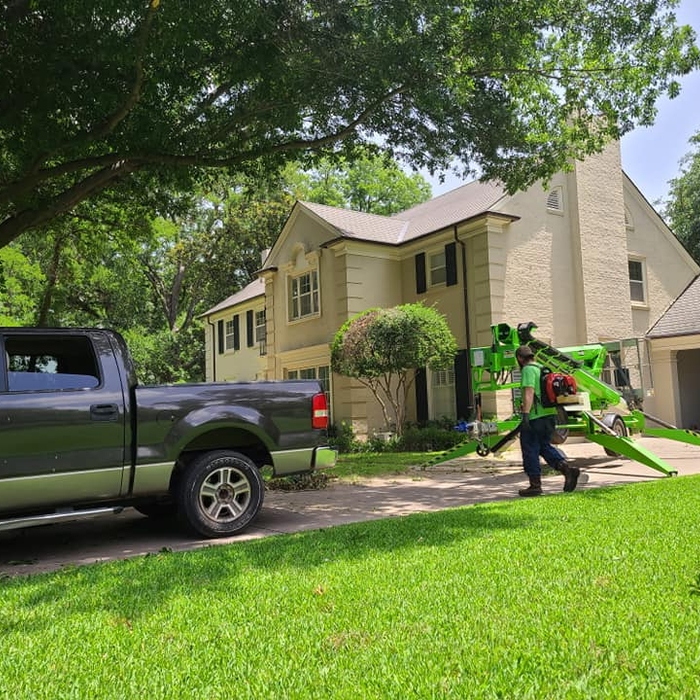
"it's a bit pricey, but if my trees are saved it'll be worth every penny. Dr. Bob was incredibly nice and he knows his stuff. After 45 years in the business I would hope he does. Another plus? He didn't treat my questions as if I were stupid. They drove from Dallas TX to my home in deep east TX a drive of over 4 hours and that was all in one day. I would definitely recommend B&W Insect control and tree service!"
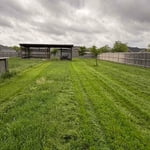
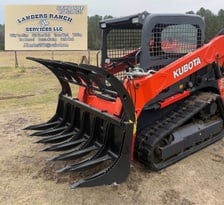
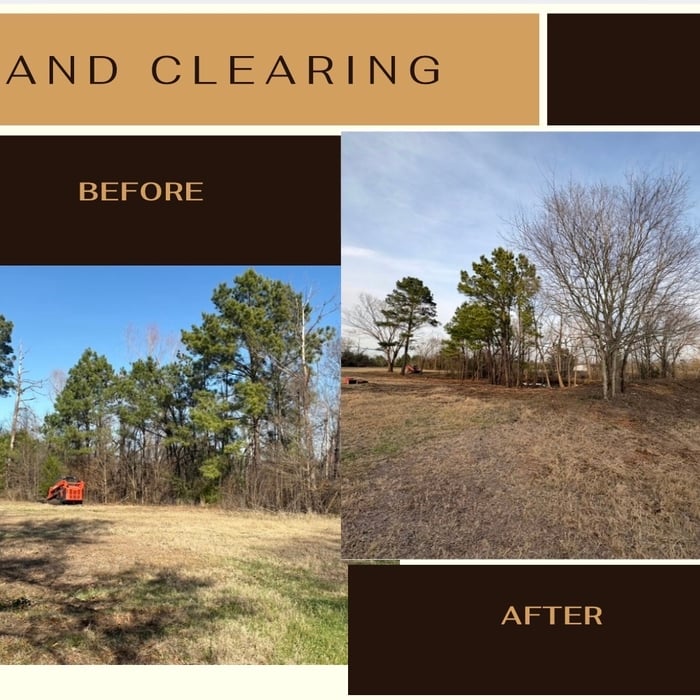
At Landers Ranch Services, we are a reputable excavation company located in Grimes County, TX. Serving the surrounding areas, we pride ourselves on delivering top-notch services to meet all our clients' excavation needs. With our skilled team and state-of-the-art equipment, we ensure efficient and reliable results for every project.
"We asked multiple landscapers in town and they didn't have the equipment to do it. Mr. Torres came out and had the tree straightened and supported in about 2 hours. Best part was that even though he had a bobcat to use, he only used it the minimal amount to avoid messing up the yard and did the rest by hand. Great quality work, great price."
Dead trees are dangerous for several reasons. They are structurally compromised and prone to branch or trunk failure, which can pose a significant safety risk to people, vehicles, and nearby structures. Dead trees can also harbor pests like termites, which may spread to other trees or your home. If a tree died from a disease, it could spread the illness to healthy trees. Additionally, the dry wood is highly flammable, increasing fire risk.
Yes, healthy and well-placed large trees can boost property value by an average of 3% to 15%. They improve curb appeal, offer energy savings through shade and wind protection, and are often considered by appraisers during home valuation. On the flip side, removing dead or hazardous trees can also increase value by eliminating safety risks. For the biggest return, choose low-maintenance, native species that thrive in your climate.
Costs depend on tree height, trunk diameter, removal complexity, and required equipment.
Generally, homeowners do not need permission to cut down a tree on their own private property, but there are several exceptions where a permit may be required. You might need a permit if the tree is particularly large, old, or a protected species, such as a heritage tree. Trees located near public property or power lines can also be subject to special rules. Additionally, many local governments and homeowners associations (HOAs) have regulations controlling which trees can be removed to manage an area's appearance or prevent the spread of invasive species. To avoid hefty fines, it is crucial to check with your local government and HOA to determine if a permit is needed before you begin.
Many consider the Fraser fir to be the most popular type of Christmas tree, but which type of tree sells out near you can depend on region and decorating trends that year. For example, the Leyland cypress is especially popular in the Southeast, according to the National Christmas Tree Association.
The Throckmorton, TX homeowners’ guide to tree services
From average costs to expert advice, get all the answers you need to get your job done.
Tree inspections can ensure your trees stay healthy and safe, preventing costly damage. Learn how much tree inspections cost and what can affect the price.
How much does an arborist cost? This guide explains the cost of different services, ongoing expenses, and other factors to consider when hiring an arborist.
Follow these tips to learn how to find a good tree removal service. Doing a little research can help you save time and money when you need to say goodbye to your trees.
You suspect that the leaning oak tree in the back needs to come down, but can you just handle it yourself? Here are the pros and cons of calling a tree service.