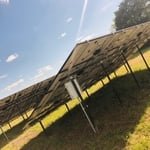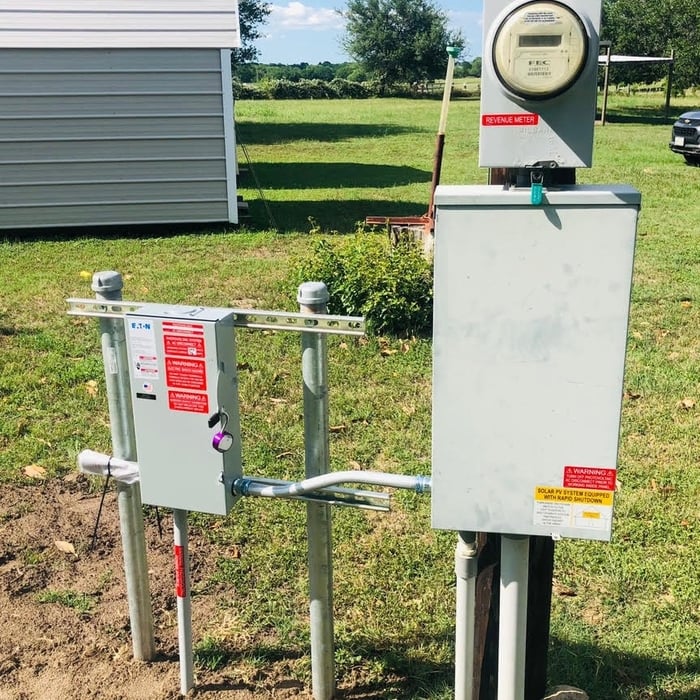

For insurance purposes we will only service/repair equipment we install. \n\nI’m told the customer chooses the contractor on Angi and I believe that but I don’t believe that 95% of you can’t even respond in email text or phone call. Please gather your estimates & come to me last. I will beat any price by $1000 or more. I’m only trying to help you bring home that deal your looking for backed by a great company with our industry leading 30 year worry free deductible free warranty. I can’t help you if you can’t respond. \n\nPowur is a solar energy installation company that has installed thousands of residential solar systems across 20 US states since its founding in 2014. Powur has partnered with a number of industry leaders to provide homeowners with quality solar panels, inverters, backup batteries & solar generators, & other energy efficiency upgrades designed to reduce the monthly utility bill as well as help the environment. \n\nPOWUR DIFFERENCE\n\nYour solution to low cost, clean, reliable energy your family can depend on.\nFinancially Secure: Investor backed & Member owned\nExperienced: Over 5,000 successful installations\nDoing Well By Doing Good: Fully certified B-Corp\nValidation: Inc. 5000 Fastest Growing Company in America

"He was able to quickly diagnose that the water leak from the water heater was a result of a ruptured tank, resulting in the need to replace the entire water heater."
"The yearly service works out to be $50 a month. We've had two water heaters replaced through them because of a fault in them. They're usually very responsive. I like that I can request the service online. The only thing is, I wish that there was a better avenue for emergency services. If something doesn't work right away usually it takes a couple of days to get someone out and sometimes you can't wait two days without water."
Replacing a water softener costs $200 to $6,000, depending on the capacity of the water softener, the type of water softener, and the amount of people living in your home. An ion exchange water softener is the most common type and costs $500 to $3,000. Water distillers, which cost $1,200 to $4,000, and dual-tank models, which cost $1,000 to $5,000, are definitely pricey, but they offer more filtration or capacity, respectively.
A water softener is a worthwhile investment if you live in an area with hard water. While hard water is safe to drink, it contains minerals like calcium and magnesium that can cause significant problems over time. These minerals build up inside pipes, reducing water flow and eventually corroding the plumbing system, which can lead to leaks and a shortened lifespan. Hard water also damages fixtures and appliances, potentially resulting in costly repairs. Additionally, it makes soaps and detergents less effective, meaning you'll use more product to get things clean. By installing a water softener, you can prevent these issues. The initial investment is often recouped through long-term savings, including lower energy bills, reduced appliance and plumbing maintenance, and spending less on soap and cleaning supplies. Other benefits include cleaner linens, dishes, and clothing, as well as softer water that is gentler on your skin and hair. In some areas, a water softener can also increase your home's value, making it a valuable long-term investment.
While it depends on how complicated the unit and installation is, it takes two to four hours to install a water softener unit, on average. It might take longer if pipes need to be replaced. You should make sure the installation area is clear of any objects that might get in the way before you begin.
It’s unlikely that hard water on its own could cause substantial hair loss or damage, though it’s true that bathing in hard water can cause your scalp to feel itchy or flaky and might dull your hair’s natural shine. Using high-quality shampoo and conditioner or buying a whole-home water softener can decrease these issues.
You can install a water softener system by turning off the water supply, draining the water, and then connecting your device to the waterline. Next, you’ll fill your tank with the recommended amount of salt or brine (whichever your unit calls for; be sure to read the instructions). Turn the water supply on and check for leaks. You can opt to let your water run for a few minutes, then test it using strips.
Water softeners work to remove unwanted minerals from hard water through a filtration and recharge cycle. Keep reading to learn how a water softener works.
There are four common softener alternatives available on the market today. We compare and contrast each one to help you find your best-fit solution in this blog.
Water softeners rid your home of hard minerals and, well, soften your water. Even better, the regeneration process is an automatic cycle that works when you’re least likely to use it.
Water softeners remove hard minerals from your tap water, improving plumbing systems and water-using appliances. Here are the most efficient water softeners out there.