"AHS is ok. They cover repairs of most everything under the roof of your house. The companies that contract with them are not always the best. You call AHS with the issue, they send a fax to the repair company and give you the contact info. If they don't contact you within 24 hours, you call them. Sometimes they answer, sometimes they don't. When they arrive (usually three days or so later), they service the item. if it has issues within the 90 days, you call AHS again, they are sent out with no charge. If the serviceman decides the unit is unrepairable, AHS will allow you to choose a replacement from their listing (usually not as good as what you have) they will install and remove your old item, or give you wholesale amount to buy and install your own. Prices vary on what you want covered and what you want the copay to be, plus where you live. For me it is 49.99 per month with a 75.00 time of service order. You can have more than one item serviced at the same time under the same fee. If you have a SEAR product the repair guys are great. Not that wild about the other ones they send out. But it is a big savings compared to calling someone on your own. The cost of service is only the 75.00 copay."

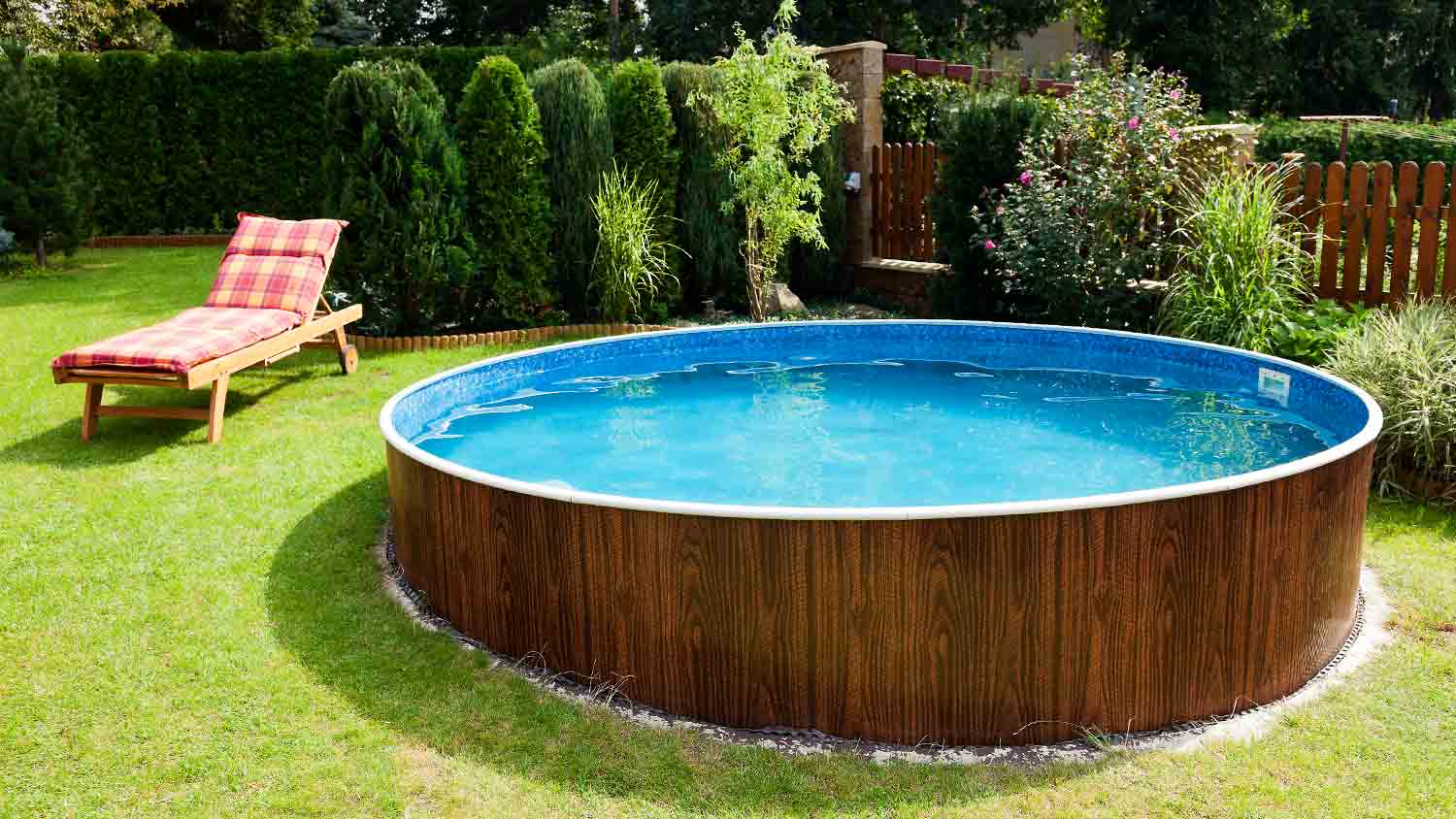
Install Above Ground Pools questions, answered by experts
Yes, adding a pool to your property will almost always increase your homeowners insurance premiums. This is because pools are considered hazardous, which increases your home's liability risk. The replacement cost of the pool itself is also factored into your home's rebuilding cost when determining coverage limits. The amount of the increase can vary from as little as $50 to several hundred dollars more per year, depending on your insurance company, location, current coverage, and installed safety features. It is best to contact your insurance agent before installing a pool to get an estimate, understand their specific guidelines, and factor the ongoing cost into your budget.
The formula you’ll use to measure your pool will differ based on the shape of your pool. For a rectangular pool, you’ll use the following formula to find the size in gallons: length x width x depth x 7.5. If the depth changes from one end of your pool to the other, take the average by finding the depth at the deepest and most shallow points and dividing that number by two. Circular and oval pools require different, more complicated formulas, which can be found in this article.
While some commercial pools are required to run their pump 24 hours a day, homeowners should not. Running a pool pump for 24 hours a day isn’t necessary to clean the pool water—eight hours is enough. Doing so unnecessarily increases your electric bill and puts more wear and tear on the pump and filter, shortening their lifespan.
Completely refreshing the water in an aboveground pool every five to seven years helps keep it free of bacteria and algae. Emptying the pool also allows you to clean, repair, or replace the pool liner. Schedule your water change when the weather is mild, as intense heat or cold can damage the pool liner when the pool is empty.
Unless you have an alternative to chlorine in your pool to prevent bacteria and viruses from taking up residence in your water, it’s not safe to swim in a pool without enough chlorine. According to the Centers for Disease Control and Prevention (CDC), swimming in a pool with insufficient chlorine could lead to skin and eye irritation, ear issues, respiratory distress, such as coughing and congestion, and various other health issues. Always make sure your chlorine levels are healthy and stable before swimming for proper pool safety.
The Wanblee, SD homeowners’ guide to above ground pool installation services
From average costs to expert advice, get all the answers you need to get your job done.
Above ground pools are more affordable than inground pools, so can you put an above ground pool in the ground to save money? Learn when it’s safe to do so.