"AHS is ok. They cover repairs of most everything under the roof of your house. The companies that contract with them are not always the best. You call AHS with the issue, they send a fax to the repair company and give you the contact info. If they don't contact you within 24 hours, you call them. Sometimes they answer, sometimes they don't. When they arrive (usually three days or so later), they service the item. if it has issues within the 90 days, you call AHS again, they are sent out with no charge. If the serviceman decides the unit is unrepairable, AHS will allow you to choose a replacement from their listing (usually not as good as what you have) they will install and remove your old item, or give you wholesale amount to buy and install your own. Prices vary on what you want covered and what you want the copay to be, plus where you live. For me it is 49.99 per month with a 75.00 time of service order. You can have more than one item serviced at the same time under the same fee. If you have a SEAR product the repair guys are great. Not that wild about the other ones they send out. But it is a big savings compared to calling someone on your own. The cost of service is only the 75.00 copay."

Install Above Ground Pools questions, answered by experts
Yes, you can put too much shock in a pool, and it is crucial to follow the directions on the product you are using. Adding excess shock can upset the chemical balance, make the water cloudy, have adverse effects on swimmers, damage pool equipment or surfaces, and even encourage certain types of algae to grow. If you have over-shocked your pool, perform a water test and adjust the chemicals as necessary. The pool's chemical balance will eventually return to normal as the excess chlorine dissipates over time.
It’s a good idea to wait at least 24 hours after opening your pool before you swim in it. Pool opening often involves shocking the water, and the chemical levels need to come down a bit before it’s safe to swim. You can continue testing your water pH and chlorine levels if you’re in a rush. It’s wise to wait until your chlorine levels drop to under four parts per million (ppm) and you have a water pH of between 7.2 and 7.8. You can artificially lower your water pH to speed up the process.
The type of sand you need for your sand filter depends on the manufacturer’s instructions, but you’ll need to use sand specifically for pool filters. Silica sand is a wallet-friendly, common choice that’s relatively easy to replace. You’ll choose between various grades of sand and different-sized sand grains.
The most expensive part of building a pool is typically the excavation and labor, which can account for 25% to 50% of the total project cost. This is particularly true for inground pools that require significant excavation, potentially including the rental of large equipment, and extensive construction labor. In contrast, above-ground pools are generally less expensive as they typically do not require excavation and can be installed much more quickly. Concrete in-ground pools are among the most labor-intensive options.
When looking into fiberglass vs. concrete pools, you will notice a big price difference. A fiberglass pool costs $15,000 to $75,000, whereas a concrete pool costs $35,000 to $100,000. While concrete pools are customizable, fiberglass is faster to install and requires less maintenance. Additionally, you can expect to pay $25,000 to maintain a concrete pool over a ten-year span. On the other hand, a fiberglass pool only requires basic maintenance like testing water levels and cleaning.
The Lemmon, SD homeowners’ guide to above ground pool installation services
From average costs to expert advice, get all the answers you need to get your job done.
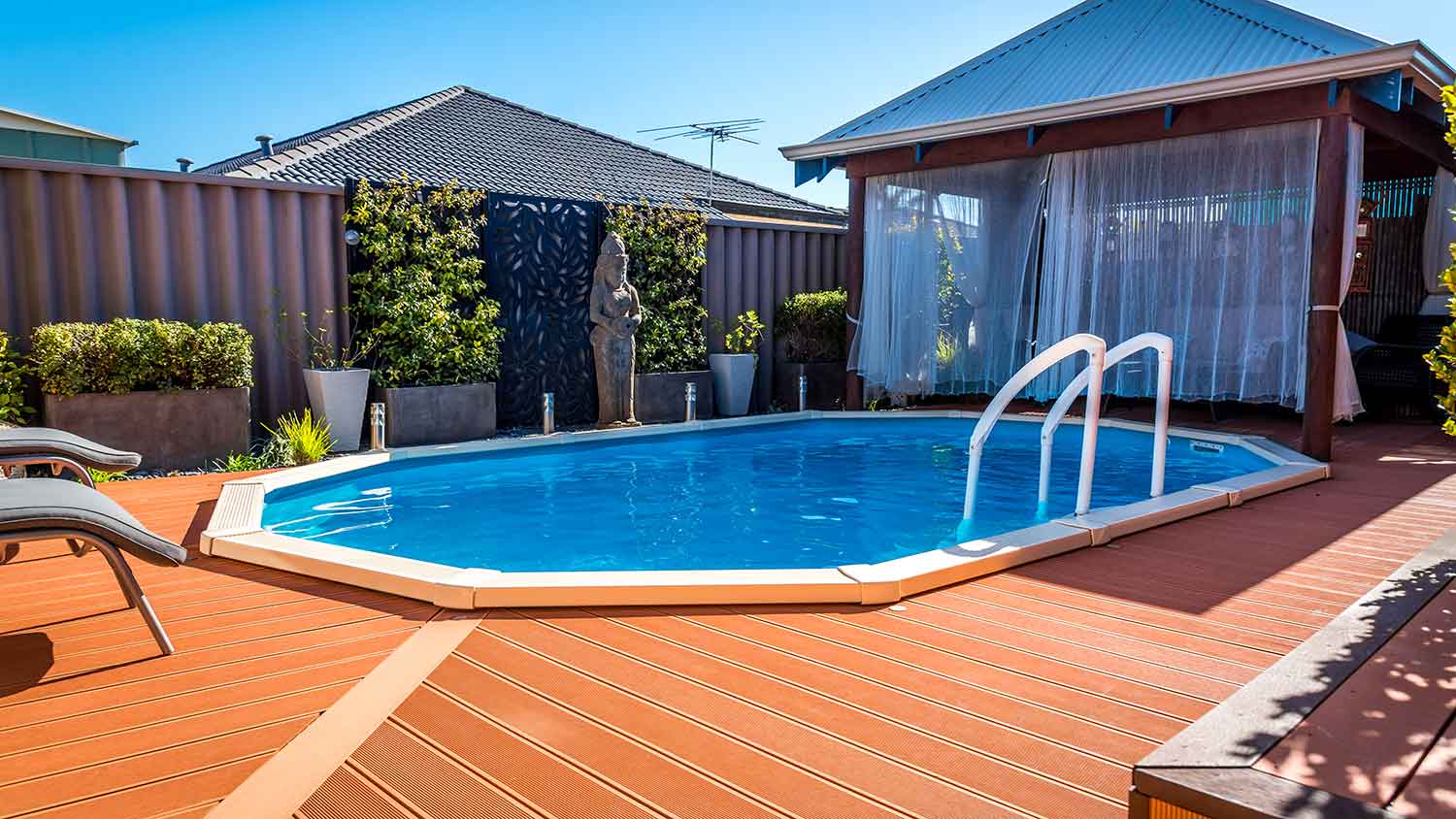
Above ground pools are more affordable than inground pools, so can you put an above ground pool in the ground to save money? Learn when it’s safe to do so.