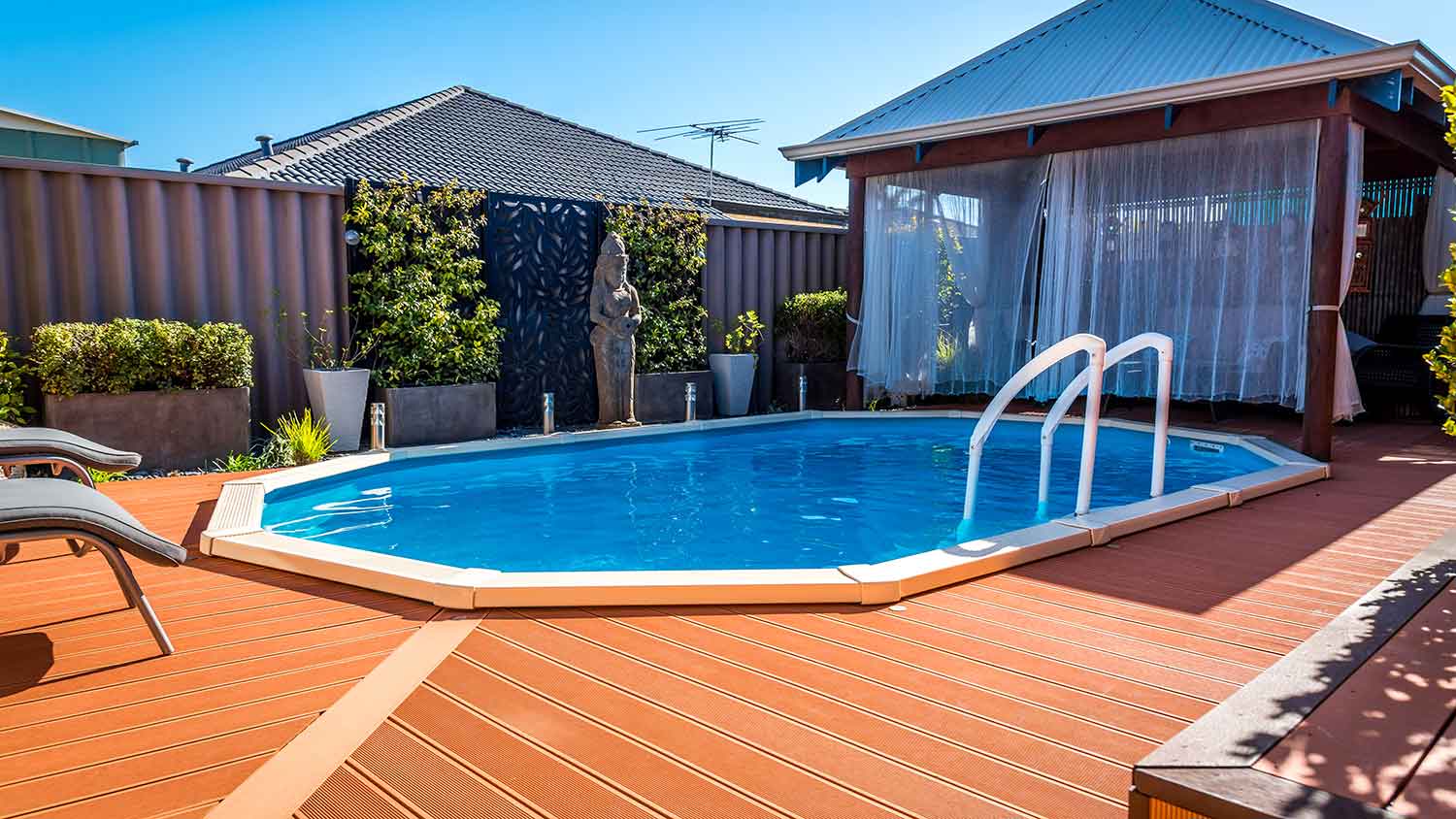






Top-rated above ground pool installation pros.

Get matched with top above ground pool installation pros in Dickinson, ND

Enter your zip and get matched with up to 5 pros

Need a pro for your above ground pool installation project in Dickinson, ND?

Select your specific project to find the pro for you.

Find Above ground pool installation pros in Dickinson

Install Above Ground Pools questions, answered by experts

A good rule of thumb is to add one or two 40-pound bags of salt for every inch of rain, but you’ll want to test your salt levels first to ensure you’re adding the right amount. Rainwater can dilute the salt levels in your pool, so after significant rainfall, test the levels and add the appropriate amount of salt to bring it back to the ideal level.

It is possible to restore a filled-in pool. If you want to dig up and repair a filled-in pool in your backyard, the process will cost about the same as the cost of installing a new in-ground pool. You might do this if the filled-in pool is causing sinking, swelling, or drainage issues in your yard. A new pool may resolve these problems and increase your property value.

Yes, pool pumps use a significant amount of electricity, making them one of the biggest energy consumers in a home. A pool pump can use up to three times as much electricity as a refrigerator. Typically, a residential pool pump consumes about 1 kilowatt-hour (kWh) for every hour it runs. Because pumps often need to run for about eight hours a day to properly filter the water, this can add up to an annual consumption of 3,000 to 5,000 kWh, which can cost between $480 and $800 per year based on average electricity rates.

The amount of electricity your pump uses depends on its size, energy efficiency, and daily run time. To lower your energy consumption, you can choose an energy-efficient or variable-speed pump, ensure it is correctly sized for your pool, and run it only for the minimum time required to keep the water clean.

In most cases, late May or early June are the most popular times to open a pool, depending on your location. It’s a good idea to open your pool when the outdoor temperature sits consistently above 65 to 70 degrees (F). At this point, algae will begin to flourish in your water, so opening the pool and adding the proper chemicals will avoid excessive pool algae growth.

There are some disadvantages to a salt water pool. Besides costing slightly more than chlorine pools, salt water pools require a lot of salt. It's also harder to find a professional with salt water pool experience to do minor maintenance and repairs. Salt water can also damage some materials, so you’ll need to use specific heating, fixtures, lighting, liners, and masonry when building a salt water pool.

The Dickinson, ND homeowners’ guide to above ground pool installation services

From average costs to expert advice, get all the answers you need to get your job done.