"I only use James when I need some work done to my house. He responds fast, gets the work done quicker than just about anyone else I've ever used and seems very concerned with leaving his customers happy."
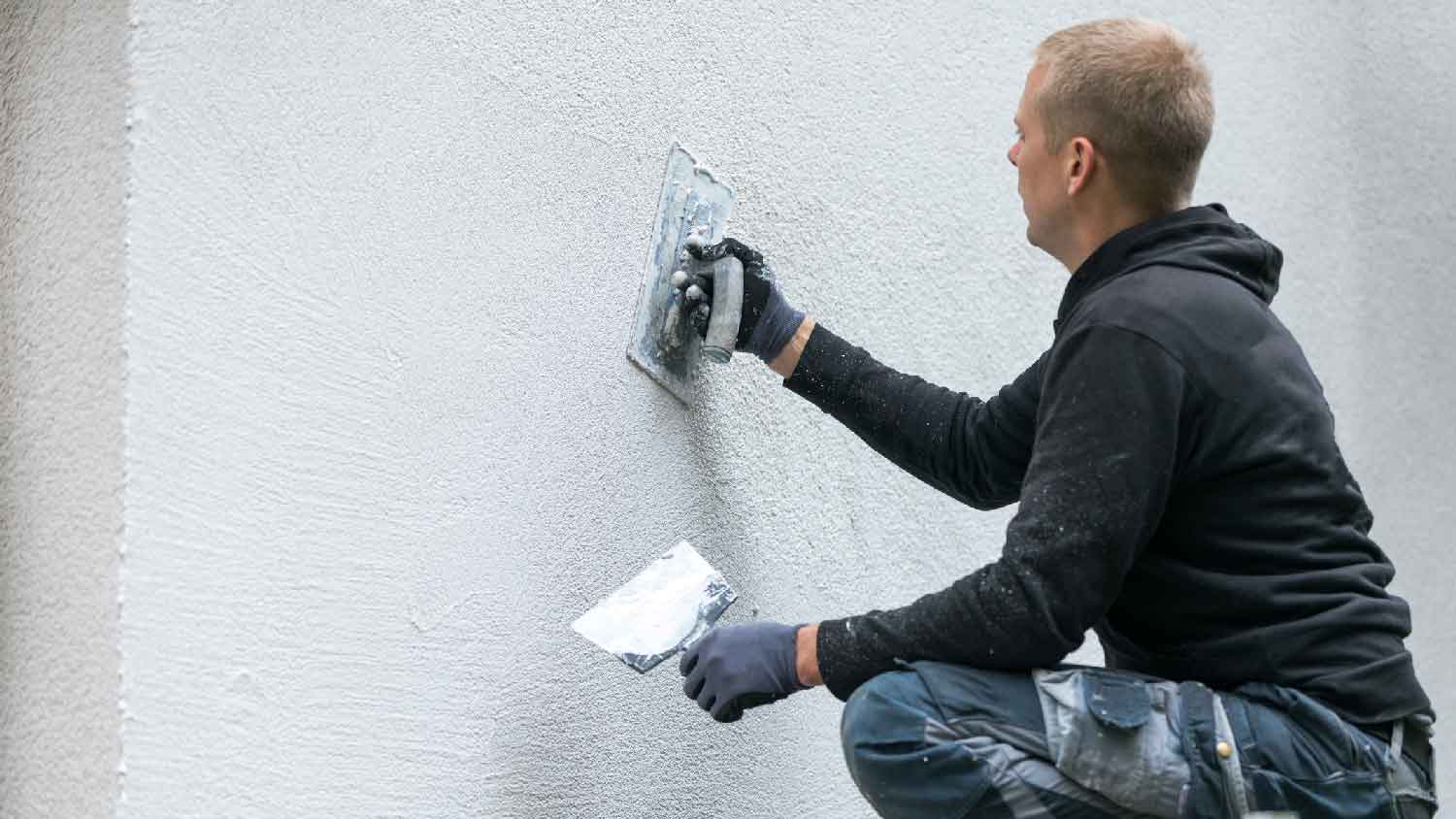
Stucco is very challenging to DIY, so it’s always best to leave the work to professional stucco contractors. The same recommendation applies to painting a stucco house, which should be left in the reliable hands of a professional exterior painter.
Inexperienced DIYers can make several critical mistakes during stucco application, such as:
Failing to apply sufficiently thick layers for longevity and water resistance
Uneven application
Uneven texture across the exterior
Mixing the stucco improperly, leaving a weak structure
Failing to texture properly in between coats, leading to cracking and chipping
If your windows are losing efficiency from wearing out or experiencing leaks on rainy days, it may be time to consider replacing them. Window replacement costs run between $180 and $410 per window but may be on the higher end for homes with stucco siding since stucco will likely require more time and special tools for replacement.
If contractors discover water damage, rot, or mold beneath the stucco, additional repairs will be necessary. These repairs can increase your total project cost and timeline, but addressing them promptly is essential for your home’s structural integrity. Ignoring hidden damage can lead to more severe issues and higher costs in the future.
Yes, you can screw directly into stucco. Only do so if the item you are installing is a permanent fixture. Drill a pilot hole into the stucco using a masonry or concrete bit, then drive in the screw with a power drill or screwdriver.
Depending on the amount of damage, a stucco repair professional can repair your stucco siding in four to 12 hours. If you only have a few small cracks, that repair could take as little as one to two hours to repair. In contrast, if you have an extensive fix, like foundation or chimney repair, you can expect the process to take a bit longer. Always discuss your project expectations with your stucco repair expert.
The Gregory, SD homeowners’ guide to stucco services
From average costs to expert advice, get all the answers you need to get your job done.
Discover the cost to stucco a house in 2026, including average prices, key factors, and tips to help you budget and plan your stucco project with confidence.
Installing new stucco gives your home a facelift and boosts home value. But can you stucco over stucco? You can, but there are some things to consider.
Choose the right pro for stucco installation to get the best professional-quality results. Learn who does stucco installation and the benefits of hiring a pro.
Wondering if stucco increases home value? The short answer is, yes, but the ROI you’ll see depends on a few factors, like location and installation costs.