"I only use James when I need some work done to my house. He responds fast, gets the work done quicker than just about anyone else I've ever used and seems very concerned with leaving his customers happy."
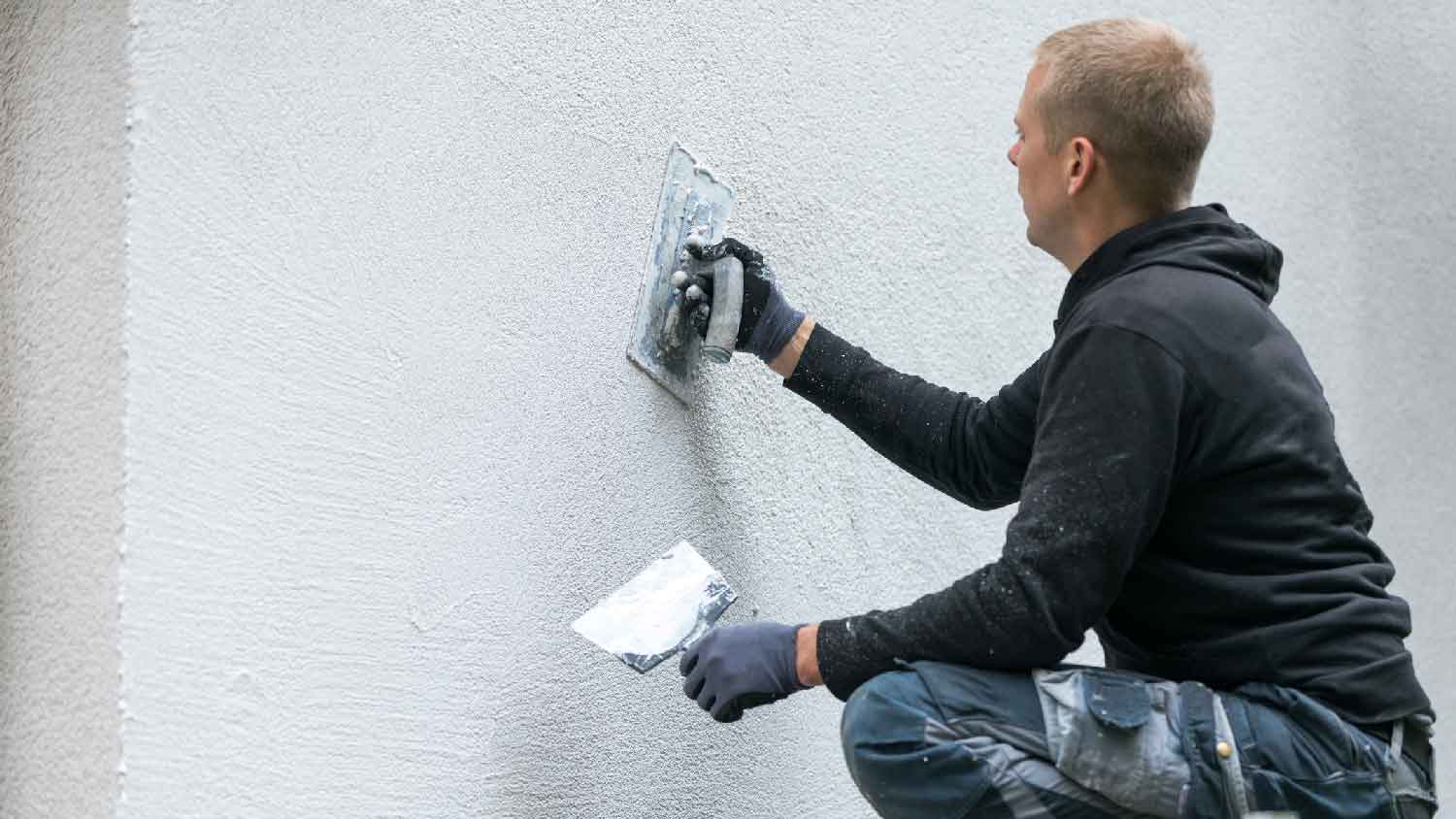
To repair damaged exterior stucco, you’ll first remove all loose and crumbling material from the damaged area. You then need to thoroughly clean the area and dampen it to ensure proper bonding. After that, you’ll apply a bonding agent to the repair area, then apply new stucco in layers, allowing for curing time between each layer. The final coat should be textured to match the surrounding stucco pattern as closely as possible. Once fully cured, the repaired area can be painted to match the rest of the wall if needed.
The best tape that works on stucco is the kind made explicitly for stucco surfaces. Look for tape that specifies stucco, masonry, or cement installations. The adhesive usually needs to be thicker and more durable to remain stuck to these rough surfaces.
Failing to repair damaged stucco can lead to significant problems. Cracks can grow and deepen, allowing water and moisture to get behind the stucco. This moisture intrusion can cause water damage, structural issues, and mold or mildew growth. Delaying repairs will likely cost more in the long run as the damage worsens, so it's best to repair your stucco as soon as you notice any signs of damage, such as cracks, holes, or discoloration.
Properly maintained stucco can enhance insulation, reducing energy loss.
Stucco repair can best be described as a patch. It involves identifying the problem and fixing that specific damage with additional stucco. If no mold infiltration or an underlying leak is causing the damage, repair is most likely all you need.
Remediation, on the other hand, involves removing the existing siding, fixing the underlying cause of the damage, and then reapplying stucco siding for that wall. It’s a more permanent fix that takes longer to complete and, hence, comes with a steeper price tag than repair.
The Burke, SD homeowners’ guide to stucco services
From average costs to expert advice, get all the answers you need to get your job done.
Discover the cost to stucco a house in 2026, including average prices, key factors, and tips to help you budget and plan your stucco project with confidence.
Installing new stucco gives your home a facelift and boosts home value. But can you stucco over stucco? You can, but there are some things to consider.
Choose the right pro for stucco installation to get the best professional-quality results. Learn who does stucco installation and the benefits of hiring a pro.
Wondering if stucco increases home value? The short answer is, yes, but the ROI you’ll see depends on a few factors, like location and installation costs.