"I only use James when I need some work done to my house. He responds fast, gets the work done quicker than just about anyone else I've ever used and seems very concerned with leaving his customers happy."
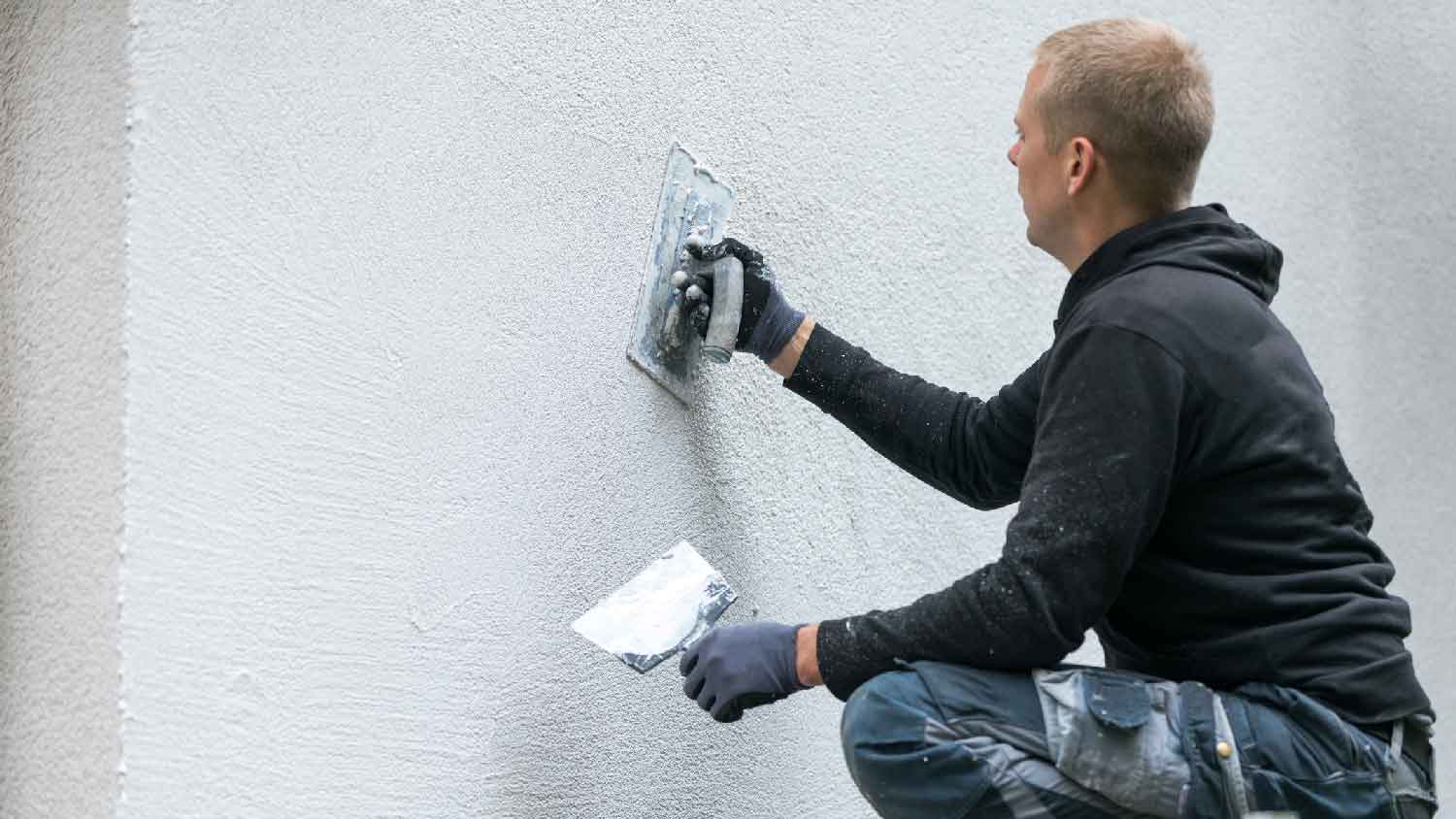
Tools include trowels, floats, and patching compounds. Professionals use these for precise and durable repairs.
A standard drill will work just fine if you’re drilling small holes, and only a few of them. But anything with a diameter larger than 3/8 inch is best done with a hammer drill, since it is stronger, faster, and also makes your drill bits last longer. While you don’t absolutely need a hammer drill for stucco, it is a worthy investment if you think you might drill more holes down the road.
Repaired stucco requires regular inspections, cleaning to prevent mold or mildew build-up, and timely minor repairs to address hairline cracks. Applying protective sealants can also enhance longevity and maintain its appearance.
One of the most significant downsides to stucco is the installation cost, which is higher than that of many other siding options because getting it to look clean and professional is a labor-intensive process. Stucco can also absorb water, making it an unsuitable option for siding in areas that see excessive rainfall. Finally, stucco can crack and chip, especially in extreme weather, and repairs are not only challenging and require help from a professional who does stucco, but can get expensive.
Homeowners insurance may cover the cost of siding repair or replacement, but coverage depends on the cause of the damage. Most policies will cover damage from a covered event, such as a storm, wind, hail, fire, natural disaster, or other impact damage. Your policy might pay for the full or partial cost of the repair or replacement. However, damage resulting from age, general wear and tear, or neglect is typically not covered, and you should expect to pay for those repairs out of pocket. It is best to review your specific homeowners insurance policy for full details on what is covered, how to file a claim, and what documentation is required.
The Mission, SD homeowners’ guide to stucco services
From average costs to expert advice, get all the answers you need to get your job done.
Discover the cost to stucco a house in 2026, including average prices, key factors, and tips to help you budget and plan your stucco project with confidence.
Installing new stucco gives your home a facelift and boosts home value. But can you stucco over stucco? You can, but there are some things to consider.
Choose the right pro for stucco installation to get the best professional-quality results. Learn who does stucco installation and the benefits of hiring a pro.
Wondering if stucco increases home value? The short answer is, yes, but the ROI you’ll see depends on a few factors, like location and installation costs.