



Top-rated deck repair pros.

Get matched with top deck repair pros in Burbank, SD

Enter your zip and get matched with up to 5 pros

Need a pro for your deck repair project in Burbank, SD?

Select your specific project to find the pro for you.

Find Deck repair pros in Burbank

Avatar for JWM Construction LLC
JWM Construction LLC
5.0(
5
)

Serving Burbank, SD and surrounding areas

In business since 2024

Free estimates

Emergency services offered

"JWM exceeded expectations. Professional, friendly & willing to go the extra mile to get work done! If something doesnt meet expectations, they have no problem adjusting to meet them. Highly recommend!"
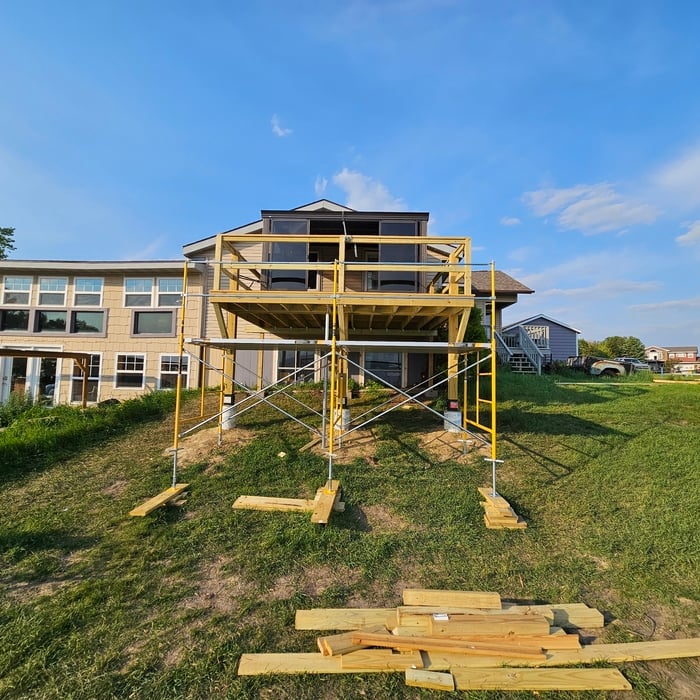
New deck build
New deck build
New deck build
New deck build
New deck build

+21

Response time2 days
CJ's Handyman Services
New to Angi

Serving Burbank, SD and surrounding areas

In business since 2022

Free estimates

Credit card accepted

CJ's Handyman Services is a locally owned and operated company that values honesty and integrity in all aspects of our business. Our dedicated team of professionals have years of hands-on experience, to provide innovative ideas and suggestions tailored to your projects. Our services are customized to your individual needs, paying close attention to the details of each project that we are involved with. Please feel free to contact us today!

Response time4 hrs
Showing 1-10 of 20
Deck Repair questions, answered by experts

Ideally, a gate should be able to swing both in and out. However, if it can only open in one direction, it is generally best for it to swing inward. This is often the safest option, especially for deck gates near steps, as you'll want the gate to swing away from the stairs. An inward swing also prevents the gate from opening into a public space, like a sidewalk, and can be more convenient when carrying heavy items like a wheelbarrow into a garden.

There are exceptions, however. The layout of your property may require a different approach. For example, if your property is on a slope, the gate may not be able to swing inward. You should also ensure the gate can open fully without colliding with any objects or blocking access to other areas. For a backyard garden gate where public access isn't a concern, the direction it swings is largely a matter of personal preference. Finally, always check your local building codes, as they may have specific requirements for which way a gate must swing.

A deck that isn’t attached to a house is called a floating or freestanding deck. These standalone decks are built near ground level, so they usually don’t need deck stairs. Some don’t even require permits. Generally speaking, building a floating deck is faster and more DIY-friendly than constructing one that’s connected to your home.

Composite decking might cost more upfront, but it delivers value in terms of durability. Unlike wood, composite material resists common deck problems such as rotting, fading, warping, and all the other things you don’t want a deck to do. The extra processes lead to a higher price tag, but you’ll save big in maintenance costs down the road.

Footings for ground-level decks need to be at least 12 inches deep, and some areas require them to be even deeper. A standard range for deck footings is anywhere from 12 to 48 inches. The minimum footing depth is determined by an area’s frost line and soil conditions. If you’re unsure how deep to install deck footings, check local building codes to find the minimum footing depth in your area. 

The problems with composite decking include a high rate of expansion and contraction from temperature swings. This characteristic can cause boards to split, delaminate, or peel. In addition, significant movement can cause shrinking, warping, twisting, and bending. For this reason, you should minimize moisture and ensure proper airflow below your deck.

The Burbank, SD homeowners’ guide to deck repair services

From average costs to expert advice, get all the answers you need to get your job done.