





Top-rated tree service pros.

Get matched with top tree service pros in Castanea, PA

Enter your zip and get matched with up to 5 pros

Need a pro for your tree service project in Castanea, PA?

Select your specific project to find the pro for you.

TRUSTED BY CASTANEA, PA HOMEOWNERS

  • Average homeowner rating star icon4.5
    Average homeowner rating
  • Verified reviews icon23
    Verified tree services reviews

Find Tree service pros in Castanea

Avatar for Walters Tree Care
Walters Tree Care
4.8(
6
)

Serving Castanea, PA and surrounding areas

In business since 2024

Free estimates

Offers commercial services

"Mr. Walters worked with/for me for several years in a landscape role in State College. Although he did not perform tree services at that time, he took pride in his work and was willing to go the extra mile to make our customers happy. He is a very polite young man and I wish him great success with his new venture!"
Response time2 hrs
Courter's Tree Trimming, LLC
5.0(
1
)

Serving Castanea, PA and surrounding areas

In business since 2017

Free estimates

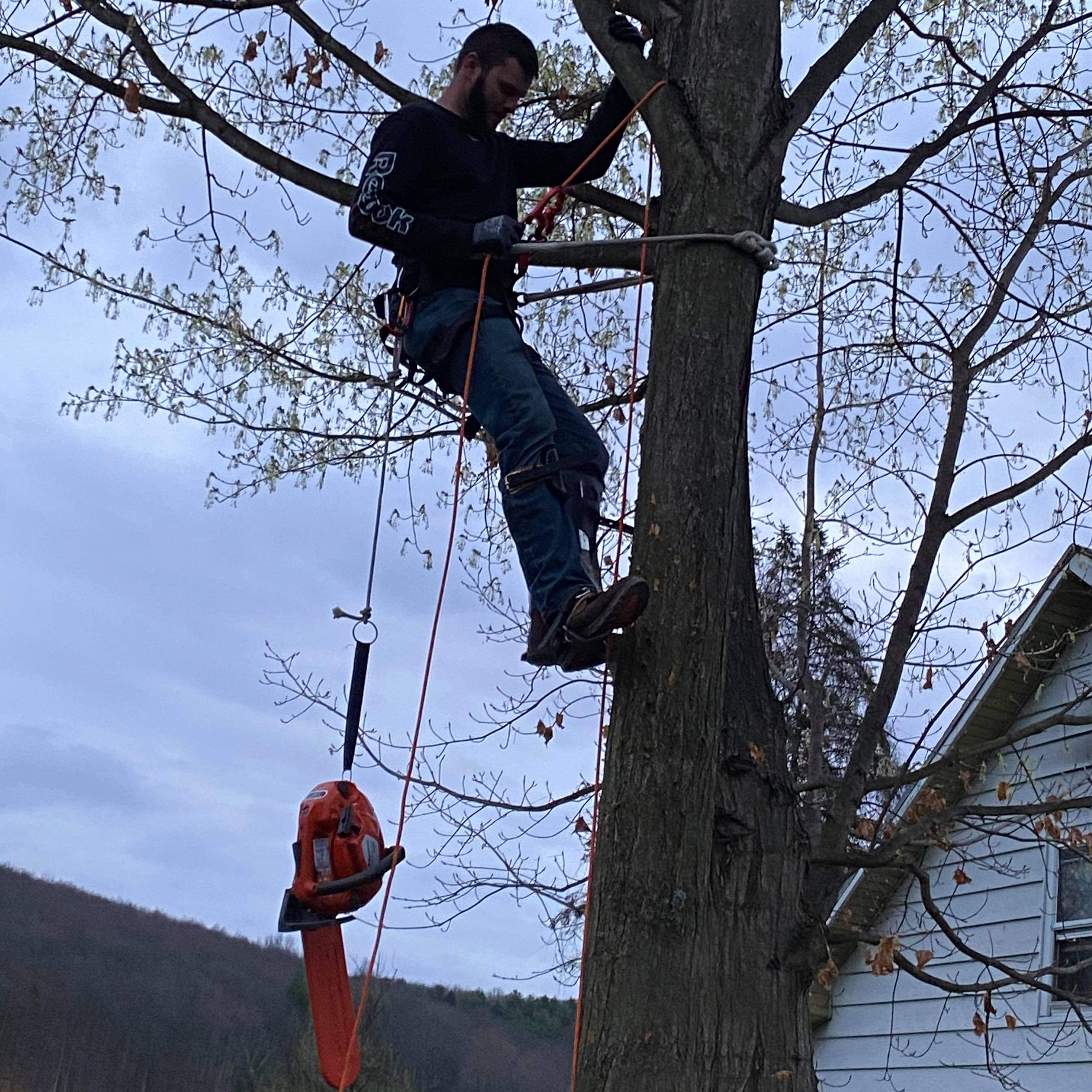
In life we grow and with the continued love an support of my parents, I am starting my own business. I love to be outdoors and those who know me know I like a little thrill, but I have all of the proper climbing and safety gear. My business is now set up and fully insured. We are available 7 days a week and we also work evenings to fit into your busy work schedule.

Response time10 mins
Recommended by100%of homeowners
Aces Tree Service - Facebook
New to Angi

Serving Castanea, PA and surrounding areas

In business since 1998

Free estimates

We are a locally owned and operated company that values honesty and integrity and treats your property with respect and care. We offer tree removal services that are customizable to the needs of the home or business owner. We pride ourselves on the quality of our work as well as our commitment to outstanding results. We look forward to building lasting relationships with our clients and guarantee your satisfaction!

Showing 1-10 of 41
Tree Service questions, answered by experts

It depends on where you live—but in most areas, leaves begin falling in September and continue falling until January or February. Warmer regions, such as Southern states, may see leaves fall a bit later in the calendar year. It also depends on the type of trees in your yard and their maturity. 

Absolutely. These steps are significantly easier, too, especially when it comes to preserving the root ball and moving the palm tree. However, you will want to make sure the tree has plenty of fertilizer to establish itself and start growing. Supports may also be more important, as it can take extra time for a potted palm to spread out its roots. If you are transferring a palm to another pot, you’ll want to move up a size or two to a larger pot. Make sure the pot has excellent drainage to keep the palm from getting waterlogged.

Completely topping a plum tree is a risky business. Cut too much, and you’ll kill your tree. That said, you do need to trim the top of your tree to encourage bushy growth, maintain your tree’s vase shape, and limit size. 

A plum tree's central leader (or trunk) should never extend more than 3 feet above the highest branch. When you first plant your tree, cut the central leader so it’s 2 to 3 feet tall. As it grows, cut it back 12 to 20 inches until it reaches its desired height. Never prune more than one-third of the new growth.

Generally, homeowners do not need permission to cut down a tree on their own private property, but there are several exceptions where a permit may be required. You might need a permit if the tree is particularly large, old, or a protected species, such as a heritage tree. Trees located near public property or power lines can also be subject to special rules. Additionally, many local governments and homeowners associations (HOAs) have regulations controlling which trees can be removed to manage an area's appearance or prevent the spread of invasive species. To avoid hefty fines, it is crucial to check with your local government and HOA to determine if a permit is needed before you begin.

Whether tree roots will continue to grow after a tree has been cut down depends on the species. Some tree roots will eventually die because they can no longer get nutrients through photosynthesis. However, other species that reproduce through root sprouts can continue to grow and produce new sprouts for seven years or more. For example, the roots of elms, ficus, and willows tend to regrow aggressively, while the roots of pines, oaks, and maples will typically die. To determine if a root system is still active, look for new sprouts on the old trunk, stump, or any exposed roots.

The Castanea, PA homeowners’ guide to tree services

From average costs to expert advice, get all the answers you need to get your job done.