



Top-rated electricians.

Best electricians near Rockaway Beach, OR

Enter your zip and get matched with up to 5 pros

Need a pro for your electrical service project in Rockaway Beach, OR?

Select your specific project to find the pro for you.

TRUSTED BY ROCKAWAY BEACH, OR HOMEOWNERS

  • Average homeowner rating star icon4.3
    Average homeowner rating
  • Verified reviews icon43
    Verified electrical services reviews

Top-Rated Electricians in Rockaway Beach - Updated Nov 2026

Avatar for Mr. Electric of Clark County
Mr. Electric of Clark County
4.1(
53
)
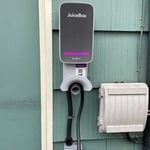
Electric Vehicle Charging Station Installation - For Business - Materials Not ProvidedElectric Vehicle Charging Station Installation - For Business - Materials Provided by ConsumerElectric Vehicle Charging Station Installation - Materials Not Provided+3 more

Serving Rockaway Beach, OR and surrounding areas

In business since 2023

Free estimates

Credit card accepted

"Our electrician was prompt, communicative, and worked hard to resolve the problem with our doorbell, and was ultimately successful. We put in a fair amount of the effort, however, and overall we spent almost $600 for about 2.5 hours of time. That seems really high - enough that we will probably check with other contractors next time before automatically using Mr. Electric again."
Recommended by95%of homeowners
Avatar for AA Appliance Repair
AA Appliance Repair
5.0(
22
)
Appliance (Major Electric Appliance) - Install or Replace

Serving Rockaway Beach, OR and surrounding areas

In business since 2021

Free estimates

Credit card accepted

"I used AA appliance repair twice to repair my microwave and stove. They did a very good job, their price was reasonable and the technician was very knowledgeable. I recommend them if you need an appliance repair service."
Response time9 hrs
Response rate92%
Recommended by15%of homeowners
Showing 1-10 of 36
Electrical FAQs, answered by experts

Yes, hot tubs can use a significant amount of electricity, primarily to keep the water heated. A typical hot tub uses between 1,500 and 6,000 watts, and the pump can add another 1,500 watts. This usage can result in a monthly cost of around $20 to $30. The exact amount of electricity consumed depends on several factors, including the hot tub's age, size, heater voltage (120V vs. 240V), usage habits, and thermostat setting. Newer, energy-efficient models generally use less power than older ones. To reduce electricity costs, consider investing in an energy-efficient model, using a quality insulated cover with a thermal blanket, and keeping the filters clean.

A 60W LED bulb is likely labeled as “60W replacement” on the package—that’s because it provides about the same light output as a 60W incandescent bulb. In reality, it likely uses less energy—usually 15 watts or less. If that’s the case, then it’s perfectly fine to put a 60W LED bulb in a 40W socket. Your best bet is to read the package carefully. It will tell you the LED bulb’s actual wattage, and as long as it’s lower than the fixture, the bulb will be safe to use.

Electrical meter risers connect your home’s electrical meter to overhead power lines so you can receive electrical service from the grid. Electrical meters also have a weatherhead, which protects the utility lines connected to your home’s electrical system via the service entrance cable. Risers connect the weatherhead to your electrical meter socket, which connects to the meter.

It’s not recommended to turn off your breaker box in hopes of saving electricity. Breaker boxes were not designed to constantly be switched on and off. Therefore, turning off breakers unnecessarily can cause costly damage that outnumbers any energy savings. Only flip your breakers if absolutely necessary when troubleshooting an electrical issue.

Yes, standard dimmer switches should never be used to control a ceiling fan motor. They’re designed for lighting, not motors, and they can cause humming, overheating, or permanent damage. You should only use switches that are specifically labeled for fan speed control.

The Rockaway Beach, OR homeowners’ guide to electrical services

From average costs to expert advice, get all the answers you need to get your job done.