
Top-rated tree service pros.

Get matched with top tree service pros in John Day, OR

Enter your zip and get matched with up to 5 pros

Need a pro for your tree service project in John Day, OR?

Select your specific project to find the pro for you.

Find Tree service pros in John Day

Avatar for JBC Group Solutions Inc
JBC Group Solutions Inc
4.0(
4
)
Tree RemovalTree Removal - For BusinessTree Stump - Remove+5 more

Serving John Day, OR and surrounding areas

In business since 2007

Emergency services offered

"They did a real good job. They were real professional. We can now open the garage door from the inside of the house and now it is so smooth that we have to check to see if we hit the button to open it or close it.  Before we used to know when it was opening or closing because it used to make a noise. It helps when you move to a city where you are new. "
Custom Staircases
Custom Exterior Restoration
Custom Bathrooms
Recommended by75%of homeowners
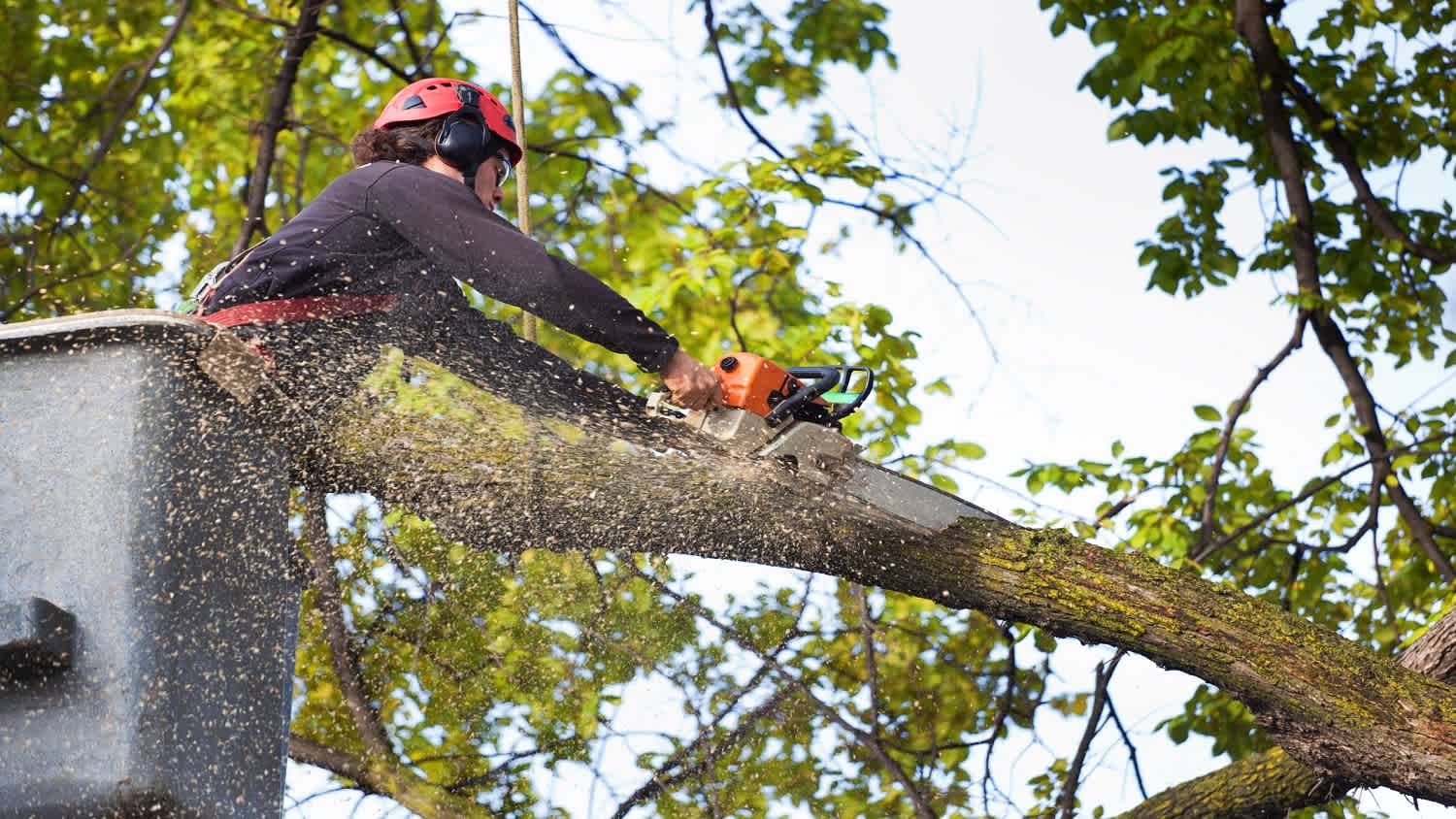
Tree Service questions, answered by experts

Bleach can potentially kill some types of delicate ornamental trees, but for the most part, it will only kill the foliage it comes in contact with. Applying bleach is not an effective method of killing a tree. A better option is to use an herbicide, which is a chemical compound designed to effectively kill a tree. 

Yes, forestry mulching can grind stumps, but the level of effectiveness depends on the equipment used. Drum mulchers can break down smaller stumps, but larger or deep-rooted stumps may require a dedicated stump grinder for complete removal. If full stump removal is necessary for replanting or construction, additional excavation may be needed. Always check with your forestry mulching provider to confirm whether they offer stump grinding and if their equipment is suitable for your specific needs.

You don’t always need a permit to grind a stump, but you might need one depending on your location and the stump’s surroundings. Permits are often needed if the stump is part of a protected tree species, near public areas or utility lines, or close to environmentally sensitive zones like wetlands. Some cities also regulate noise and work hours. Always check local rules before grinding, and contact your city or county office if you're unsure.

No, homeowners insurance typically does not cover the cost of removing a dead, sick, or rotting tree that is still standing. Insurance is designed to protect against sudden and unexpected accidents, whereas a tree dying or rotting over time is considered a maintenance issue. Coverage usually only applies after a tree has fallen and caused damage to your property.

Generally, homeowners do not need permission to cut down a tree on their own private property, but there are several exceptions where a permit may be required. You might need a permit if the tree is particularly large, old, or a protected species, such as a heritage tree. Trees located near public property or power lines can also be subject to special rules. Additionally, many local governments and homeowners associations (HOAs) have regulations controlling which trees can be removed to manage an area's appearance or prevent the spread of invasive species. To avoid hefty fines, it is crucial to check with your local government and HOA to determine if a permit is needed before you begin.

The John Day, OR homeowners’ guide to tree services

From average costs to expert advice, get all the answers you need to get your job done.