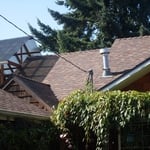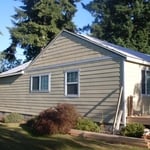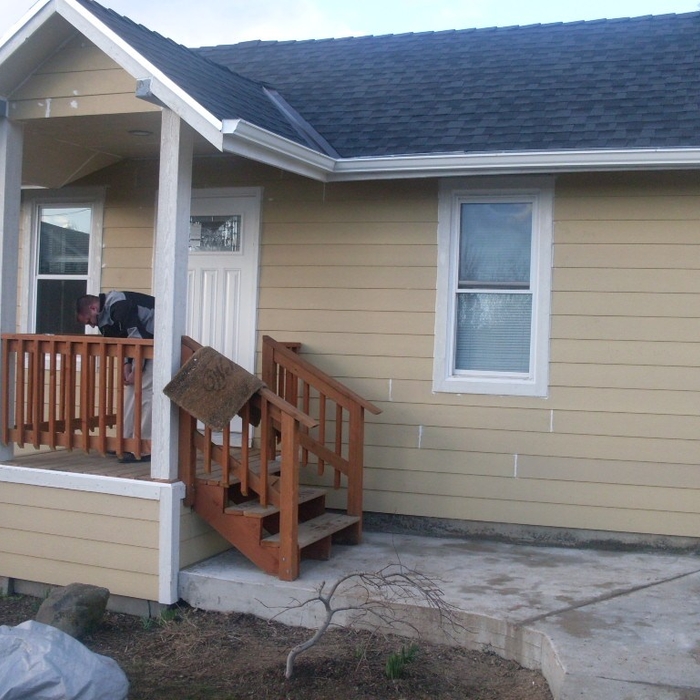

"Replaced my roof. I have a large roof because I have a one story home with over 2100 square feet (not including the two car garage). I took advantage of the Big Deal and because of that I was able to get a roof with a little better quality roof with 50 year warranty for the same price as 30 year warranty roofs. I also had them replace three sky lights. I gave them a "C" for responsiveness because I had to email a couple of times to nail down a date for them to complete. I'm still waiting for one of my sky lights and I haven't heard from him for a couple of weeks.
|
|Thank you for the big deal because although I have had a little frustration it is well worth it. They completed the roof in 2 days and that is saying something during the winter and a large roof. They cleaned up really well and I have already given them a reference to my Mom which I wouldn't do if I didn't think they were fair and didn't do a good job."
"They did a real good job. They were real professional. We can now open the garage door from the inside of the house and now it is so smooth that we have to check to see if we hit the button to open it or close it. Before we used to know when it was opening or closing because it used to make a noise. It helps when you move to a city where you are new. "
Concrete Mudjacking questions, answered by experts
A sinking foundation can be lifted, most often by installing piers to re-level and support the weight of the house. Depending on the cause and extent of the sinking, other methods to lift a foundation include underpinning and mudjacking. Consult a foundation repair pro to determine the best way to lift your sinking foundation.
Generally speaking, push piers—or steel piers—are the best option for underpinning, as they reach down to solid bedrock to find support for your foundation rather than relying on soil, which could be subject to the same issues as the soil directly below your foundation. However, the best underpinning method for your home depends on your location, how far down the bedrock is, and the type of soil in your area. Helical piers are usually the best option for sandy soil or in areas where the bedrock is too deep to use steel piers.
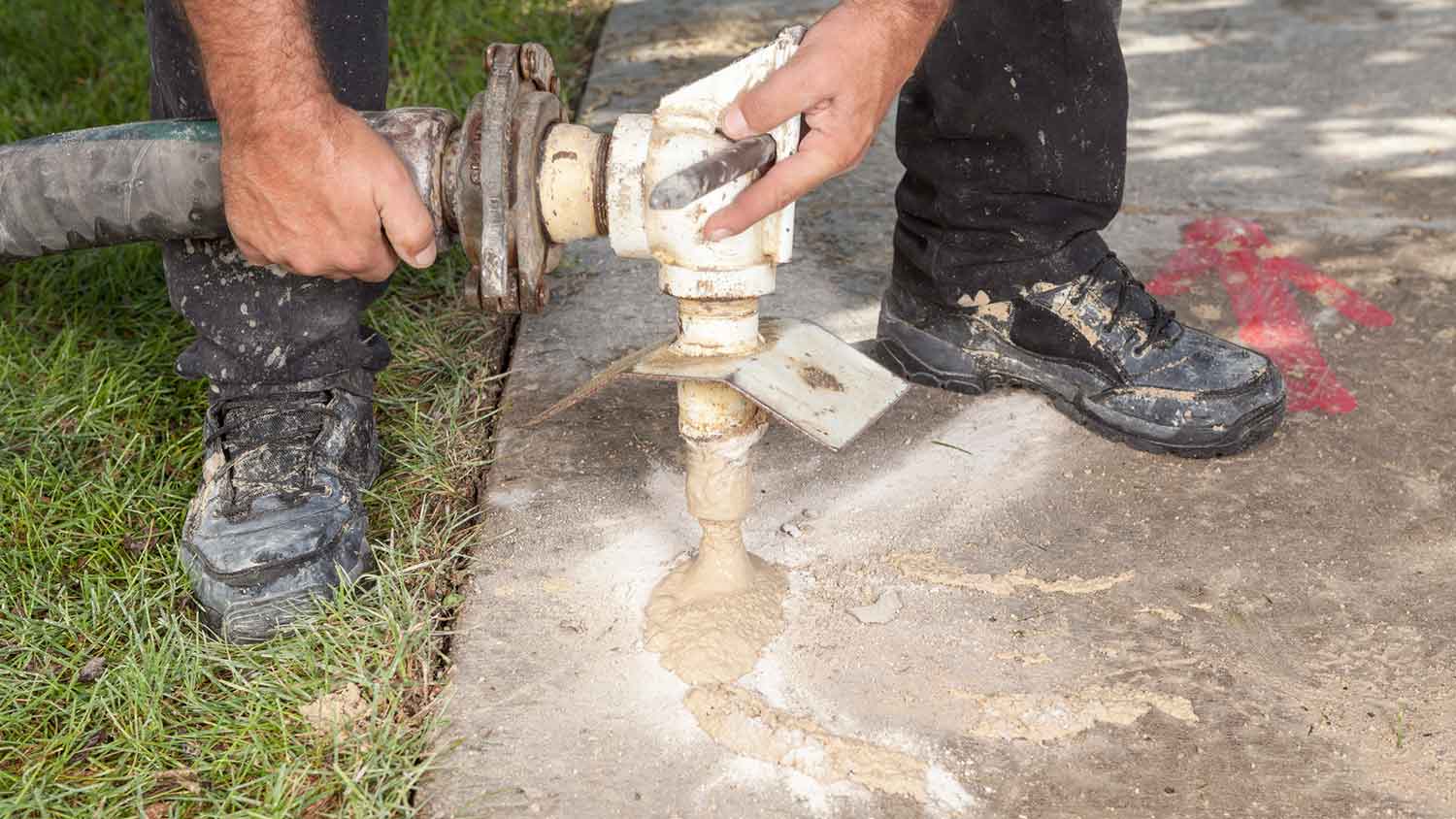
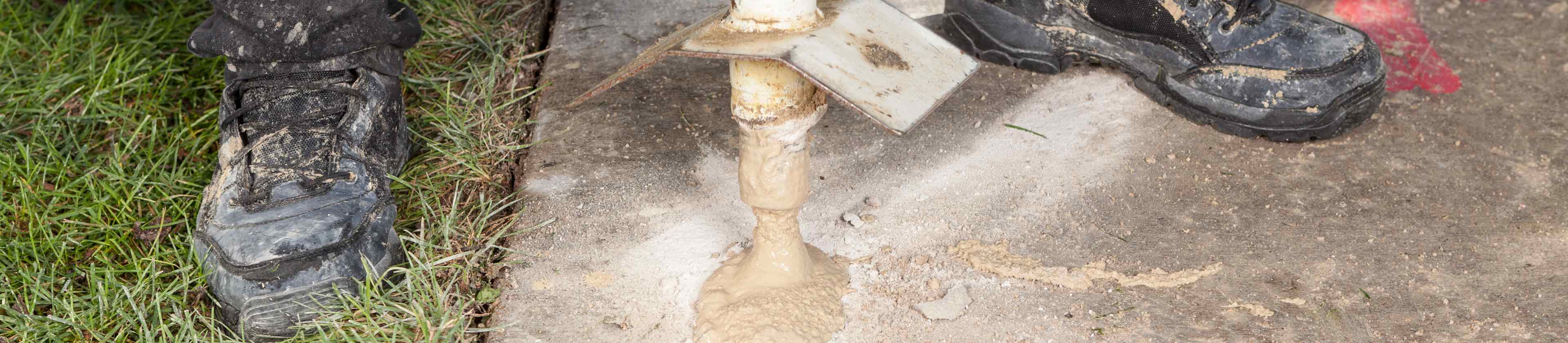
A slurry of cement, sand, and water is injected beneath the concrete to lift and stabilize it.
It’s best not to perform mudjacking in the winter unless the ground temperature remains above freezing. Freezing temperatures can cause the slurry to harden too quickly, compromising its strength and longevity. Concrete is also more susceptible to cracking and splitting in cold temperatures, so there’s a higher risk of damaging the slab during the drilling and lifting process in winter.
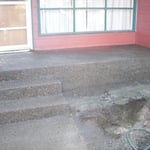
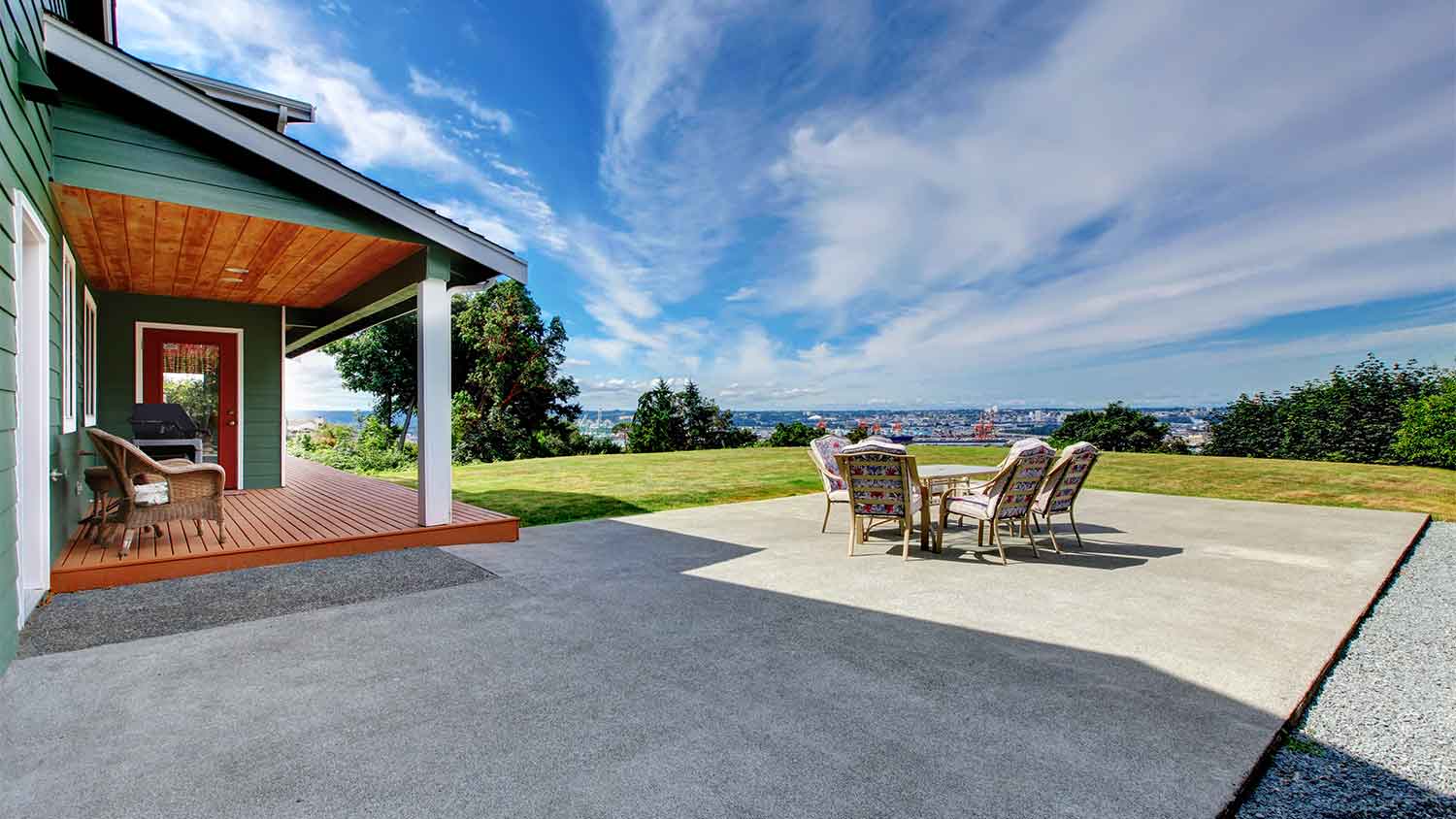
Mudjacking is usually reserved for light-duty slabs, like patios, driveways, and sidewalks. However, it can be an effective way to lift garage slabs and concrete around the perimeter of the home, which could harm your foundation if it’s not done properly. The risk of damage is why having a professional mudjacking company carry out the work is important. This type of slab or foundation repair is relatively inexpensive, especially if you consider that a DIY job requires that you pay to rent the necessary equipment.
The Fossil, OR homeowners’ guide to concrete mudjacking services
From average costs to expert advice, get all the answers you need to get your job done.
DIY mudjacking is an advanced task, but learning how to raise a concrete slab is great to know for many scenarios. Let's take a look at how to DIY mudjack.
Sunken concrete can be a structural issue, but a professional can easily repair it. Ask these concrete injection leveling and mudjacking questions before you hire.