





Top-rated energy efficiency auditors.

Get matched with top energy efficiency auditors in Irondequoit, NY

Enter your zip and get matched with up to 5 pros

Need a pro for your energy efficiency auditing project in Irondequoit, NY?

Select your specific project to find the pro for you.

TRUSTED BY IRONDEQUOIT, NY HOMEOWNERS

  • Average homeowner rating star icon4.6
    Average homeowner rating
  • Verified reviews icon31
    Verified energy efficiency auditing services reviews

Find Energy efficiency auditors in Irondequoit

Avatar for True Energy Solutions, Inc.
True Energy Solutions, Inc.
4.1(
32
)
Home Energy Audit

Serving Irondequoit, NY and surrounding areas

In business since 2008

Free estimates

Credit card accepted

"We have had the energy audit but that is as far as we currently are in the process as the request for this review came before we have the results of the review, cost, or work has been given to us."
Solar Install 1
Solar Install 2
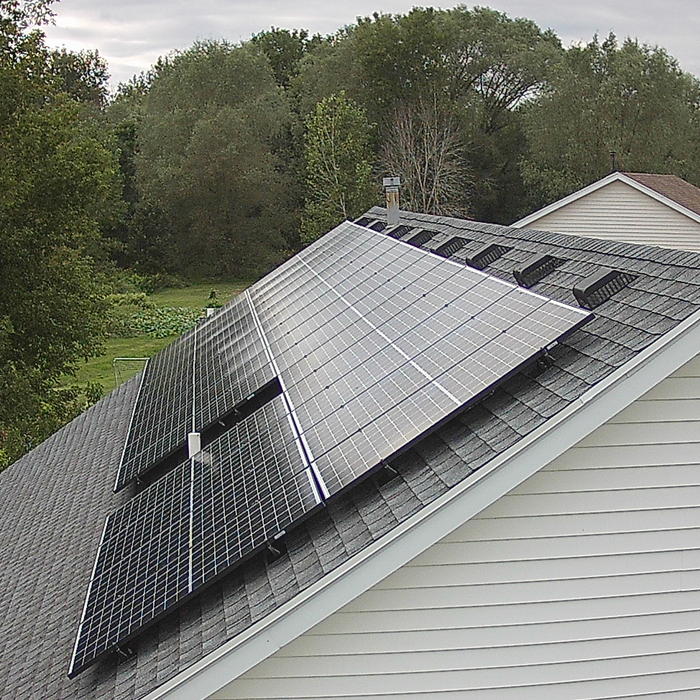
Solar Install 3
Solar Install 4
Solar Install 5

+1

Response time10 mins
Response rate100%
Recommended by100%of homeowners
Avatar for Ranmon Enterprises, LLC
Ranmon Enterprises, LLC
5.0(
1
)
Home Energy Audit

Serving Irondequoit, NY and surrounding areas

In business since 2015

Free estimates

Small jobs welcome

There are more ways than you would expect to stop overpaying on your energy bill. Our business is to help identify those alternatives, and focuses on those that show the quickest and most tangible dollar amount savings over the fastest time frame. If you are pro-environment, we pay close attention to those issues as well. If this sounds like a fit, get in touch with us today. Our vendors are running different cash back incentives through the end of the quarter.

Lower Energy Bill and Reduce Carbon Emissions
Response time10 hrs
Recommended by100%of homeowners
northshore pressure washing
New to Angi
Energy Audit - For BusinessHome Energy Audit

Serving Irondequoit, NY and surrounding areas

In business since 2011

Free estimates

We are one of the largest energy consulting companies in the country. We offer Free Energy Forcasts to businesses across a wide variety of climate zones. When implemented, our recommendations can consistently save you 17-22% on your energy costs, in the first year. We offer a variety of products, from an all-inclusive fixed product, to a variable option and a hybrid. Call today to see what solutions we can offer you! References are available from very happy clients.

Energy Efficiency Auditing questions, answered by experts

To determine the right size generator for your house, you should calculate the total wattage of the appliances and devices you want to power during an outage. List all essential items, note their start-up wattages, and add them together.

Here are some typical wattage requirements for common appliances:

  • Refrigerator: 600 watts

  • Large dehumidifier: 700 watts

  • Large window air conditioner: 1,400 watts

  • Water heater: 3,000 to 4,500 watts

  • Electric furnace: 5,000 to 25,000 watts

A 7,500-watt generator might be sufficient for essentials like a refrigerator, freezer, well pump, and lighting circuits. However, for high-demand items like a water heater or furnace, a whole-home generator is a better choice. A portable generator may be enough if you only need to power a few critical items.

While home square footage can offer a rough estimate, it is not always a reliable indicator. For reference, here are some typical generator sizes based on square footage:

  • 1,000 sq ft: 6–9 kW

  • 1,500 sq ft: 7–10 kW

  • 2,000 sq ft: 10–14 kW

  • 2,500 sq ft: 12–16 kW

  • 3,000 sq ft: 16–20 kW+

For the most accurate sizing, consult a professional who can calculate your home's peak and average power consumption and recommend the optimal generator.

Common warning signs of an overloaded electrical panel or meter box include frequent circuit breaker tripping, flickering or dimming lights, scorch or burn marks, and a burning scent coming from the panel. A circuit breaker trips as a protective measure to prevent overheating and potential fires. If you observe any of these signs, turn off the affected circuit breaker and move some devices to a different circuit. If the problem persists after turning the breaker back on, you should contact a professional electrician to resolve the issue.

An average, 400-square-foot electric heated driveways consume approximately $3 per hour in terms of electricity. The price may slightly fluctuate depending on your local energy cost. A simple formula to calculate your heated driveway’s total wattage consumption is by multiplying the square footage by 50 watts and then dividing it by 1,000 to get the kilowatt number. Multiply that with your local energy cost per hour and there you have the hourly operating cost.

A small sump pump running infrequently uses an average of 10 kilowatt-hours (kWh) of electricity per month. The average cost for electricity is $0.171 per kWh. The size and use frequency affect how much electricity it uses. Sump pumps average one-third to one horsepower (hp) motors. One hp is equal to 745.7 watts. Watts multiplied by the time your pump is running divided by 1,000 equals your average kWh. Multiply kWh by your average cost of electricity. In areas with high rain or a marsh basin, the average cost can be as high as $15-$25 a month.

Motion-sensor lights use one watt while on standby and five watts while turned on. They’re usually on for one hour over a 24-hour period, bringing the total wattage to about 28 watts per day. LED lights use around 6.5 to 8 watts while on. If you leave an LED light on all night, with night ranging from 10 to 14 hours, you’re looking at using 65 to 112 watts a night. You can minimally cut your wattage in half by switching to a motion-sensor light.

The Irondequoit, NY homeowners’ guide to energy efficiency auditing services

From average costs to expert advice, get all the answers you need to get your job done.