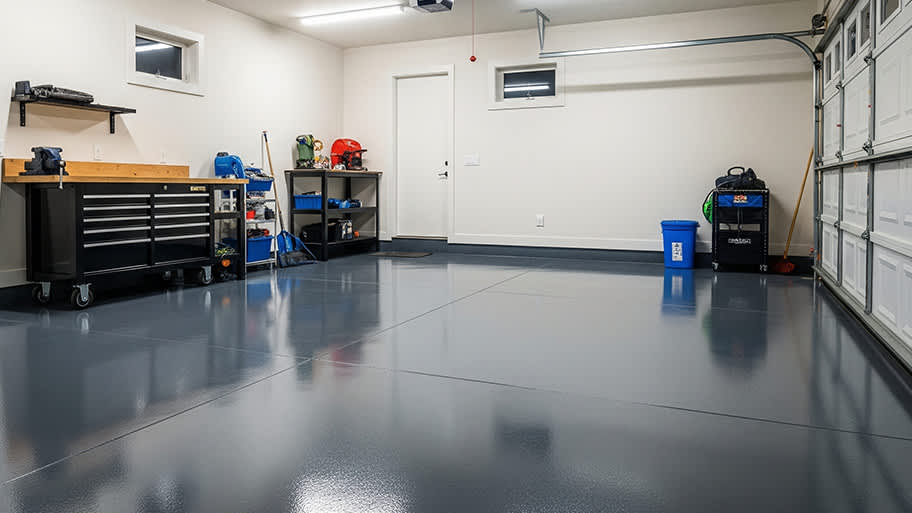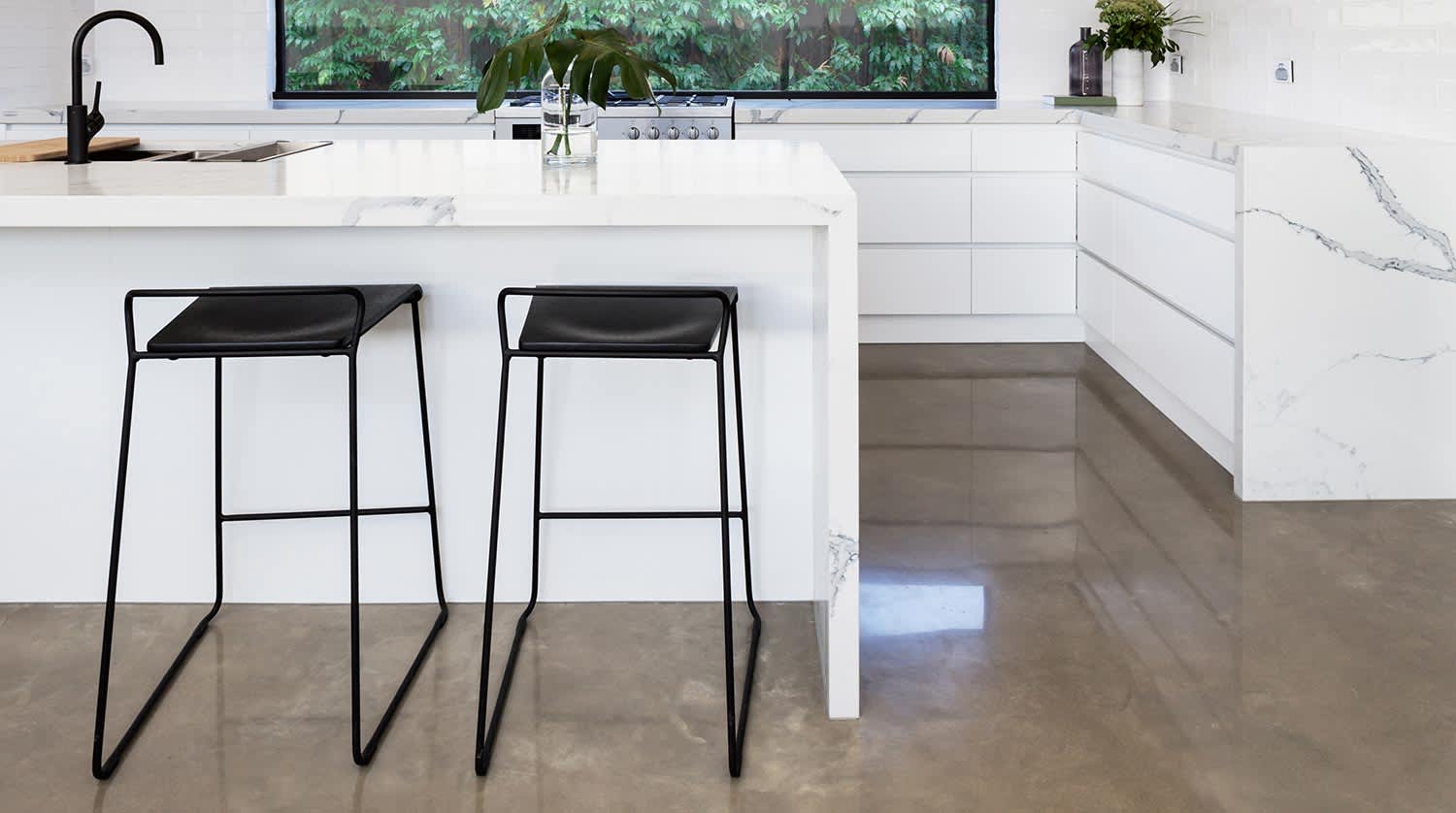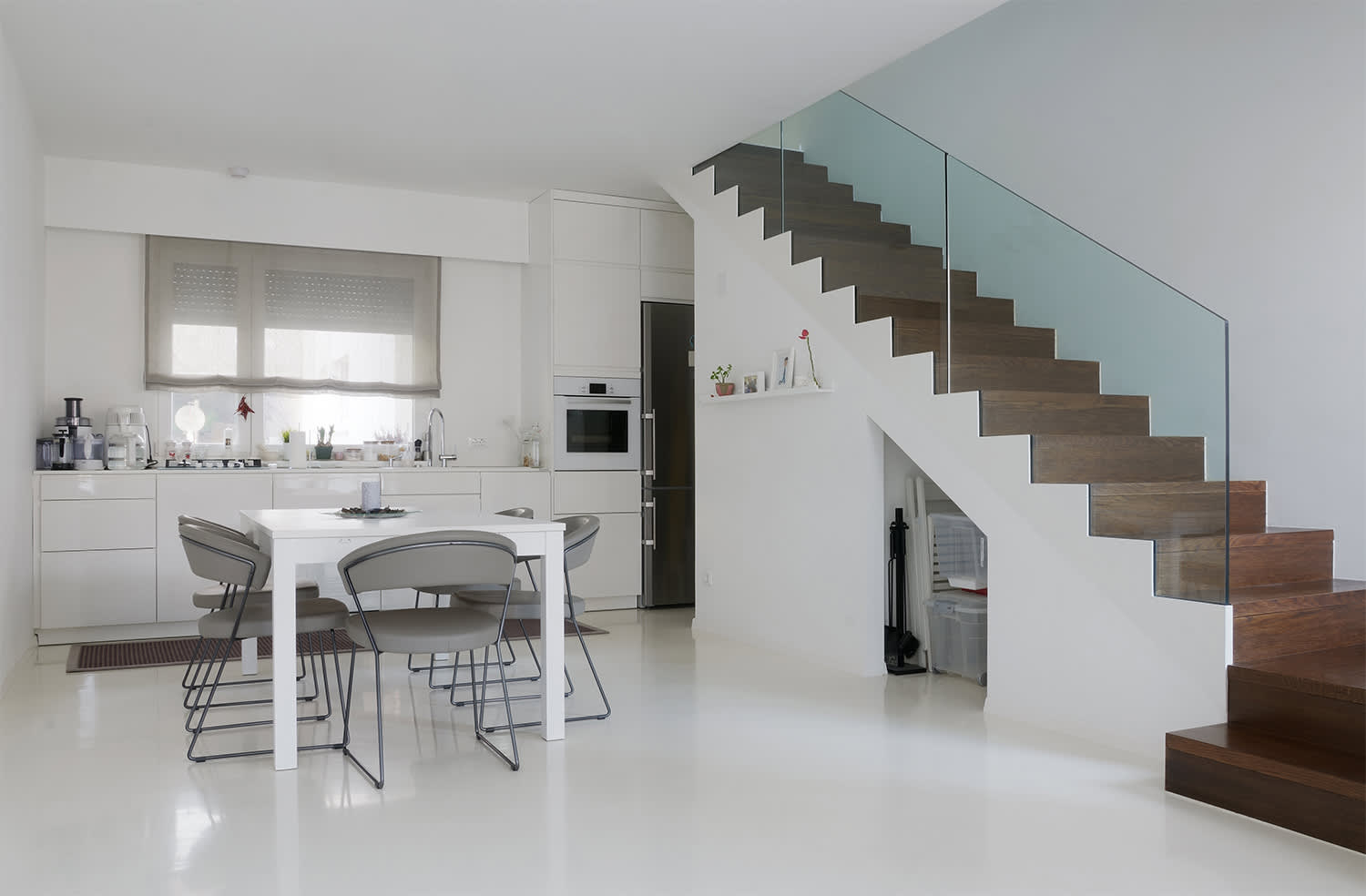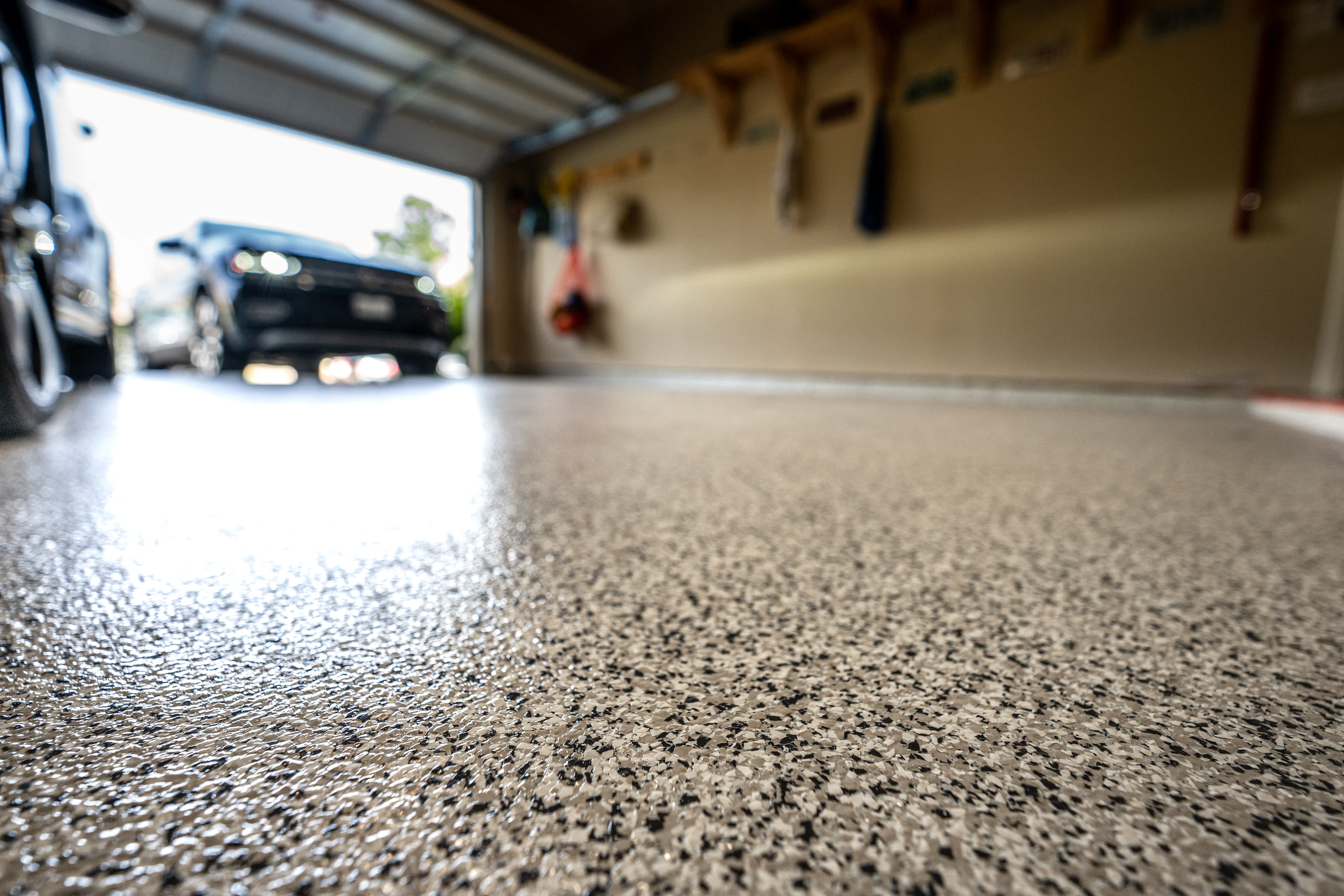





The benefits of epoxy floor coating include increased durability for concrete surfaces in the face of harsh chemicals, easy cleaning and maintenance, improved efficiency for underfloor heating, and an improved aesthetic over the dull surface of standard concrete floors.
Factors like the time of day you choose to seal the concrete, temperature, humidity, and airflow will impact drying time. To shorten the drying time, seal concrete in the late afternoon on a day with a temperature between 45 to 85 degrees Fahrenheit.
Installation typically takes 2-5 days, including preparation, pouring, and curing time.
Whether it's better to stain or paint concrete depends on your budget, desired aesthetic, and DIY skill level. Generally, staining is a more durable option because the stain soaks into the concrete's surface and won't wear away like a topical paint coating. Painting concrete can trap moisture underneath the paint layer, which may cause the concrete to deteriorate over time. However, concrete paint offers a wider variety of colors, is typically easier and less expensive to apply, and is effective at covering up existing stains or blemishes on the surface.
No. You cannot use asphalt products on concrete driveways. To seal a concrete driveway, use acrylic, epoxy, polyurethane, silane, siloxane, and silicate sealers or deep penetration sealers made specifically for concrete. Meanwhile, asphalt sealers contain refined coal tar (asphalt emulsion), water, sand, clay, polymers, and additives and are incompatible with concrete’s surface texture and higher density.
The Eureka, NV homeowners’ guide to epoxy flooring services
From average costs to expert advice, get all the answers you need to get your job done.
This guide breaks down the cost of installing epoxy flooring in your garage, basement, or other space. Costs depend on resin type, floor size, and more.
Epoxy flooring adds shine and durability to your basement, studio, or garage floor. Check out these epoxy flooring ideas to create the room of your dreams.