If you want to ensure your concrete sealer is applied correctly and lasts for as long as possible, hiring a professional is a good idea. A pro can recommend the ideal sealer and ensure it’s applied correctly.
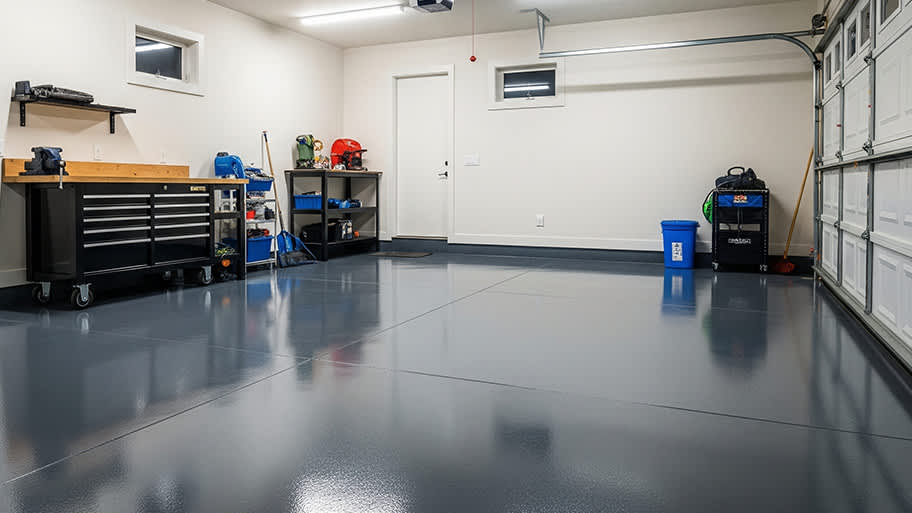
With so many vastly different options to choose from, how can you find an inexpensive garage floor that you can also confidently say is the best? The right solution will be different for everyone and truly depends on your individual needs and stylistic tastes.
If you’re working with a smaller budget, a low-cost coating such as paint, sealer, or stain might be the best way to express your style in the garage. If you need a high-performance surface that can handle the tough projects and maintenance you do in the garage, or if you want a wide range of colorful customization options, flexible tiles might be for you.
Yes, it is possible to apply a concrete coating yourself, especially for smaller applications if you have the proper equipment. However, for larger projects, a professional application is recommended to ensure durability, slip resistance, and proper adhesion.
Yes, you can seal old concrete, but proper preparation is essential. Before sealing, ensure the concrete is clean, dry, and free of any old sealant. To check if resealing is necessary, place a few drops of water on the surface; if they are absorbed in less than five minutes, it's time to reseal. If you are using the same type of sealer that was previously applied, you may not need to remove the old layer. However, if you are applying a different type of sealer, the existing one must be removed. Additionally, repair or fill any cracks to create a smooth base before you begin sealing.
When you’re painting a garage floor, it’s best to use a combination of rollers and brushes. You’ll want to start with a brush, making a border around the edges where the floor meets the wall. From there you can use a roller, though some people also like to do the entire first coat with a brush because it’s easier to work the paint into the textured concrete.
The Carlin, NV homeowners’ guide to epoxy flooring services
From average costs to expert advice, get all the answers you need to get your job done.
This guide breaks down the cost of installing epoxy flooring in your garage, basement, or other space. Costs depend on resin type, floor size, and more.
Faced with the shiny dilemma of polished concrete floors vs epoxy, you’ll need the details of cost, aesthetics, and durability to weigh and measure the winner.