

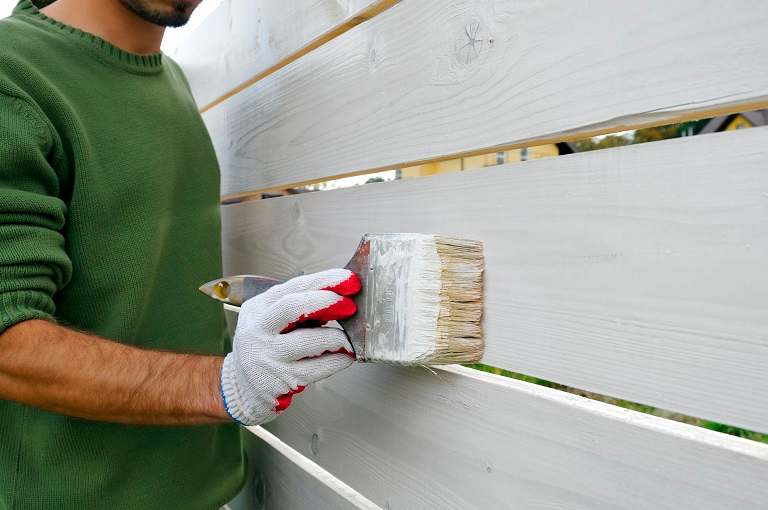
Top-rated fence painters.

Get matched with top fence painters in La Luz, NM

Enter your zip and get matched with up to 5 pros

Need a pro for your fence painting project in La Luz, NM?

Select your specific project to find the pro for you.

TRUSTED BY LA LUZ, NM HOMEOWNERS

  • Average homeowner rating star icon4.6
    Average homeowner rating
  • Verified reviews icon14
    Verified fence painting services reviews

Find Fence painters in La Luz

No results for Fence painter in

Try adjusting your search criteria.
Fence Painting questions, answered by experts

Whether to brush or roll stain on wood depends on the project and your preference. Brushing is ideal for smaller, intricate areas and offers more control over the application, ensuring thorough coverage and penetration into the wood's grain. 

Conversely, rolling is efficient for more extensive, flat surfaces and can save time. However, it is not always the best fit for textured or uneven wood. Some projects may benefit from combining both methods, using a brush for detail work and a roller for broader areas. Ultimately, the choice between brushing and rolling depends on the specific requirements of your staining project.

Rags used with oil-based stains are highly flammable and can spontaneously combust in the right conditions. To reduce the fire risk, throw them in a metal container after use and add rocks on top to secure them. Add an inch of water and seal the container. Take the rags in the container to a hazardous waste factory as soon as possible.

Yes, many fence repair services include treatments like sanding, priming, rust prevention, and repainting to protect the fence and restore its appearance. These services help prevent further corrosion and improve aesthetics. However, since not all providers include this, it is best to confirm what is covered before scheduling the repair.

If you want to achieve a deeper, darker stain color, wait 5 to 10 minutes before wiping it off. However, wipe it off faster for a lighter tone. When wiping off the stain during this part of the process, be sure to work in the direction of the wood’s grain for best results.

Limewash and whitewash are two techniques used to give brick a light, matte finish, but they differ in composition, application, and permanence. The best choice depends on your aesthetic goals and the specific surface.

Composition

  • Limewash: A natural and environmentally friendly option made from limestone, water, and sometimes pigments. It is breathable and soaks into porous surfaces like brick.

  • Whitewash: Traditionally made from lime, water, chalk, and binders, but a similar look can be achieved with watered-down white paint. It is paint-based and sits on top of the surface.

Appearance and Finish

  • Limewash: Provides a natural, textured appearance that allows the brick's character to show through. It offers a more traditional finish.

  • Whitewash: Creates a softer, more opaque finish, often used for a rustic or shabby-chic style.

Application and Permanence

  • Limewash: Is semi-permanent and can be removed, making it a good choice if you might want to change the look in the future. It requires more skill to apply and cannot be used on previously painted brick.

  • Whitewash: Is a more permanent solution. It is more forgiving to apply and can be used on painted brick. However, because it sits on the surface, it can trap moisture.

Ultimately, if you want a breathable, natural, and reversible finish for unpainted brick, limewash is a great option. If you need a more permanent, opaque coating that can be applied over painted surfaces, whitewash is the better choice. Whitewashing may also be more economical, costing approximately $1.40 to $4.20 per square foot.

The La Luz, NM homeowners’ guide to fence painting services

From average costs to expert advice, get all the answers you need to get your job done.