



Top-rated fence painters.

Get matched with top fence painters in Jacona, NM

Enter your zip and get matched with up to 5 pros

Need a pro for your fence painting project in Jacona, NM?

Select your specific project to find the pro for you.

TRUSTED BY JACONA, NM HOMEOWNERS

  • Average homeowner rating star icon4.4
    Average homeowner rating
  • Verified reviews icon199
    Verified fence painting services reviews

Find Fence painters in Jacona

No results for Fence painter in

Try adjusting your search criteria.
Fence Painting questions, answered by experts

Limewash and whitewash are two techniques used to give brick a light, matte finish, but they differ in composition, application, and permanence. The best choice depends on your aesthetic goals and the specific surface.

Composition

  • Limewash: A natural and environmentally friendly option made from limestone, water, and sometimes pigments. It is breathable and soaks into porous surfaces like brick.

  • Whitewash: Traditionally made from lime, water, chalk, and binders, but a similar look can be achieved with watered-down white paint. It is paint-based and sits on top of the surface.

Appearance and Finish

  • Limewash: Provides a natural, textured appearance that allows the brick's character to show through. It offers a more traditional finish.

  • Whitewash: Creates a softer, more opaque finish, often used for a rustic or shabby-chic style.

Application and Permanence

  • Limewash: Is semi-permanent and can be removed, making it a good choice if you might want to change the look in the future. It requires more skill to apply and cannot be used on previously painted brick.

  • Whitewash: Is a more permanent solution. It is more forgiving to apply and can be used on painted brick. However, because it sits on the surface, it can trap moisture.

Ultimately, if you want a breathable, natural, and reversible finish for unpainted brick, limewash is a great option. If you need a more permanent, opaque coating that can be applied over painted surfaces, whitewash is the better choice. Whitewashing may also be more economical, costing approximately $1.40 to $4.20 per square foot.

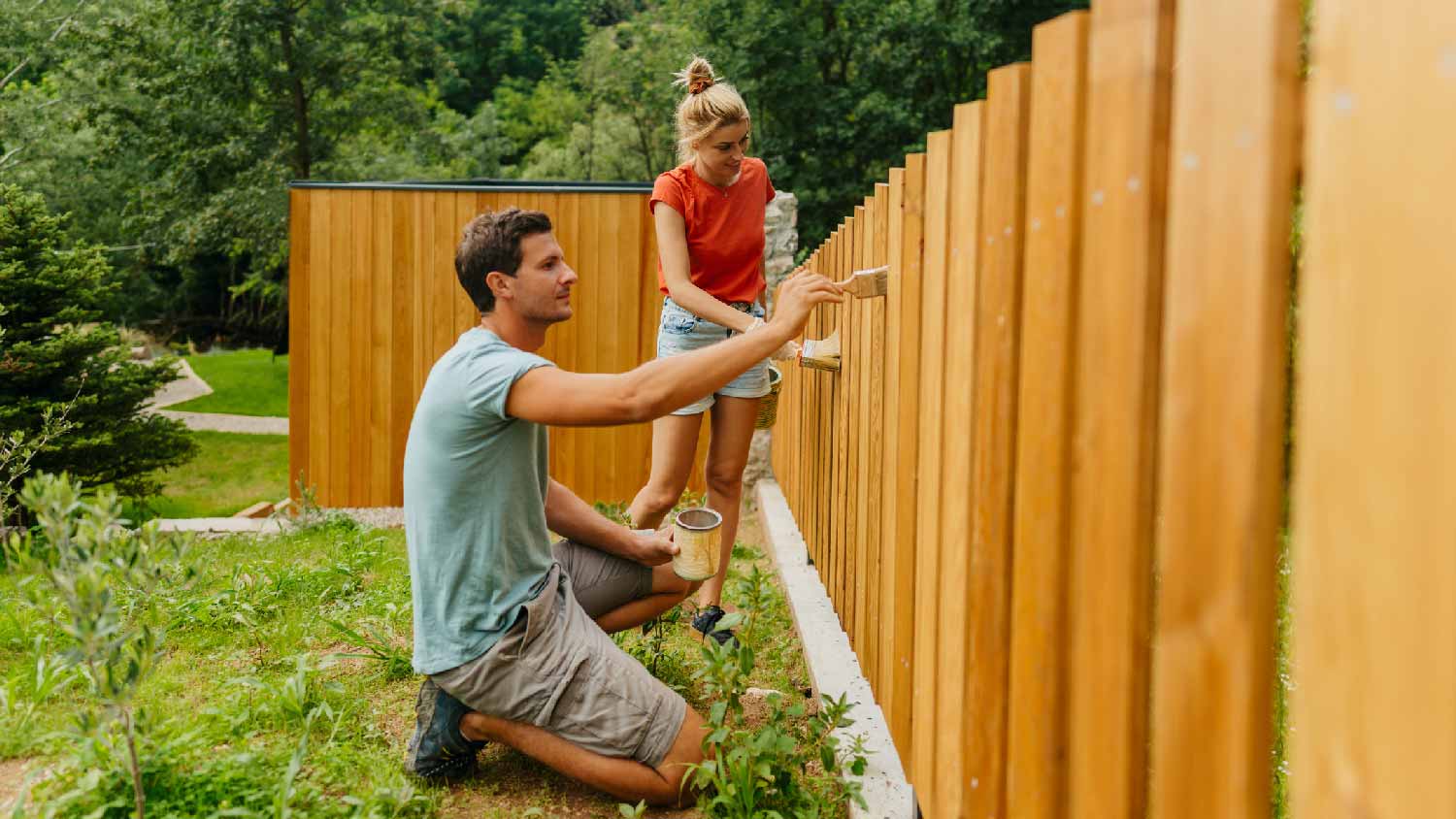
You should stain both sides of your fence to get the full benefits. Fences often fall along property lines, so you may want to save a buck by leaving your neighbor’s side in the dust. If you do that, all you get is a slightly better view. Moisture and UV rays can still sneak in through the side that’s unpainted or worn down and damage your fence. Rot and rust will spread, even if you can’t see it from your side of the lawn.

You can paint an old wooden fence, but make sure first to do a deep clean (ideally with a pressure washer) and inspect the fence for any existing damage. Painting over dirt and debris will cause your paint to peel. Once you’ve cleaned and repaired any minor issues, use a primer and high-quality satin paint.

You can weather a new wood fence by applying vinegar with steel wool as a way to fade some of the coloring. You may also find it easier to stain your entire fence a new color instead of trying to get newer fence boards to match an older one.

Both a roller and a brush are effective methods for painting a chain link fence. A roller will make the job easier by ensuring symmetrical strokes and reaching the backside of the fence as well, which cuts down on paint time. However, a brush is often necessary for painting the base of the fence and near the posts due to its ease of reaching smaller spaces.

The Jacona, NM homeowners’ guide to fence painting services

From average costs to expert advice, get all the answers you need to get your job done.