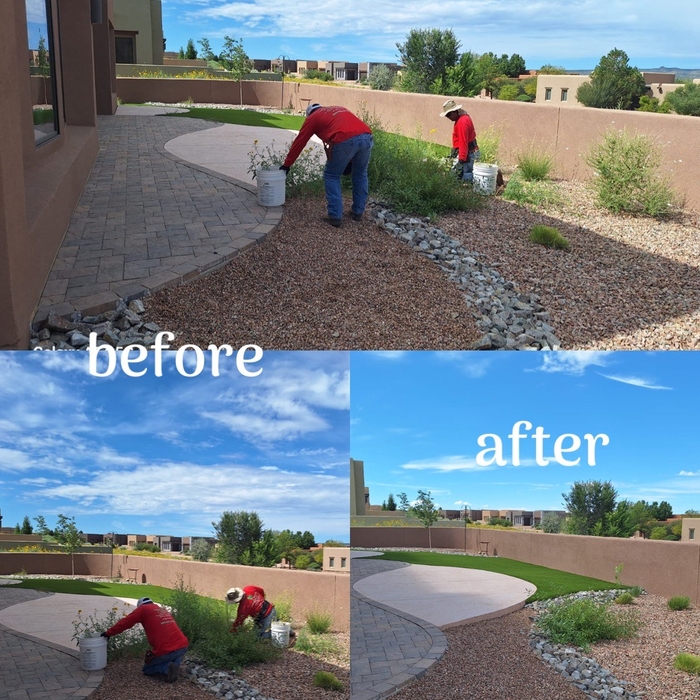




Top-rated plant watering pros.

Get matched with top plant watering pros in Chamita, NM

Enter your zip and get matched with up to 5 pros

Need a pro for your plant watering project in Chamita, NM?

Select your specific project to find the pro for you.

Find Plant watering pros in Chamita

No results for Plant watering pro in

Try adjusting your search criteria.
Plant Watering questions, answered by experts

A jigsaw is commonly used to cut holes in drywall. It offers versatility and precision, making it suitable for creating circular or irregular openings. When equipped with the right blade, a jigsaw can swiftly and cleanly cut through drywall, making it a good choice for DIY projects.

The two most common drywall thicknesses for ceilings are 1/2-inch and 5/8-inch. For most standard residential applications, 1/2-inch drywall is sufficient and widely used. It provides adequate support and is lighter and easier to handle during installation compared to thicker sheets. However, 5/8-inch drywall is often used for specific cases where additional benefits are needed. It is heavier but provides superior sound dampening and fire resistance. You should consider using 5/8-inch drywall for ceilings in commercial buildings, between a garage and a living space, or above a finished basement to meet building codes or for enhanced soundproofing.


Whether Venetian plaster increases your home's value often depends on the buyer's preference. As a purely aesthetic upgrade, it doesn't add structural value in the same way a kitchen or bathroom remodel might. However, its beautiful and attractive appearance can make a home more appealing to potential buyers, possibly leading to more interest, higher offers, and increased competition when you sell.

The easiest way to cut holes in drywall for electrical boxes is to use a spiral saw with a drywall router bit. Hang the drywall without cutting out a hole for the box, but make sure you measure and mark where the box is located on the wall. Once you screw in the drywall sheet, drill a small hole into the box void, insert the spiral saw bit, and move it around the edge of the box using the inside wall as a guide. You can also use an oscillating multi-tool with an electrical box cutout for fast, professional results.

Although they have similar applications, spackle and joint compound are not the same. Their primary differences lie in their composition, consistency, and ideal use cases.

Spackle is composed of gypsum and binding agents, making it thicker than joint compound. It dries quickly and is easy to sand, which makes it ideal for small wall repair projects like filling nail holes or patching minor damage.

Joint compound, also known as drywall mud, consists of limestone and gypsum. It is primarily used for large-scale projects, such as taping and finishing the seams on newly installed drywall. It tends to shrink more than spackle and can be more difficult to spread.

While both products can be used to fill small depressions and cracks, spackle cannot replace joint compound for taping and mudding new drywall. Conversely, you can often use joint compound for small patching jobs typically done with spackle.

The Chamita, NM homeowners’ guide to plant watering services

From average costs to expert advice, get all the answers you need to get your job done.