
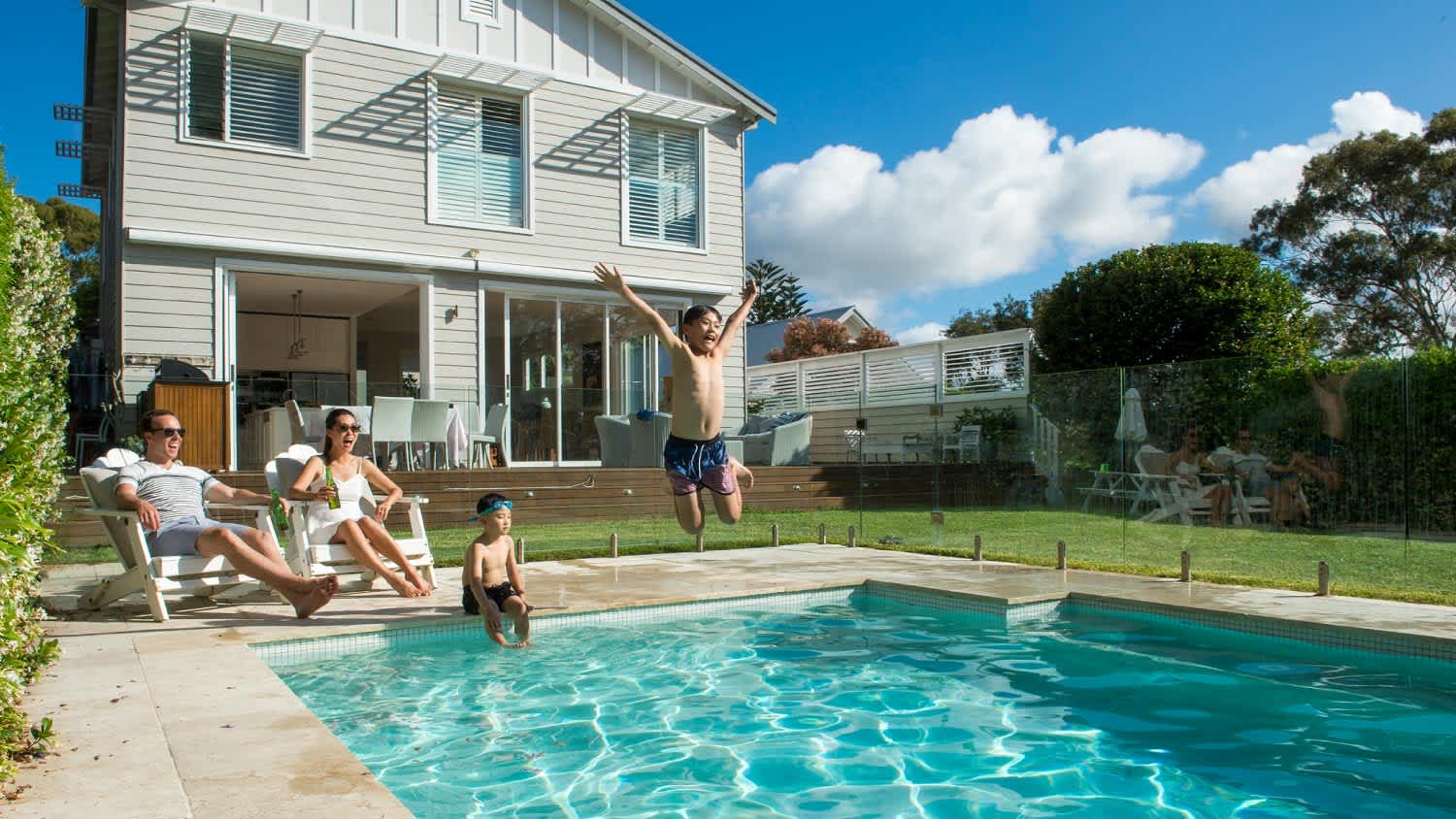
Considering a swimming pool for your backyard? Find out everything you need to know about in-ground pool costs, from materials to labor and more.
Dive into your pool installation with this straightforward yard leveling guide

Before installing an aboveground pool, you’ll need to level your backyard. Knowing how to level ground for a pool is easier said than done for particularly uneven yards. Nonetheless, if you’re willing to roll up your sleeves, you can level your yard like a pro in a few simple steps. It just takes some muscle, time, and attention to detail.
There are some precautions you should take before starting this project. Depending on the size of the area, you may need a building permit and approval from your local homeowner’s association (if you have one). The next hurdle is selecting an area to level—and you’ll need to consider both safety and convenience. Generally, your pool area should be:
At least 10 feet away from your home
At least 6 feet away from other obstacles or receptacles
Away from power lines, septic lines, and cables
On firm ground without mud, sand, or loose soil
Away from large trees that could drop leaves into the pool
Since every pool and municipality is different, always read the manufacturer’s manual and check your local laws. You’ll typically want to place your pool in the flattest area of your yard, but that won’t always work if there’s something in the way. Always call 811 before you dig, so they can make sure you won’t hit any underground utility lines.
Choosing a location is all about safety first. It may seem easy to put an aboveground pool on a paver patio, but the pavers could sink under the weight of the water and collapse your pool. This could be disastrous for your foundation.
Instead, pick an area of firm ground at least 10 feet away from your home (or more if local laws require it). The flattest area in your yard is a great place to start—so long as it’s away from aboveground power lines and underground utility lines.
Sharp debris and strong roots can damage your pool. Once you choose a location, clear the area of rocks, debris, and vegetation like grass and weeds. Use a rake to move the loose debris and a shovel or sod cutter to remove the rest. Cart away the debris in your wheelbarrow.
Before you level your yard, you’ll need to know which areas aren’t level. To do this, identify the high points. You’ll probably be able to see some of them with your naked eye, but you’ll also want to check using a level taped to a two-by-four plank.
Move the plank across your work area, keeping note of places that aren’t level. Start on one side, and check every 2 to 3 feet until you’ve examined the entire space. Alternatively, if you’re installing a circular pool shape, you can put your plank in the center and rotate it clockwise.
As you check for high points, make sure you mark these spots with a landscaping stake. Sometimes, an area is mostly level, but there will be a sloped portion. You’ll need to dig out the slope to level your yard for the pool.

Rather than filling in holes and slopes with dirt, you’ll want to remove the bumps and peaks. This is because pools are heavy. If you add a large amount of soil, that soil can settle beneath the pool and create an uneven surface.
Locate the deepest spot in your work area. This is the baseline that the rest of the ground should match. Use your shovel to dig out the higher points and check the surface with your two-by-four plank. You can cart excess dirt away with your wheelbarrow. Keep repeating this step until the area is level.
Tip: If you plan to fill the area with sand, dig the pool area at least 2 inches into the ground. This way, the sand will sit level with the rest of your yard.
As you dig, you may uncover rocks and other debris. Rake them away. Once the area is totally clear, moisten the soil with your garden hose, so you can efficiently tamp it down. Patience is a virtue, as this could take around an hour. You can’t use too much water pressure, or it could ruin your leveling job.
Once the soil is moist, use a hand tamper or rolling tamper to compact the surface. This helps prevent your pool from sinking once it gets filled with water.
Some pool manufacturers recommend a finishing layer of masonry sand. To be sure, check the manual that came with your pool kit for how much sand you need for your pool setup. Simply spread the sand across your work area in a 1- to 2-inch layer. While leveling the sand for your pool, use your rake to get even coverage.
Once you have an even layer, remove any rocks or debris hiding in the sand. Use your hand tamper or rolling tamper to tamp down the sand. Make sure the area is still level using your two-by-four plank. Make adjustments if necessary.
With a freshly level area, you’re ready to start installing your pool. Use your plank to double-check the area to ensure it’s level. Even a couple of inches of slope can cause major issues. You may also want to spray an herbicide or fungicide to stave off weed and fungus growth around the high-moisture pool area.
For some homeowners, leveling ground for a pool as a DIY project is a way to cut costs ahead of a professional pool installation. Other homeowners have no problems installing an aboveground pool themselves. Some parts of this job can be difficult to do solo, so if you don’t hire a pro, you should still enlist a friend for a helping hand.
A level pool looks better, and it’s safer and lasts longer. Here are some common mistakes to avoid when prepping the ground for a pool installation:
Choosing the Wrong Location: Always choose a flat, level location for your pool that doesn’t collect standing water. Consider how much sun exposure it will get for comfort’s sake, and set it up close enough to water and electricity for your convenience.
Not Measuring: If your pool leveling method involves squinting and guessing, you’re not doing it right. Even a slight slope can lead to structural problems, so always use a level for accuracy.
Skipping Soil Compaction: Loose soil may seem fine now, but it can shift and settle unevenly under the weight of a filled pool. Use a plate compactor for the most solid foundation.
Over-Digging and Backfilling: Digging too deep and filling low spots with loose dirt or sand leads to future settling. Instead, cut down high areas rather than filling low spots.
Using Too Much Sand: You need some sand to buffer your pool liner against damage from the soil, but you should never use it as a leveling substrate. Similarly, the sand should be inside the boundaries of the pool base, not under the track. Extending the sand too far out will allow it to wash out, and the pool will settle or sink.
Using Patio Blocks: Some DIY pool installation manuals tell you to place patio blocks under the liner, but these can tear the pool liner and ruin your pool. Always place the pool frame, uprights, track, and liner on the ground, not on patio blocks.
Ignoring Drainage: Poor drainage will erode the soil and destabilize your pool. You want water to flow away from the pool site, so think of drainage before you start to level the ground for your pool installation.
Taking the time to level the ground properly means more time enjoying your pool and less time worrying.
Most homeowners spend between $200 and $800 on the cost of leveling their backyard for a pool. You can save a chunk of change on pool installation by doing this portion of the job yourself, but not every homeowner is up for the challenge. It requires some significant labor and careful measurements. Hiring a local swimming pool company may be worth it rather than risking an injury or a water-damaged backyard.
As a rule, if you don’t feel confident or your land has significant slopes, go with a pro. You can also call an aboveground pool company near you if you need help installing your new pool.
If you’re good people wanting to do business with good people, hire Matt. He is a consummate professional and utterly competent. He installed a water heater in my home at a price that beat competitors by hundreds of dollars with a promise to support the unit for its life (even after its 6 yr...
 Greene's Plumbing Services
Joseph did a great job with the staircase and trim. Timely and efficient, clear communication about the work, very fair pricing. For the stairs in particular, done very skillfully in an old house (1893) in a tight spiral, and very creative with how to do the handrail. Did a nice job with...
 Vouis Trim Carpentry L.L.C.
This company does it right. Firstly, I want to say that Landan was a joy to work with. He was so kind, transparent, and had everything under control. His entire team showed up ready to work and they were all very respectful of the fact that we were in an office space. A little backstory – we...
 Krumlauf Floors
Professional Team, smooth to communication chain and schedule flexibility. Follows proper construction procedure and completes task on time.
 Pegasus Concrete
Very professional, knowledgeable and helpful! Completed the install on time and as expected.
 Ward's Services
Cole has been handling plumbing and general contracting for our four properties over the past three years, and he’s always done a great job. Most recently, he installed a sink and countertop in our retail store where none existed before, and it turned out exactly how we needed. He’s...
 ANB Renovations LLC
Excellent, Prompt, Courteous Service!!! They were super friendly and quite personable. I felt very comfortable with the gentlemen that did the installation. They installed it exactly where I asked them to and they did an excellent job!! I loved their service so much.
 Tether House
I hired windows depot USA of central to install new windows in house in Oshawa. Ilya was very professional from the start, not only did he offered a great price, he also made sure the installation was on time. I am very satisfied with final outcome. The windows look great and the overall...
 Window Depot USA of Central Ohio
The guys did an outstanding job and we had a great experience with CarifaTile. I appreciated that Joe reviewed the quotes with me and set expectations prior to the install. The crews showed up as scheduled and always left the areas clean upon leaving the house. We will definitely use...
 CarifaTile
Did an amazing job transforming my yard. Also installed sod in places, would recommend to everyone.
 Cardinal Landscaping & Construction LLC
From average costs to expert advice, get all the answers you need to get your job done.
Considering a swimming pool for your backyard? Find out everything you need to know about in-ground pool costs, from materials to labor and more.
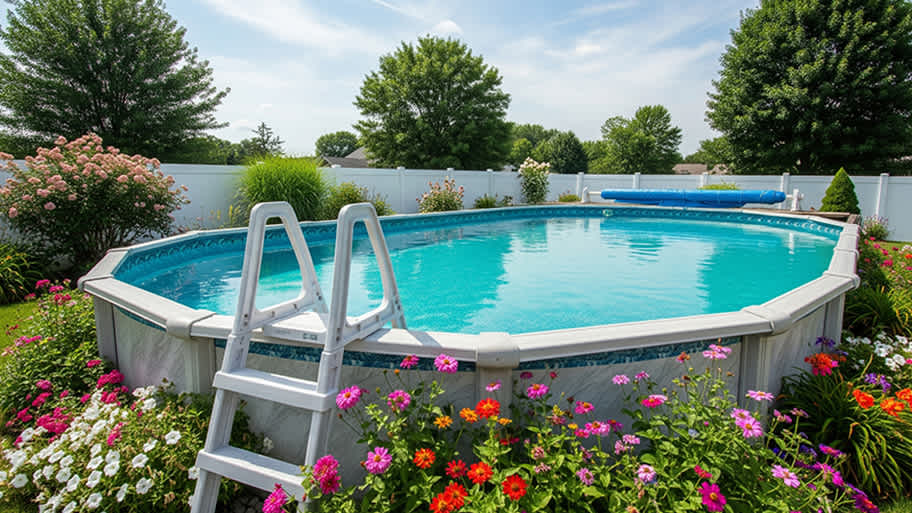
Dreaming of summertime swimming? Find out aboveground pool costs, including prices for materials, fun extras, and professional installation.
Leveling your yard can help with drainage and prevent damage to your home. Learn the cost to level a yard and what factors can affect the price.

A perfectly level ground is crucial for a safe and enjoyable pool experience. Learn who to hire to level the ground and prepare your backyard oasis.
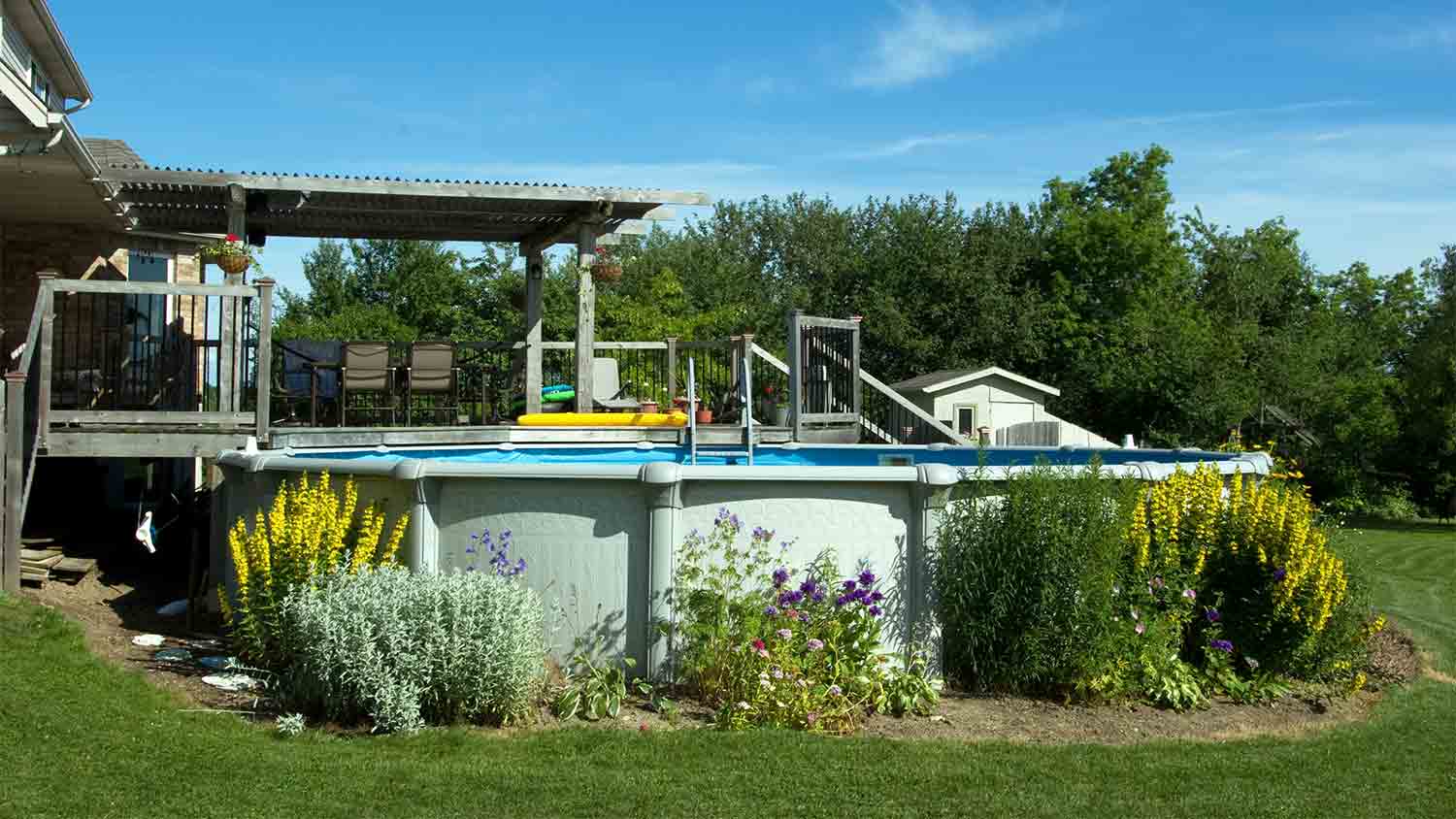
Before installing an above ground pool, you’ll need to prepare a flat surface for it to sit on. Learn how to level the ground for a pool without digging.
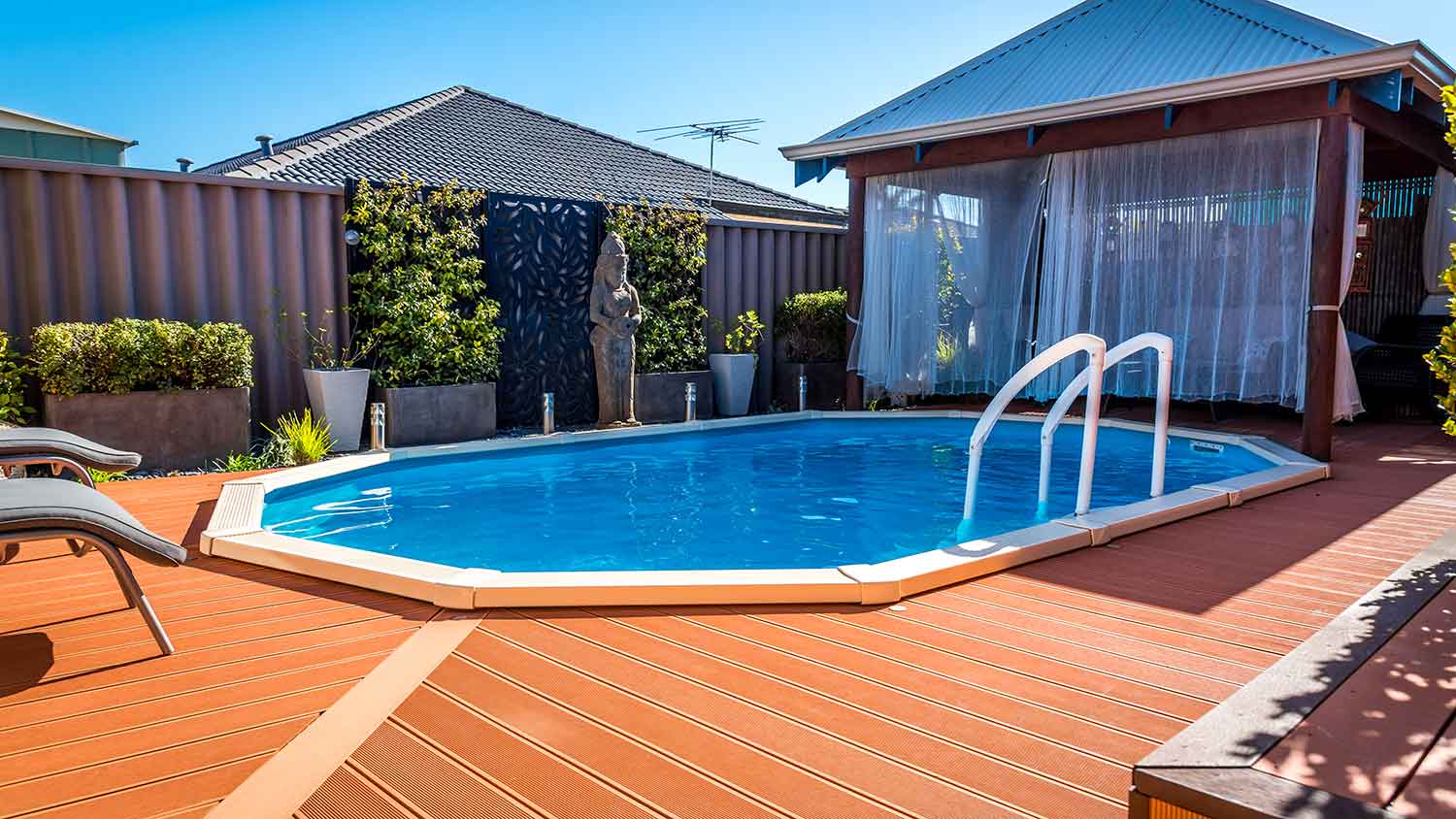
Above ground pools are more affordable than inground pools, so can you put an above ground pool in the ground to save money? Learn when it’s safe to do so.