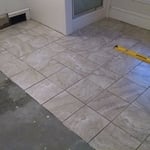
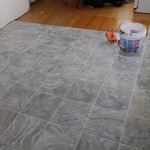
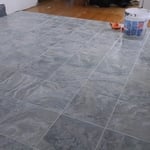
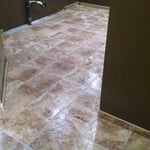
"Very conscientious and personable. He doesn't charge you by the hour so you get good value for your money. He is an excellent installer and I give him a 5 star rating."
701 Tile Setters specializes in any and all tile work. We handle both residential and commercial, working with both stone and granite. We look forward to earning your business!
At Shaina Rutherford Flooring & Design, we are your premier choice for all your tile work. We have provided high quality work and friendly customer service with several years experience. Call today!
One of the primary benefits of a soapstone countertop is that the material is heat-resistant. You can put a hot pan on soapstone, and it won’t scorch or crack. Despite being able to handle extreme heat, soapstone is much softer than granite, quartz and similar materials. This means that it scratches easily, so you should not prepare food directly on the surface.
Marble is a porous natural stone that needs sealant to minimize staining. Leaving this type of countertop material sealant-free means any liquids left on the surface will quickly absorb into the stone, discoloring it and dulling the sheen. Dark or acidic liquids, like red wine, coffee, and lemon, are the worst culprits.
You can’t change the color of the stone, but you can update granite countertops without replacing them by painting them. Because granite is a porous material, you’ll want to seal them first before painting them so that the paint doesn’t hurt the surface. This is important because you don’t want to devalue your counters by damaging the original surface; even if you don’t like the color now, you or a new homeowner may want to remove the paint someday and return them to their original color. You can also cover them with
A water-based, low- or no-VOC sealer is typically a good choice for marble countertops. Choose a sealant that is certified safe for contact with food when applying to kitchen countertops. For high-traffic areas, look for formulas that have heat-resistant and acid-resistant features. While there are economical and convenient spray-on sealers, they don’t coat the surface as effectively as the ones you apply with a pad or brush.
Acid can seriously damage granite countertops and lead to etching and erosion. This is why cleaning with vinegar isn’t recommended. Other acidic items that you should keep away from your granite countertops include:
Citrus
Acetone nail polish remover
Tomatoes
Ammonia
In addition, always steer clear of using bleach on or around your granite as it will degrade the countertop’s sealant quickly.
The Rolla, ND homeowners’ guide to marble restoration services
From average costs to expert advice, get all the answers you need to get your job done.
Thinking about marble restoration? Learn about polishing options, average costs to expect, and how to hire the right local pro to renew your stone surfaces.