"They were excellent, I would highly recommend. Everyone was very professional and showed up right when they said they would. They were gentle and everything arrived intact. They had us on the road in no time."
"I only use James when I need some work done to my house. He responds fast, gets the work done quicker than just about anyone else I've ever used and seems very concerned with leaving his customers happy."
Whitewashing isn’t permanent, but it can last for a long, long time. When you apply it correctly or have a seasoned pro whitewash your brick, whitewashing can last for 20 to 30 years or longer. Whitewash is very durable and typically requires little maintenance, making it a great project for most DIYers.
Oxygen bleach uses hydrogen peroxide as a base and won’t harm wood when using it as a cleaner. On the other hand, chlorine bleach breaks down wood at the cellular level and causes irreversible harm. Although you may not see immediate damage to wood after exposing it to chlorine bleach, its strength and integrity are now compromised.
Here's the deal with leaving used rags covered in oil-based stain lying around in a pile: Depending on the conditions, these rags can take just an hour or up to a few days to combust. The source of ignition is caused by trapped heat that can be compounded if the rags are near a heat source.
Unless you’re using a 2-in-1 formula or painting over an existing coat of paint, it pays to apply a coat of primer ahead of your new paint. Decks see a lot of footfall and exposure to extreme and sudden temperature changes and moisture levels. The primer promotes better paint adhesion, moisture repellency, and a smoother finish, which means you’ll often need fewer coats of paint.
Yes, you can waterproof any wood that has not already been treated. A good way to test this is to splash some water on it. If the water starts to bead up, the wood is treated and most likely doesn’t need another coating.
The Rolla, ND homeowners’ guide to deck staining services
From average costs to expert advice, get all the answers you need to get your job done.
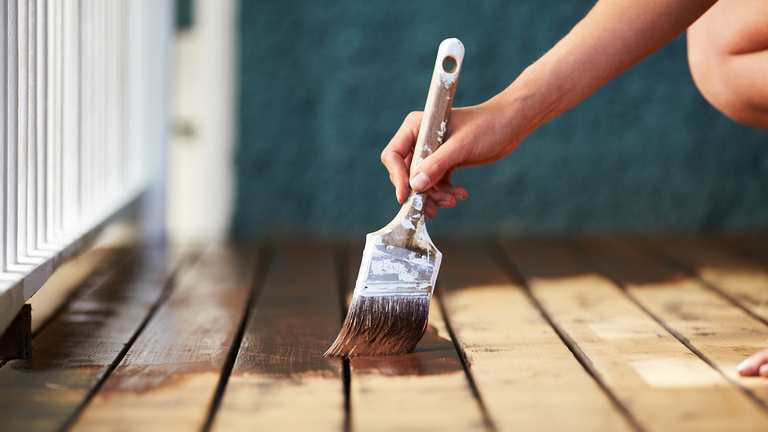
The best time to stain a deck is when it’s dry but not too sunny. How often you restain a deck depends on climate and wood type, but every two to three years is normal.