"I only use James when I need some work done to my house. He responds fast, gets the work done quicker than just about anyone else I've ever used and seems very concerned with leaving his customers happy."
Yes, you can and should paint or stain pressure-treated wood, as this helps prevent the surface from cracking. However, it is crucial to wait for the wood to dry out completely from the chemical treatment process before applying a finish. If the wood is still wet, the paint will not adhere properly. The drying time can range from weeks to six months. To test if the wood is ready, drip some water onto a board. If the water is absorbed, the wood is dry enough for painting or staining. If the water beads up on the surface, it needs more time to dry. You can build with the wood while it's still wet, but you must wait for it to dry before painting.
The opposite is actually true: Wood stains tend to appear lighter when they’re fully dry. However, stains may darken as they weather and oxidize with age. Stains might also darken on surfaces left in direct sunlight, as UV rays can break down pigment particles and cause them to darken over time.
You should seal your deck every one to two years, but you’ll also need to clean and repair your wood deck throughout the seasons. You may want to hire a local house cleaning service to sweep and clean the deck thoroughly. These cleaning services cost around $50 per hour.
Inspect your deck at least once a year, and if you notice any damage or rot, expect to spend about $10 to $50 for simple DIY fixes or about $2,000 for professional repairs on more extensive damage.
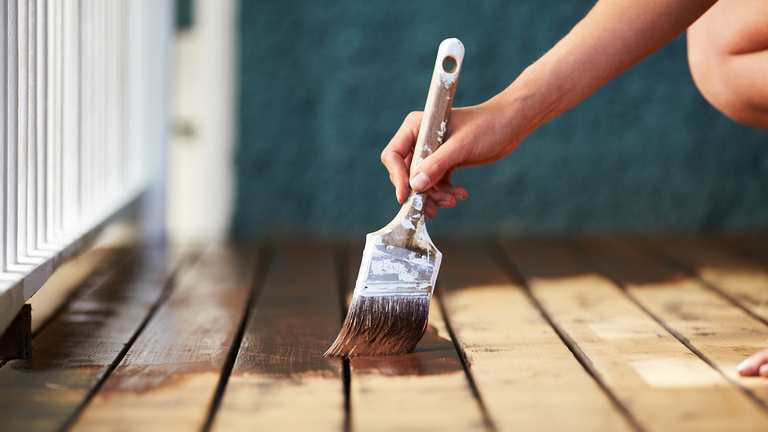
Staining a deck with a rag is typically a better option than using a brush, as it helps the stain penetrate deeper into the wood. However, both brushes and rags are best reserved for detailed work because using these tools on an entire deck can require tediously crawling around on your hands and knees. A pad applicator, sprayer, or roller are preferred alternatives to applying stain over the majority of a deck. Use a rag for railings and other detailed work, and let the wood soak up as much of the stain as possible before wiping away drips or pools.
Waterproof paint creates a barrier to hold back moisture, but it doesn’t eliminate the source of the water. If you hire a basement waterproofing contractor, many will tell you that waterproof paint is only a temporary solution. On average, you can expect it to last from six months to two years in a wet basement before deteriorating.
The New Rockford, ND homeowners’ guide to deck staining services
From average costs to expert advice, get all the answers you need to get your job done.
Cedar is a popular decking material, best known for its natural wooden look and resistance to rot. So, how much does a cedar deck cost? Find out in this guide.
Planning a deck staining or painting project? Learn about finish options, average costs to expect, and how to hire the right local pro for your backyard.