


Top-rated plaster repair specialists.

Best plaster repair specialists near Flat Rock, NC

Enter your zip and get matched with up to 5 pros

Need a pro for your plaster repair project in Flat Rock, NC?

Select your specific project to find the pro for you.

TRUSTED BY FLAT ROCK, NC HOMEOWNERS

  • Average homeowner rating star icon4.4
    Average homeowner rating
  • Verified reviews icon106
    Verified plaster repairs reviews

Top-Rated Plaster repair specialists in Flat Rock - Updated Nov 2026

Avatar for All in One Handyman Company - Home  Facebook
All in One Handyman Company - Home Facebook
4.9(
13
)
Plaster - InstallPlaster - Install - For BusinessPlaster - Repair+1 more

Serving Flat Rock, NC and surrounding areas

In business since 2018

Free estimates

Emergency services offered

"Nathan Nate was fantastic! He did a beautiful and thorough job on the task I hired him for. I then asked if he could do a few handyman repairs for me, like getting a bi-fold closet door back on its track and getting my doorbell to work. He easily completed these tasks. He even found a few things that needed repair that I didnâ t see. All of this was a tremendous help to me as I prepared to sell my home. With his help, my home sold 4 hours after it was listed!"
Response time2 days
Recommended by100%of homeowners
Avatar for YOUR CASTLE REMODELING LLC
YOUR CASTLE REMODELING LLC
4.2(
15
)
Plaster - InstallPlaster - Install - For BusinessPlaster - Repair+1 more

Serving Flat Rock, NC and surrounding areas

In business since 1998

Emergency services offered

"First, you can't help but like Heath Slavin. He's upbeat and hustles. There were serious problems with the quality of some of the work performed, however. One long joint where the wall met the ceilng in the attic looked more like a snake than a straight line. I called it to Heath's attention, and he corrected it fine. Their pressure washer broke down and they had to rent a substitute which didn't have the capability of adding cleaner, so the trim up high just got water. The operator of the pressure washer apparently didn't know much about the job, and he stripped paint from wood in a number of places, and even stripped out the top layer of the composite concrete siding. When I called all this to Heath's attention it also was corrected to my complete satisfaction. Additionally, the concrete step was to be two levels, and they did only one, and I'm completely unsatisfied with the one level that actually was done. Unfortunately, I didn't notice this until I had already paid in full for the job and the crew had left. I had difficulty contacting Heath to tell him about this additional problem, and only succeded when I decided to use his wife as a go between. It's been two weeks now since he said he'd come back & fix the steps, and I haven't seen anything of him yet. Finally, most of the crew was very polite and cleaned up after themselves meticulously. The folks who did the concrete (I didn't see who they were) used my hose, left it and the hose wand pretty well covered with concrete residue, and didn't bother to put it back."
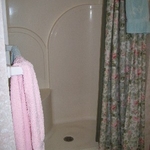
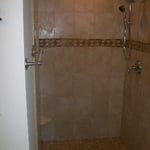
Before Shower
After Shower
Recommended by72%of homeowners
...
Showing 1-10 of 77
Plaster Repair FAQs, answered by experts

Plaster is a beautiful finish but is labor-intensive to install and remove. It’s vulnerable to cracking and more sensitive to moisture variance than drywall. Installing plaster on a new wall is an expensive process that can take days to weeks, depending on the scope. Removing a plaster wall can also be quite expensive and time-consuming.

Yes, you can use drywall repair techniques for some types of plaster damage. Tiny holes and small cracks in plaster can be patched in similar ways to drywall. You apply the necessary compound to fill the hole, wait for it to dry, then sand it down. For larger damage, like water damage or mold, you need to use plaster-specific techniques and materials.

It may take a bit of patience and trial and error to match your particular drywall texture type when making repairs. For orange peel or knockdown finishes, use a spray texture product or a thinned joint compound applied with a roller or sponge. Practice on scrap drywall or cardboard first. Once dry, lightly sand and prime before painting.

Although they have similar applications, spackle and joint compound are not the same. Their primary differences lie in their composition, consistency, and ideal use cases.

Spackle is composed of gypsum and binding agents, making it thicker than joint compound. It dries quickly and is easy to sand, which makes it ideal for small wall repair projects like filling nail holes or patching minor damage.

Joint compound, also known as drywall mud, consists of limestone and gypsum. It is primarily used for large-scale projects, such as taping and finishing the seams on newly installed drywall. It tends to shrink more than spackle and can be more difficult to spread.

While both products can be used to fill small depressions and cracks, spackle cannot replace joint compound for taping and mudding new drywall. Conversely, you can often use joint compound for small patching jobs typically done with spackle.

While it is possible to repair minor plaster cracks or holes yourself, it is generally not recommended for larger jobs or if you want a professional result. Plaster repair can be difficult in practice; proper wall preparation and achieving a smooth, seamless finish that blends with the existing wall requires experience, especially on textured surfaces. Hiring a professional ensures the repair will be durable and last longer, potentially saving you money over time. A pro can also determine if the cracks are from normal expansion or a more serious underlying issue.

The Flat Rock, NC homeowners’ guide to plaster repairs

From average costs to expert advice, get all the answers you need to get your job done.