






Top-rated plaster repair specialists.

Get matched with top plaster repair specialists in Wiggins, MS

Enter your zip and get matched with up to 5 pros

Need a pro for your plaster repair project in Wiggins, MS?

Select your specific project to find the pro for you.

Find Plaster repair specialists in Wiggins

Precision Remodeling
4.2(
10
)
Plaster - Repair

Serving Wiggins, MS and surrounding areas

In business since 2009

Free estimates

Warranties offered

"Ronnie Holmes was just great. He was punctual, fast and hardworking. I hired him to pressure wash the exterior of my house and he did a great job. My house looks brand new. He even repaired a plumbing problem that Roto-Rooter had screwed up twice. He didn't even charge for it because he said I had already paid too much and had been ripped off. Who does that in this day and age? Nice guy - hire him."
Recommended by80%of homeowners
Showing 1-10 of 46
Plaster Repair questions, answered by experts

Smaller is better when patching holes with spackle. Any holes wider than four to six inches in diameter tend to be too wide to repair with spackle alone. You'll likely want to patch bigger holes with a drywall panel. 

Even holes measuring up to 6 inches may be challenging to fill with spackle alone. For best results, purchase a wall repair patch made from wire mesh. Cut the patch to fit over the hole, then use the spackle to hold it in place. Apply the spackle over the patch as you would for a smaller hole.

Although they have similar applications, spackle and joint compound are not the same. Their primary differences lie in their composition, consistency, and ideal use cases.

Spackle is composed of gypsum and binding agents, making it thicker than joint compound. It dries quickly and is easy to sand, which makes it ideal for small wall repair projects like filling nail holes or patching minor damage.

Joint compound, also known as drywall mud, consists of limestone and gypsum. It is primarily used for large-scale projects, such as taping and finishing the seams on newly installed drywall. It tends to shrink more than spackle and can be more difficult to spread.

While both products can be used to fill small depressions and cracks, spackle cannot replace joint compound for taping and mudding new drywall. Conversely, you can often use joint compound for small patching jobs typically done with spackle.

Regular inspections and cleaning to prevent moisture or pest issues.

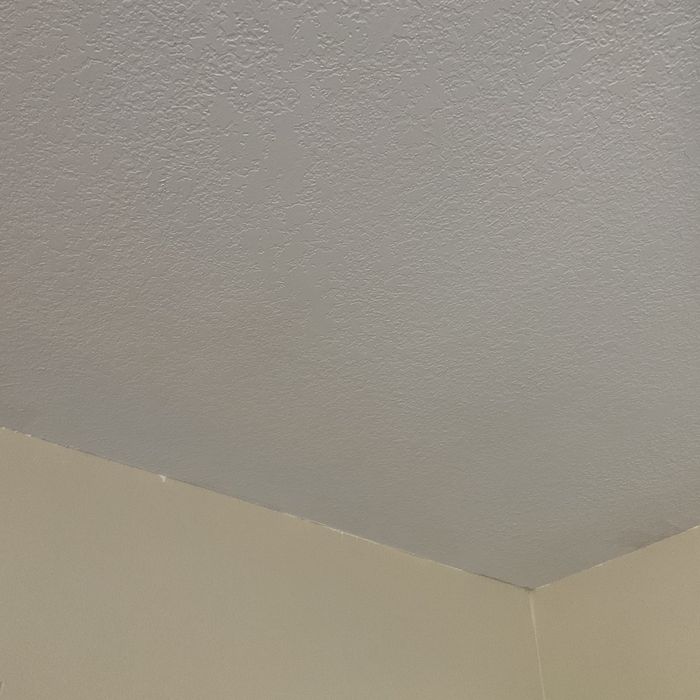
Common causes of ceiling cracks along drywall seams include poor drywall installation techniques, structural issues, truss uplift, and foundation problems. Temperature and humidity also play major roles in ceiling cracks flush with the wall. As the drywall shrinks and expands from major temperature changes or extreme humidity shifts, this can cause the drywall to crack.

It is possible to apply plaster on the interior or exterior of your home, but we don’t recommend it. Plaster is easy to apply in theory, but in reality, it can be a challenging material to work with, and it’s difficult to get the finished product to look clean, even, and smooth. Many DIYers end up calling in a professional afterward to touch up the area or even redo it entirely because of mistakes they made in the process. Hiring a plaster pro will cost more, but it’s usually the best option to achieve high-quality results.

The Wiggins, MS homeowners’ guide to plaster repairs

From average costs to expert advice, get all the answers you need to get your job done.