








Top-rated deck maintenance specialists.

Get matched with top deck maintenance specialists in Maryville, MO

Enter your zip and get matched with up to 5 pros

Need a pro for your deck maintenance project in Maryville, MO?

Select your specific project to find the pro for you.

Find Deck maintenance specialists in Maryville

Avatar for Butler Services
Butler Services
3.0(
13
)
Deck, Fence, Patio or Porch - Clean and Seal

Serving Maryville, MO and surrounding areas

In business since 2010

Free estimates

Emergency services offered

"Michael and Bruce were hard working, fast, and friendly. The quality of their work was great and I have already spoken to Michael about working on two more projects for me. Can t beat the quality for this price."
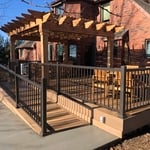
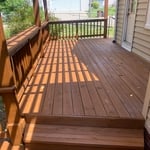
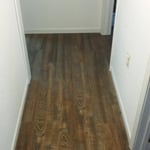
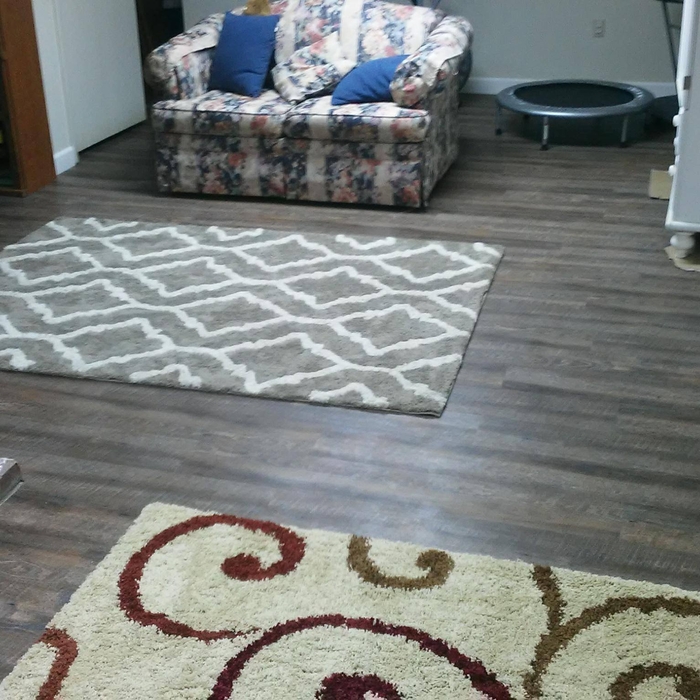
Finished product East view
Helper w/ different view
IKEA Dresser
Better look at the grain and color
Furnace room

+5

Response time2 days
Recommended by77%of homeowners
Good As New Now
New to Angi
Deck, Fence, Patio or Porch - Clean and SealDeck, Fence, Patio or Porch - Clean and Seal - For Business

Serving Maryville, MO and surrounding areas

In business since 2019

Free estimates

Emergency services offered

Good As New Now is committed to excellence in every aspect of our business. We uphold a standard of integrity bound by fairness, honesty, and personal responsibility. Our distinction is the quality of service we bring to our customers. Accurate knowledge of our trade combined with ability is what makes us true professionals. Above all, we are watchful of our customers' interests and make their concerns the basis of our business.

Showing 1-10 of 17
Deck Maintenance questions, answered by experts

The best direction for a gate to swing depends on its location and purpose, but swinging inward is the general rule. An inward swing is often considered safer, prevents the gate from opening into public spaces like a sidewalk, and may be required by local building codes.

There are exceptions and specific considerations. If your property is on a slope, an inward swing might not be possible. For a deck gate, it's safest to have it swing away from any steps. In a backyard, the direction can be a matter of preference, though an inward swing can be helpful when carrying heavy items like a wheelbarrow into a garden.

Regardless of direction, ensure the gate can open fully without hitting any objects or blocking spaces. While an inward swing is standard, a gate that can swing both in and out offers the most flexibility if your setup allows for it.

Choosing whether your deck should be lighter or darker than your house is a matter of personal preference, as there is no right or wrong answer. However, considering the pros and cons of each can help guide your decision. Darker colors are often chosen because they show less dirt, footprints, and marks from daily wear, making them easier to keep clean. On the other hand, lighter deck colors tend to stay cooler in the summer. From a design perspective, using a deck color that contrasts with your home's exterior can help make the deck a more defined and distinct feature. Consulting color theory can also make the process of choosing a complementary house and deck color combination easier.

When building a deck, #2 grade lumber is a go-to for several reasons. It’s strong, budget-friendly, and works well for most framing and decking needs. But upgrading to #1 or Appearance Grade can give your deck that extra visual edge if you're after a cleaner, more polished look for high-visibility spots.

Yes. Freestanding or floating decks are exactly what the name implies—structures with their own support beams. You can build a deck yourself and place it next to a house for the illusion of a connected deck without the hassle. Or you can construct it in a separate part of your yard for a dedicated outdoor entertainment space. For the purpose of removing a freestanding deck, the steps are the same as an attached deck, but you don’t have to cut the deck away from the home.

The overhang, or nosing, of deck steps is another area that will be covered in building code requirements. The noses on your deck steps should have a minimum overhang of ¾ inch. For safety, usability, and code compliance, the nosing of deck steps should not extend past 1¼ inches.

The Maryville, MO homeowners’ guide to deck maintenance services

From average costs to expert advice, get all the answers you need to get your job done.