





Get matched with top tree service pros in Hannibal, MO

Hannibal homeowners rate tree service pros in our network

4.8

(34 reviews)

Top-rated tree service pros.

Need a pro for your tree service project in Hannibal, MO?

Select your specific project to find the pro for you.

Find Tree service pros in Hannibal

Avatar for Big Oaks Tree Service LLC
Big Oaks Tree Service LLC
4.8(
27
)

Serving Hannibal, MO and surrounding areas

In business since 2020

Free estimates

Emergency services offered

"After speaking with Robert Platt II, I learned he is no longer part of Big Oaks Tree Service LLC. He is starting a new business. He has reached out to me and explained the situation. He is willing to do what needs to be done to complete the job to my satisfaction even if it is at a loss to him. I trust Robert Platt having worked with him before, and I was very satisfied with him and his crew. I believe I will be will satisfied working with him again."
Response time7 hrs
Recommended by88%of homeowners
...
Showing 1-10 of 55
Tree Service questions, answered by experts

Carefully pruning small roots no thicker than three inches in diameter won’t harm the tree. However, cutting larger roots may impact the tree's stability and nutrient absorption. It's advisable to consult an arborist or tree care professional to evaluate the root's size, the tree's health, and the potential impact of cutting. Proper tree pruning techniques and timing can minimize damage, but larger root removal may necessitate expert guidance to avoid compromising the tree's overall health and stability.

In most cases, your neighbor is responsible for roots from their tree that cause damage to your property. If your pavement, the foundation of your home, or a fence is damaged by roots from a neighbor’s tree, you likely will have legal recourse for financial relief. While it’s better to notify your neighbor of any problems you notice as soon as they arise to avoid costly damage, there are some instances where filing a civil suit is your only recourse. Your homeowner’s insurance company might wish to do so on your behalf if you file a claim.

Palm trees are unique in that their roots don't grow straight down; they grow horizontally. Typically, palm tree roots go down between 12 and 36 inches deep. The roots grow far and wide from the base of the palm tree to absorb as much water and soil nutrients as possible. In addition, the horizontal roots are also very strong—keeping palm trees stable and helping them sway during storms.

Most experts recommend removing a tree that has sustained more than 25% loss in the limbs, trunk, or circumference of the bark. Doing an initial trimming of damaged and dangling branches, but then waiting a few days of monitoring to decide how much more you might need to cut can help you better assess the total damage to the tree. However, consulting a tree maintenance pro to make this determination the best course of action before removing a tree.

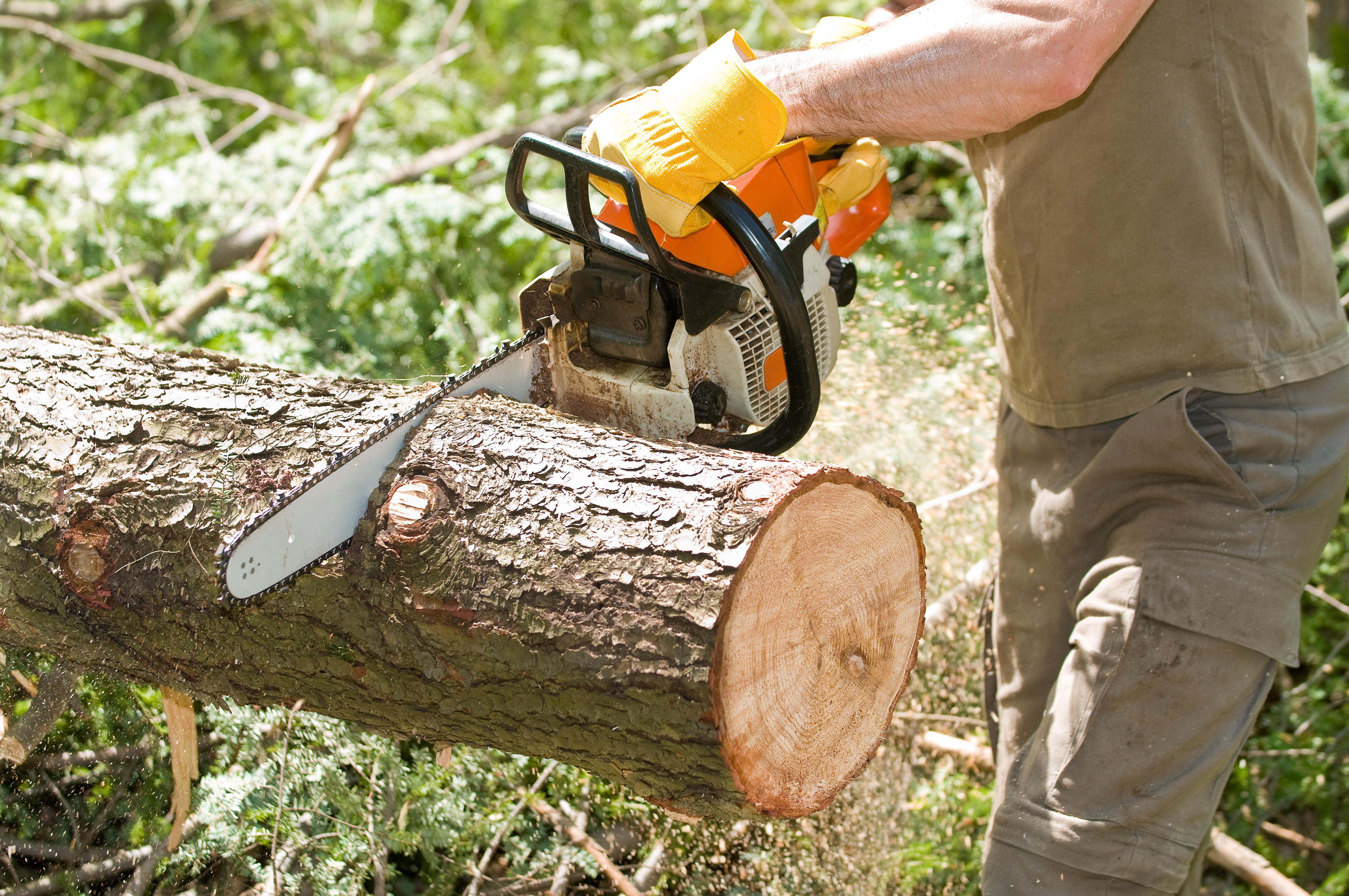
A chainsaw is the best tool to cut down a tree, but you may also use a handsaw or ax. You may also want to use a lopper or pole saw to remove limbs before cutting down the tree. Wear chainsaw chaps and protective gear, including eyewear and earplugs if you use a chainsaw. Again, if you’re unsure about how to use this tool, this project may be one to skip.

The Hannibal, MO homeowners’ guide to tree services

From average costs to expert advice, get all the answers you need to get your job done.