

Get matched with top asphalt driveway pros in Hannibal, MO

Hannibal homeowners rate asphalt driveway pros in our network

5.0

(14 reviews)

Top-rated asphalt driveway pros.

Need a pro for your asphalt driveway service project in Hannibal, MO?

Select your specific project to find the pro for you.

Find Asphalt driveway pros in Hannibal

Avatar for Stone Hauling and Excavating LLC
Stone Hauling and Excavating LLC
4.3(
9
)

Serving Hannibal, MO and surrounding areas

In business since 2012

Free estimates

Small jobs welcome

"Let me start with, this was a major driveway grading and rock work. What an absolute delight to work with Matthew Stone. Professional, personable, respectful and knowledgeable. So nice to work with a contractor with integrity. Matthew gave me a quote but ended up not using all of the rock he quoted. He did not charge me for that rock! We are so happy with the way it looks, and so happy we found Matthew Stone!"
Response time2 days
Recommended by100%of homeowners
One Contracting
5.0(
6
)

Serving Hannibal, MO and surrounding areas

In business since 2021

Free estimates

Credit card accepted

"A professional experience throughout the project. Chase is very experienced and knowledgeable and communicated the costs, options, and timelines very clearly and effectively. The crew was managed well and were very respectful of the property, doing their best to minimize effects to the yard by heavy equipment. I added an extra slab for a shed in the back yard at the last minute and they handled it no problem."
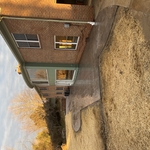
Stamped patio
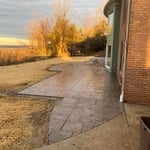
Stamped patio
Stamped patio
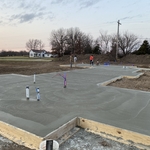
Slab for new home
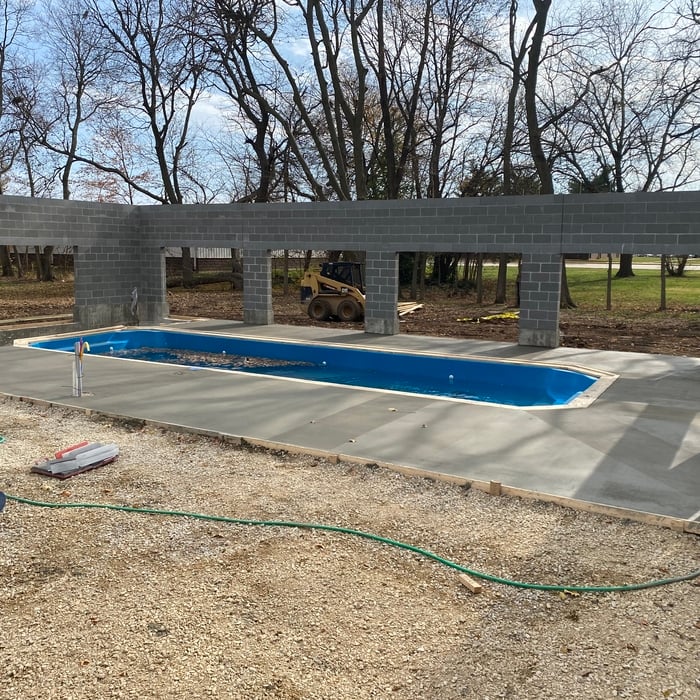
Swimming pool install

+21

Response time6 hrs
Recommended by100%of homeowners
...
Showing 1-10 of 61
Asphalt Driveways questions, answered by experts

In the United States, roads are usually categorized as one of three types: public roads, other drivable roads, and non-drivable roads. These categories dictate how a road can be used; a non-drivable road might be classified that way because it is heavily damaged and unsafe for cars.

Driveways should be sloped with a minimum 2% slope—anything lower will cause precipitation and runoff to collect. A 2% slope is the equivalent of a 2-foot rise over 100 feet. One quick way to check the integrity of your driveway’s slope: no more than four inches of water should collect on the surface longer than 15 minutes after rain.

New asphalt typically needs 24 to 72 hours to dry before it can handle light foot traffic and careful driving. Although it may appear solid after a few days, the full curing process, where the asphalt reaches its peak strength, takes much longer—generally from 30 days to a year.

During this extended curing time, the surface remains relatively soft and can be damaged by heavy vehicles, sharp objects, or high temperatures. To protect your investment, it's best to avoid parking heavy machinery on the asphalt until it has fully cured.

The exact time required for drying and curing depends on several factors, including the weather, the specific asphalt mix, and its thickness. For the most accurate advice tailored to your situation, consult with your asphalt contractor.

The choice between asphalt and concrete depends on your priorities, budget, and climate.

Concrete is generally more durable, lasting up to 50 years with minimal upkeep, and offers more customization options like staining and stamping, which can add more to a home's value. However, it is more expensive upfront and can be prone to cracking in cold climates where water can freeze and expand.

Asphalt is typically cheaper and quicker to install and is easier to repair. It performs better in colder climates. However, it requires more maintenance, including regular resealing, has a shorter lifespan, and can get hot and sticky in intense sunlight.

Ultimately, if durability and long-term value are key, concrete is often the better choice. If upfront cost and performance in cold weather are more important, asphalt may be preferable.

Asphalt, which is stone mixed with tar, is the most common material for outdoor basketball courts because it’s so sturdy and versatile. However, you don't have to use it: another option is polymeric rubber, which has shock pads that can prevent injury. This option is a little more expensive, ranging between $16 and $25 per square foot.

Materials used for indoor basketball courts, such as hardwoods, aren’t really an option outdoors.

The Hannibal, MO homeowners’ guide to asphalt driveway services

From average costs to expert advice, get all the answers you need to get your job done.