



Top-rated drywall pros.

Get matched with top drywall pros in Ellsinore, MO

Enter your zip and get matched with up to 5 pros

Need a pro for your drywall service project in Ellsinore, MO?

Select your specific project to find the pro for you.

Find Drywall pros in Ellsinore

Avatar for Payne's Handyman Services
Payne's Handyman Services
New to Angi
Drywall - Repair

Serving Ellsinore, MO and surrounding areas

Approved

In business since 2021

Free estimates

Small jobs welcome

At Payne's Handyman Services our passion and experience shine through on every job, big or small. We pride ourselves on attention to detail and building long-lasting business relationships with our clients. Call today for a free estimate!

Response time3 days
Avatar for C&J painting
C&J painting
4.3(
19
)
Drywall - InstallDrywall - Install - For BusinessDrywall - Repair+1 more

Serving Ellsinore, MO and surrounding areas

In business since 1995

Free estimates

Emergency services offered

"Chad and son were very professional and worked hard even though the rain was persistent at times. And they didn’t slow down even in 90 degree temps. I would highly recommend them and Will give them future painting projects."
Additional Photos
Additional Photos
Additional Photos
Additional Photos
Additional Photos

+101

Recommended by83%of homeowners
Tippen's Mobile Welding & Handyman
5.0(
5
)
Drywall - InstallDrywall - Install - For Business

Serving Ellsinore, MO and surrounding areas

In business since 2002

Free estimates

Credit card accepted

We pride our company on reliability, great communication, integrity, and quality work. We are experts in our trade and will do our best to keep you as educated as we can on your particular task or project. We look forward to earning your business! Book with us online or feel free to give us a call today!

Response time2 days
Response rate95%
Recommended by100%of homeowners
Avatar for Wise Guys
Wise Guys
5.0(
4
)
Drywall - InstallDrywall - Install - For BusinessDrywall - Repair+1 more

Serving Ellsinore, MO and surrounding areas

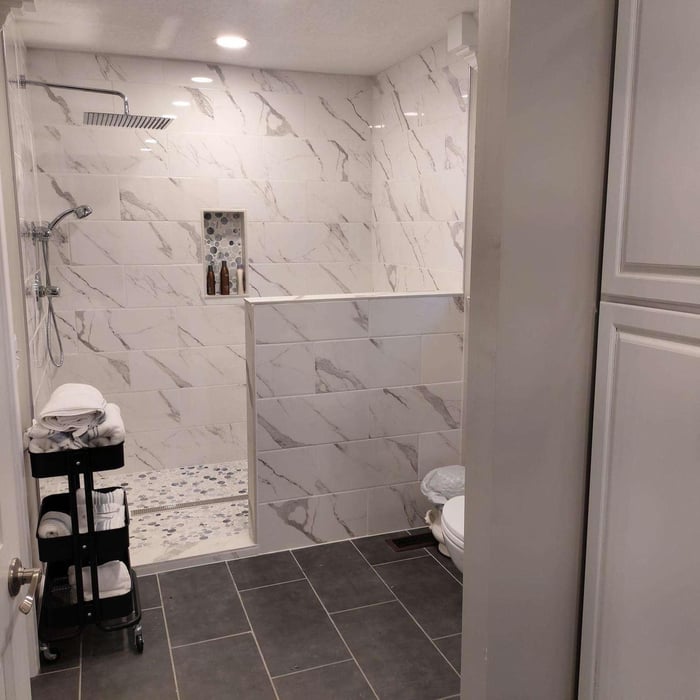
"Great! They laid it out beautifully. I appreciate how they covered my carpet to protect it and kept the dust down to a minimum. My bathroom and kitchen really look nice. I will use them again for my next tile project."
Additional Photos
Additional Photos
Additional Photos
Additional Photos
Recommended by100%of homeowners
...
Showing 1-10 of 56
Drywall questions, answered by experts

The best tool for cutting a hole in drywall is a drywall saw. Its serrated blade and ergonomic design make it efficient for both straight cuts and more intricate shapes, ensuring clean and precise results in various drywall cutting applications.

Wet-sanding and dry-sanding each have pros and cons. Dry-sanding is less messy, so it’s a good option if you’re trying to minimize dust (for example, if you’re sanding an occupied home or working with particularly dry or dusty drywall mud). However, dry-sanding is quicker because you don’t have to keep rinsing a sponge or wait for it to dry before painting.

Yes, if there is mold in your drywall mud and you then use it to build walls in your house—or if mold develops in your set drywall, like it can in hot and humid areas—it can lead to illness. Mold in your drywall (or other parts of your home) can make existing respiratory conditions or allergies worse, and the effect can be more intense for those who have existing health issues or compromised immune systems.

A common cause of separation between a wall and the ceiling is truss lift—this can happen to the ceiling of rooms directly under the attic when the seasons change and wood building materials dry out, shrink, and shift. Roof trusses often dry out at different speeds, and if the bottom pieces dry out faster than the top pieces, they can shrink and pull the attached drywall away from ceilings and walls, causing cracks. Fortunately, truss lift is only a cosmetic problem, not a structural problem, and you can fix it by separating the ceiling drywall from the roof trusses, and patching the cracks.

Although they have similar applications, spackle and joint compound are not the same. Their primary differences lie in their composition, consistency, and ideal use cases.

Spackle is composed of gypsum and binding agents, making it thicker than joint compound. It dries quickly and is easy to sand, which makes it ideal for small wall repair projects like filling nail holes or patching minor damage.

Joint compound, also known as drywall mud, consists of limestone and gypsum. It is primarily used for large-scale projects, such as taping and finishing the seams on newly installed drywall. It tends to shrink more than spackle and can be more difficult to spread.

While both products can be used to fill small depressions and cracks, spackle cannot replace joint compound for taping and mudding new drywall. Conversely, you can often use joint compound for small patching jobs typically done with spackle.

The Ellsinore, MO homeowners’ guide to drywall services

From average costs to expert advice, get all the answers you need to get your job done.