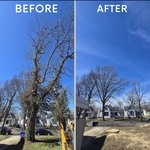
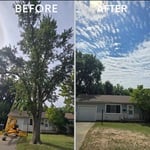
We take great pride in our experience, expertise, quality and customer service that we provide to meet every consumer's needs.
\nIt is our mission to provide excellent customer service from start to completion of a project.
\nTo understand the needs and expectations of our customers, we take great care to work and communicate with every customer in a personal and professional manner.
\nOur reputation is based on service, safety and quality, regardless of how large or small the job.
We take great pride in our experience, expertise, quality and customer service that we provide to meet every consumer's needs.
\nIt is our mission to provide excellent customer service from start to completion of a project.
\nTo understand the needs and expectations of our customers, we take great care to work and communicate with every customer in a personal and professional manner.
\nOur reputation is based on service, safety and quality, regardless of how large or small the job.
Here at K&S Quality Landacape And Tree Care LLC, We are a family owned business. We Focus on bringing your dream remodels come true, with care for all your outside projects ideas. Reach out to us for any yard care as well. We offer a wide variety of services.
As a homeowner, taking care of your trees is one of your biggest tasks. But if you need a helping hand, Big Branch Tree Company can easily take some of the weight off your shoulders. We offer an array of professional tree services in the Green Ridge, MO area. Whether you want to remove or trim your trees, we've got you covered. Call our tree company today to get started.
Bramlett's Tree and Roofing has over 25 years of experience in the industry. Jerry, the owner, learned the trade from his father at a young age and mastered the trade himself. We take great pride in our quality of work and customer satisfaction. Give us a call today!
\n
With over 35 years of family-owned and operated experience, Frazer's Tree Service is your go-to choice for all your tree service needs in Missouri. Our licensed and insured team provides free estimates and exceptional service that sets us apart from the competition. Contact us today for expert tree care you can trust.
Just started a new company, I have never owned one. I have worked all around as a laborer before but never from an owners perspective. Looking for an opportunity to make progress in the lawn service industry and potentially being there whenever a customer needs me. This is all ill be doing right now, so im available whenever you need me. Just give me a call and
J&R Tree & Outdoor Services, LLC., is a locally/owner run and operated company. We specialize in all facets of tree service, lawn care, drywall and carpentry. We are extremely competitive and understand the value of building life long relationships with our clients. Workmanship guaranteed. Prompt reply to your request.
\nCall today for a free estimate 816-617-1188.
We pride our company on reliability, great communication, integrity, and quality work. We are experts in our trade and will do our best to keep you as educated as we can on your particular task or project. We look forward to earning your business! Committed to Excellence One Cut at a Time.
"We had previously used a different arborist but decided to change after nine mature oaks died after being trimmed, and had to be removed. Stoyko's gave us a written estimate that was considerably less than the first arborist. The crew showed up on schedule, and clearly knew what they were doing. Due to the proximity of other trees, they elected to climb each of our trees rather than using a lift because of potential damage to our lawn, fences and surrounding trees. The work took two days of hard work, and we saw several safety breaks for the crew. During the safety breaks, they discussed the next phase of work to make sure each crew member knew how they were going to proceed. Additionally, they requested our input at any time a question came up. Their clean-up was excellent, and would not leave until we had inspected all of their work, and approved of what had been completed. We will be using this company going forward to maintain the health of our trees. "
No, you cannot plant a tree above a gas line. Tree roots grow and spread over time and can sometimes dent, crack, or penetrate a gas line. Those same roots may also cause accessibility problems for maintenance or repairs. You can generally plant vegetation with non-invasive root systems, low-growing vegetation, and flower beds near gas lines.
Poison oak is similar to poison ivy in that it's in the same family of plants. Poison oak is identifiable by its rounded-off leaves and hairy leaf texture. Tree-climbing varieties live primarily in western states while low-growing poison oak bushes occupy the eastern states. Treat poison oak like poison ivy to get rid of it permanently.
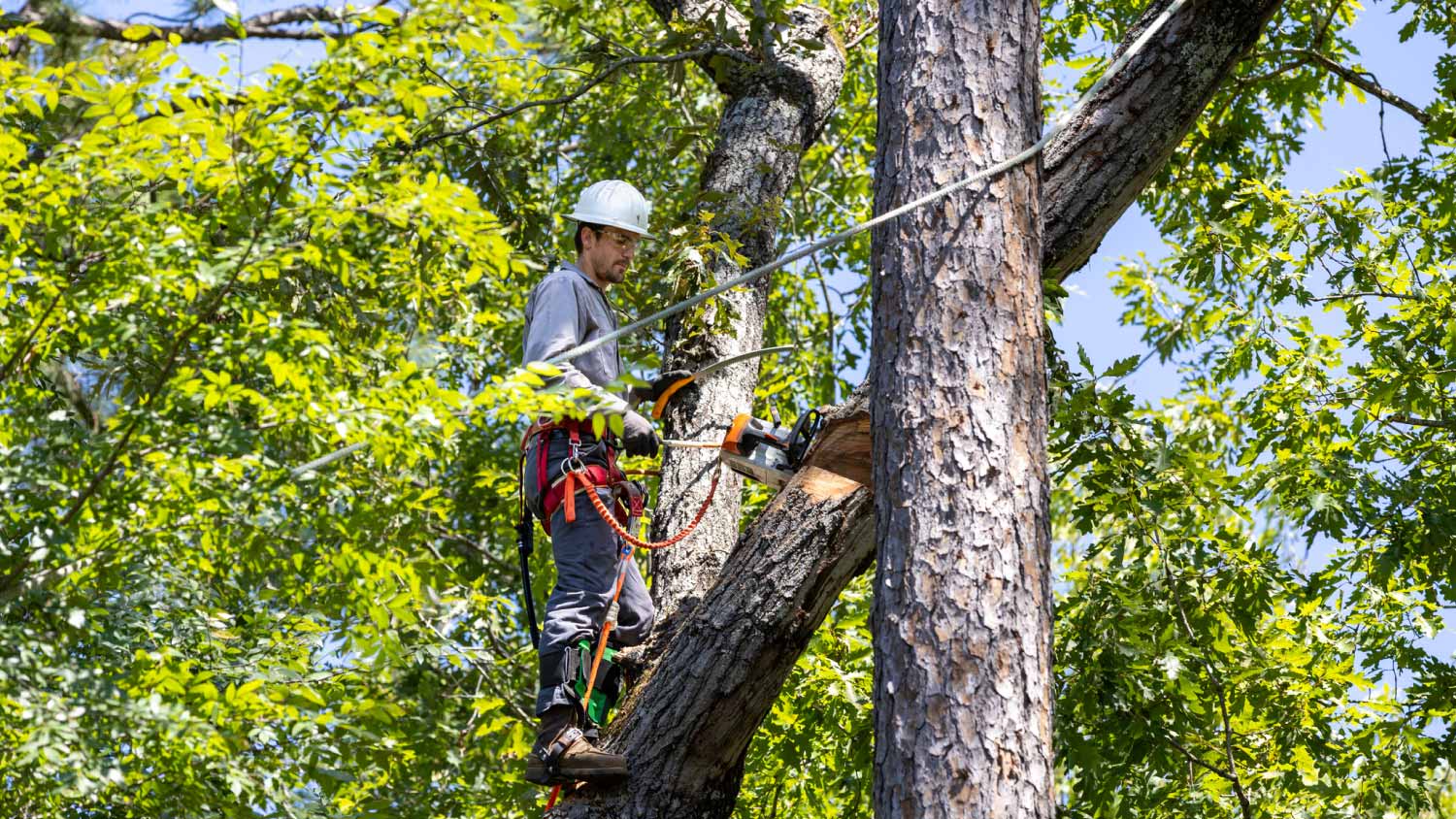
It is possible to cut down a tree on your property yourself, but it is generally not recommended unless specific conditions are met. You should only consider this project if the tree is small (e.g., under 4-5 inches in diameter and short enough that you don't need a ladder to reach the branches), and you are experienced in handling a chainsaw. The tree must also be located far from any power lines, fences, homes, or other structures. Even for small trees, the work can be dangerous, and it's always advisable to have a spotter to ensure the tree falls correctly and no branches fall on you.
For any tree that is large, requires a ladder to access, or is near electrical lines or structures, you should always hire a professional. Attempting to remove a large tree yourself is extremely dangerous, poses a risk of serious injury, and could result in significant damage to your property.
Before any tree removal, it's also important to check your local and state regulations to ensure the tree is not historic or otherwise protected by your city.
Service costs depend on several factors, including the system's age, type, and size, as well as the complexity of the repair. Labor costs and whether replacement parts are necessary also play a significant role.
Your neighbor is not in a good position to know if your trees are truly dead or pose any kind of danger. That’s why hiring an arborist or tree service expert can be such an important part of the process. If the trees are still alive and don’t pose any threat, you’re in the clear (but you may want to document and photograph everything in case events turn sour down the road).
But if a tree is visibly dead and near the property line, you should remove it to be safe. If a dead tree falls on a neighbor’s property, they may have grounds to sue for negligence. If any branches on trees have died, it’s a good idea to cut them back for similar reasons.
The Cole Camp, MO homeowners’ guide to arboricultural services
From average costs to expert advice, get all the answers you need to get your job done.
How much does an arborist cost? This guide explains the cost of different services, ongoing expenses, and other factors to consider when hiring an arborist.
Arborists are specialized tree care experts. This guide will help you hire an arborist with all the qualifications to give your trees the best care possible.