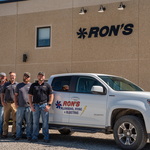
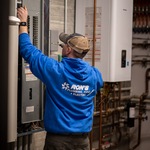
Ron's Plumbing, HVAC, and Electric is your first choice for professional residential and commercial service. We also offer Generac Generator sales, installation, and service. Check out our custom Reverse Osmosis (R/O), Water Softener, and Whole House Filter Systems that are unique only to Ron's and built in-house. With years of knowledge and the experience we are able to quickly consult and determine your household needs. Remodeling? Give us a call! Have a commercial project? No job is too big or too small for us. We proudly serve Southern Minnesota with affordable and efficient service. Give us a call today! 507-553-5848
It is safe to run a generator continuously, but you must follow safety protocols to ensure personal and home safety. Read the manufacturer’s instructions for specific recommendations, but the general recommendation is to turn generators off overnight or when you’re away from the house. Overworked generators can pose a fire hazard and if your generator is not in a well-ventilated area, running it continuously could lead to carbon monoxide poisoning.
Natural gas and electricity rates vary significantly based on location, and pricing can change over time, too. It’s possible that in locations where natural gas is particularly inexpensive, it will cost less than grid-based electricity will. However, you should also factor in the generator’s initial costs and maintenance needs, as well as its noise level and if it can comfortably power all your home appliances.
If your home already has a grinder pump and you’re still noticing issues (like frequently clogged toilets and sinks), it could be time to upgrade your grinder pump. Start by checking your existing horsepower. If there are four or fewer people living in your home, using a 1/2-horsepower grinder pump should be sufficient. Larger households should consider investing in a 1-horsepower grinder pump to maximize wastewater removal efforts.
Generators are safe to use as long as they are installed and operated correctly according to the manufacturer's recommendations. The most critical safety tips are to never use a portable or fuel-powered generator inside an enclosed space due to the risk of lethal carbon monoxide poisoning; always operate it outdoors where fumes can dissipate away from your home. Additionally, never attempt to connect a generator to your home’s electrical panel yourself—hire a professional to ensure the setup meets safety standards. Finally, avoid overloading the generator by not connecting more appliances than it is rated for, as this can damage your equipment or cause a fire.
Generally, you’ll want to keep between 60 and 70 feet between the generator and the transfer switch. There are a few reasons for this, including:
The distance reduces the noise coming from the generator into your home.
It increases efficiency because you won’t have a voltage drop from this short of a distance.
Prevents carbon monoxide poisoning: keep at least 15 feet between your generator and an open window.
The Wells, MN homeowners’ guide to generator installs
From average costs to expert advice, get all the answers you need to get your job done.
Natural gas generators are whole-home standby generators that are connected to your home’s natural gas line. The average cost for a natural gas generator is $12,000.
Generators should give you peace of mind, but you’ll only get that if your installer knows what they’re doing. Learn how to hire a pro and what red flags to look for.
Thinking about a generator installation? Learn about backup power options, costs to expect, and how to hire the right local pro to keep your home running.