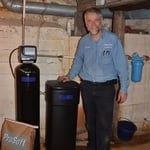
"Our water stunk like rotten eggs! Scott came out, looked everything over and did numerous tests on our water. He explained what he had found and took all the time we needed to understand what the problem was. He was more like a good friend than a salesman! We felt total trust in the company. We were able to schedule an install of a new water softener system the next day! The man who did the install (I have forgotten your name, sorry) was professional and did an excellent job. We are very happy with the new system! I definitely recommend this company and would use them again!!!"
Serving North Dakota and Western Minnesota with offices in Grand Forks, Valley City, and Jamestown\nFresh, clean, tasty water is our business! We strive to keep your home's plumbing new by removing the minerals that deposit in pipes and on fixtures. These same minerals prevent your soap from doing its job - cleaning your family and all that you own.\nIn addition, we can filter chlorine, iron, manganese, nitrates, arsenic, cysts, fluoride, and even radium from your water. We specialize in fixing your personal water issues.
You can decide whether you need a water softener or water filter based on how your bathing or laundry experience is. If you notice issues like limescale buildup, dry skin, or stains on dishes—all telltale signs of hard water—you'd likely benefit from a water softener. However, if your main concern is over chemicals or bacteria in your tap water filter, and not just comfort, a filter is a better option.
No. You should never directly drain a water softener into a sewer cleanout. This practice is illegal in many areas because it could allow raw sewage to get into your drinking water and make you seriously ill. Many places have codes requiring a specific seal, pipe, and a large air gap between a water softener and a sewage cleanout. Check out Florida's Plumbing Building Code as an example of what these restrictions might look like.
Yes, a water softener can remove scale deposits. According to the U.S. Department of Energy, after you add a water softener to your home, “gradually the softer water will dissolve limescale scale deposits and remove the problem entirely.” Installing a water softener—or water descaler—will also help prevent new scale deposits from forming.
Drinking hard water is not known to have any negative health impacts. Using hard water can lead to dry skin and hair, and the minerals in hard water can build up in pipes, faucets, and appliances. Hard water is more of a threat to your plumbing than it is to your health.
If your water softener repair is fairly straightforward, like a simple filter replacement, then you can probably do it yourself with little risk. However, anything beyond a simple fix should be addressed by someone with extensive plumbing expertise to avoid costly water softener problems, like leaks.
That said, even simple problems can be complicated to diagnose, particularly if your water softener is attached to a whole-house treatment system. So, unless you feel absolutely certain that the problem is an easy fix that you can take on yourself, it's probably best to hire a plumber to diagnose and fix the problem.
The Warroad, MN homeowners’ guide to water softener services
From average costs to expert advice, get all the answers you need to get your job done.
Water softeners work to remove unwanted minerals from hard water through a filtration and recharge cycle. Keep reading to learn how a water softener works.
There are four common softener alternatives available on the market today. We compare and contrast each one to help you find your best-fit solution in this blog.
Water softeners rid your home of hard minerals and, well, soften your water. Even better, the regeneration process is an automatic cycle that works when you’re least likely to use it.
Water softeners remove hard minerals from your tap water, improving plumbing systems and water-using appliances. Here are the most efficient water softeners out there.