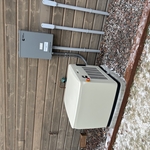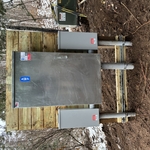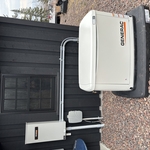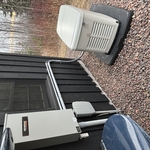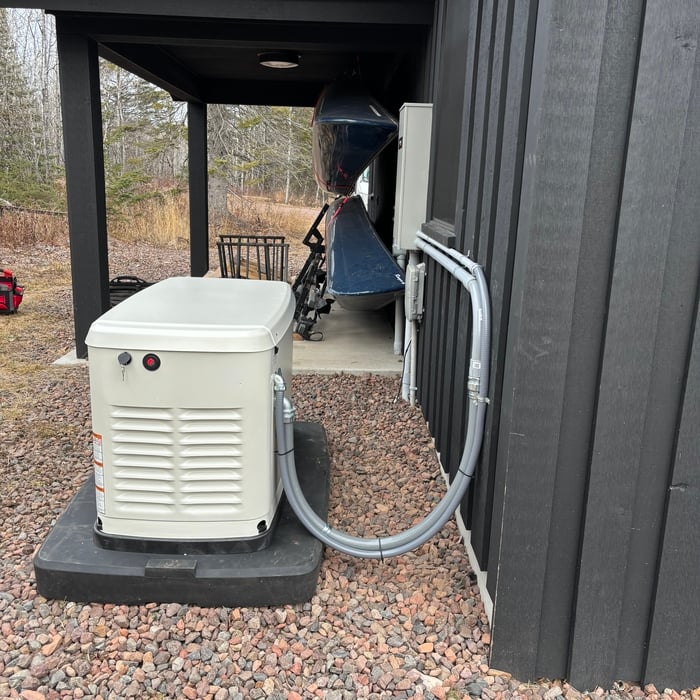








Top-rated generator install pros.

Get matched with top generator install pros in Scanlon, MN

Enter your zip and get matched with up to 5 pros

Need a pro for your generator install project in Scanlon, MN?

Select your specific project to find the pro for you.

Find Generator install pros in Scanlon

Avatar for All Service Professionals Heating, Cooling, Plumbing & Electrical, LLC
All Service Professionals Heating, Cooling, Plumbing & Electrical, LLC
5.0(
5
)
Fixed Generator - InstallFixed Generator - RepairPortable Generator - Install+1 more

Serving Scanlon, MN and surrounding areas

Approved (Corporate)

In business since 2000

Free estimates

Credit card accepted

At All Service Professionals,\n\nwe understand that homeownership can sometimes throw unexpected curveballs. Whether it's a clogged drain, a dip in temperature, or a flickering light, these inconveniences don't have to last.\n\nAs your trusted home service professionals, we're here to bring peace of mind and restore your home's comfort quickly and efficiently. \n\nDon't hesitate to call!\n\nWe're here to bring peace of mind and restore your home's comfort.

project photos
14 neighbors recently requested a quote
Clearbrook Electric, Inc.
2.5(
12
)
Fixed Generator - InstallFixed Generator - RepairGenerator - Install - For Business+1 more

Serving Scanlon, MN and surrounding areas

Approved

In business since 1937

Free estimates

Credit card accepted

"The quality of the work was awesome. Very qualified and did a very neat job. Would hire them again. The only problem was them getting back to you when you called for service. The installers were very friendly and did a great job!!! Had to call a couple times to remind to come out and start/complete the project. Otherwise, great customer service."
Response time1 day
Response rate100%
Recommended by100%of homeowners
Generator Install questions, answered by experts

To determine the right size generator for your house, you should calculate the total wattage of the appliances and devices you want to power during an outage. List all essential items, note their start-up wattages, and add them together.

Here are some typical wattage requirements for common appliances:

  • Refrigerator: 600 watts

  • Large dehumidifier: 700 watts

  • Large window air conditioner: 1,400 watts

  • Water heater: 3,000 to 4,500 watts

  • Electric furnace: 5,000 to 25,000 watts

A 7,500-watt generator might be sufficient for essentials like a refrigerator, freezer, well pump, and lighting circuits. However, for high-demand items like a water heater or furnace, a whole-home generator is a better choice. A portable generator may be enough if you only need to power a few critical items.

While home square footage can offer a rough estimate, it is not always a reliable indicator. For reference, here are some typical generator sizes based on square footage:

  • 1,000 sq ft: 6–9 kW

  • 1,500 sq ft: 7–10 kW

  • 2,000 sq ft: 10–14 kW

  • 2,500 sq ft: 12–16 kW

  • 3,000 sq ft: 16–20 kW+

For the most accurate sizing, consult a professional who can calculate your home's peak and average power consumption and recommend the optimal generator.

The amount of time a standby generator can run continuously is around 3,000 hours on average. However, standby generators can generally run indefinitely as long as they have a continuous fuel supply. Generators hooked up to a home’s natural gas supply are the best option for extended usage, as these won’t rely on a finite fuel supply based on how much you have in storage. Generators running on liquid propane or diesel won’t last as long, as these require fuel storage and regular refueling to stay running.

Potential benefits of using a natural gas generator include reducing your carbon footprint, lower likelihood of carbon monoxide exposure, budget-friendly operating costs, and low-maintenance, continuous fuel supply. Some possible drawbacks, though, include higher initial installation costs, dependency on a natural gas supply, and installation complexity. Keep in mind that pros and cons will vary based on the type and brand of natural gas generator. 

Generally, you’ll want to keep between 60 and 70 feet between the generator and the transfer switch. There are a few reasons for this, including:

  • The distance reduces the noise coming from the generator into your home.

  • It increases efficiency because you won’t have a voltage drop from this short of a distance.

  • Prevents carbon monoxide poisoning: keep at least 15 feet between your generator and an open window. 

Most homeowners won't be able to claim a home generator as a tax write-off. However, a whole-house generator may be tax-deductible in certain situations depending on its purpose. For instance, if it's needed to power essential medical equipment, it may qualify as a medical expense deduction. Also, in some cases, businesses can deduct a generator as a business expense if it supports operations. Always consult a tax professional to determine eligibility based on your specific circumstances and the applicable IRS regulations.

The Scanlon, MN homeowners’ guide to generator installs

From average costs to expert advice, get all the answers you need to get your job done.